
Groundwater Tax Increases Feared to Burden Businesses, Ministry of Industry to Coordinate with Ministry of Home Affairs
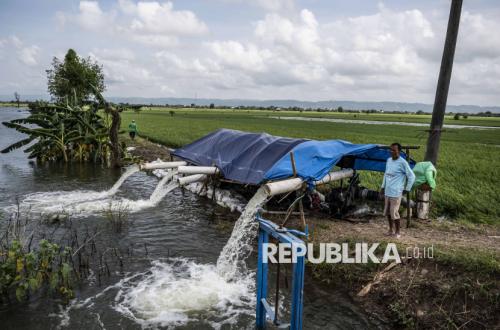
REPUBLIKA.CO.ID, JAKARTA — Increases in groundwater tax (PAT) in several regions are feared to add pressure to the operational costs of businesses, particularly in the hospitality, restaurant, and food and beverage industries. The Ministry of Industry (Kemenperin) has stated that it will coordinate with the Ministry of Home Affairs (Kemendagri) to discuss the policy, which is deemed burdensome for the industry.
Director of the Beverage, Tobacco Products, and Refreshment Materials Industry at Kemenperin, Merriyanti Punguan Pintaria, said that her side has received various inputs from business actors regarding the surge in PAT in several regions. “Regarding the groundwater tax, consolidation may be needed first. We will communicate first with the Ministry of Home Affairs,” she stated.
According to Merriyanti, coordination is necessary because the policy on the amount of PAT falls under the authority of regional governments, whose supervision is under Kemendagri. “The magnitude of the groundwater tax increase is determined by the regional government. And the regional government is under Kemendagri. That’s why we will consult with them first to find a solution,” she said.
She added that Kemenperin will also delve into the basis for calculating the tax increase before providing further input. “They must have a basis for determining that. This is what we need to explore, we need to study first the basis for this increase,” she stated.
Several regions are known to have implemented significant PAT increases. In Bogor Regency, for example, business actors have protested the tariff hike from Rp1,500 to Rp3,300, or around 120%. A businessman from Cijeruk, Indra Surjana, assessed that the increase burdens the business world and is not accompanied by improvements in regional government services.
The policy refers to the socialisation of the Regent’s Regulation regarding the Groundwater Acquisition Value (NPA) conducted in October 2025. Business actors consider the surge too drastic and potentially burdensome to operational costs.
Similar complaints have also emerged in Bandung City. Chairman of the Indonesian Hotel and Restaurant Association (PHRI) of West Java, Dodi Ahmad Sofiandi, stated that the PAT increase in the area reaches up to 250% and lacks socialisation to business actors.
In Banyuwangi, the regional government has raised the base price of groundwater referring to East Java Governor’s Regulation Number 2 of 2022. Chairman of PHRI Banyuwangi, Zaenal Muttaqin, said that the change in the payment scheme from levies to usage-based taxes has significantly increased the business burden.
Meanwhile, in the Special Region of Yogyakarta, the groundwater tax increase is also implemented through the DIY Governor’s Regulation Number 21 of 2025. Chairman of PHRI DIY, Deddy Pranowo Eryono, stated that the policy adds pressure to business actors who are still facing economic recovery challenges.
The PAT policy change itself refers to the shift in regulations from Law Number 28 of 2009 on Regional Taxes and Levies to Law Number 1 of 2022 on Financial Relations between the Central Government and Regional Governments (HKPD). The new regulation is followed by changes in the calculation formula through Ministry of Energy and Mineral Resources Regulation Number 5 of 2024, which replaces Ministry of Energy and Mineral Resources Regulation Number 20 of 2017.
The government states that the tariff adjustment is carried out to strengthen environmental conservation and control excessive groundwater extraction. The basis for calculating PAT uses the Groundwater Acquisition Value (NPA), which comes from the multiplication of the Raw Water Price (HAB) and the Groundwater Weight (BAT).