
Gripping Aftermath of Mexican Cartel Boss's Death
The leader of the Jalisco New Generation Cartel (CJNG), Nemesio ‘El Mencho’ Oseguera, was killed by the Mexican military. The cartel boss’s death has plunged Mexico into a state of tension.
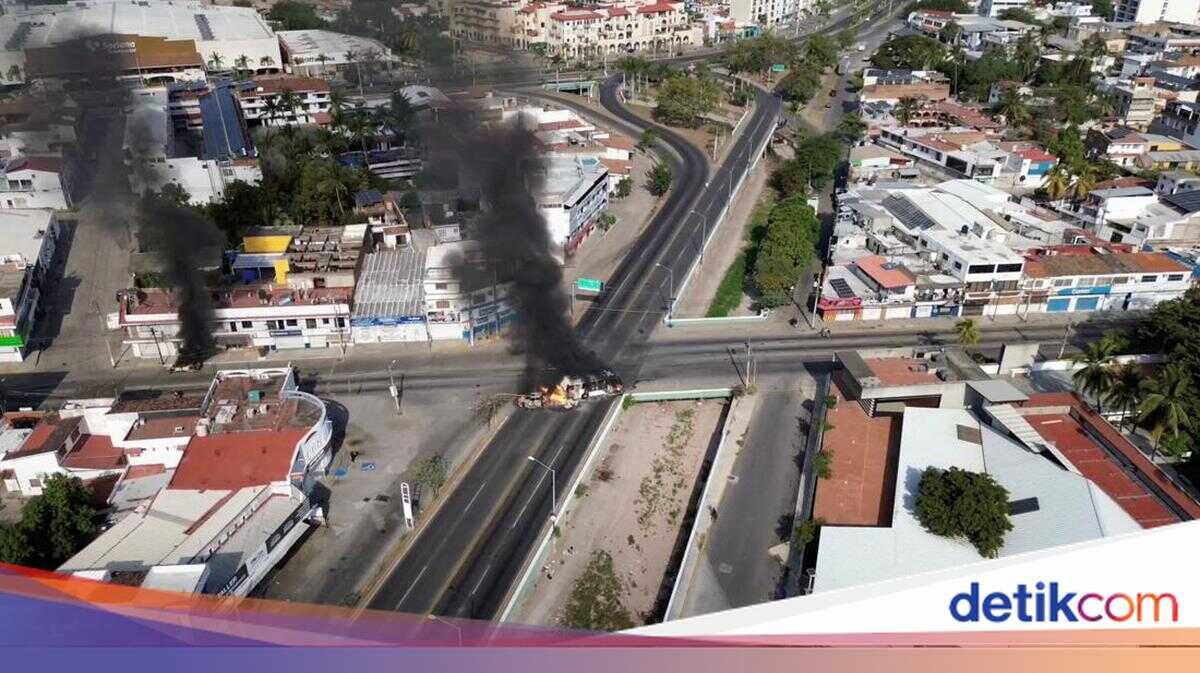
As reported by AFP on Monday (23/2/2026), the 59-year-old was wounded in a clash with soldiers in the city of Tapalpa, in the state of Jalisco, and died while being airlifted to Mexico City. In the aftermath, gunmen retaliating against the operation blocked more than 20 roads in the western state of Jalisco, including Tapalpa, with burning cars and lorries.
Following the incident, violence spread to other states. Mexican President Claudia Sheinbaum urged citizens to remain calm and said the federal government was coordinating with state authorities.
Oseguera was one of Mexico’s biggest drug lords to be neutralised since the capture of Sinaloa cartel founders Joaquin ‘El Chapo’ Guzman and Ismael Zambada. Both are now serving sentences in the United States.
According to local authorities, in addition to Mexico’s own military intelligence, the operation was carried out with ‘supplementary information’ from US authorities. Six suspected cartel members besides Oseguera were killed and three soldiers were wounded.
Flights Cancelled
The road blockades disrupted aviation operations. A number of domestic and international flights were cancelled in Guadalajara and Puerto Vallarta.
Several US and Canadian airlines cancelled flights to parts of Mexico on Sunday following the unrest. These included US carriers United, American, Southwest, and Alaska.
Additionally, Canadian airlines Air Canada and WestJet/Sunwing announced the cancellation of flights to Puerto Vallarta, Guadalajara, and Manzanillo.
Several airlines and aircraft were reportedly forced to turn back whilst already en route to Mexico, including Southwest, which diverted four flights originally bound for Puerto Vallarta.
Southwest said it would send aircraft to Mexico to repatriate stranded passengers and staff once the situation returned to normal.
Cars Set Ablaze
El Mencho’s death triggered a wave of violence across several regions of Mexico, particularly in Jalisco and surrounding areas, with cars set ablaze and armed men blocking highways in a number of Mexican states.
Jalisco Governor Pablo Lemus Navarro declared a ‘code red’ state of emergency, suspending public transport and urging residents to remain indoors.
The CJNG, led by El Mencho, is an international criminal organisation widely regarded as one of the most powerful in Mexico. El Mencho had successfully evaded capture for years, despite a US reward of up to US$15 million (approximately Rp 252.4 billion) for information leading to his arrest.
A Reuters report revealed that the Joint Interagency Task Force — Counter Cartel, involving several US government agencies and led by the US military, played a role in the Mexican military operation that killed El Mencho.
The task force, which specialises in intelligence gathering on drug cartels, according to Reuters, compiled a detailed target package for El Mencho and provided it to the Mexican government for its operation.
US Urges Citizens to Shelter in Place
The United States Department of State urged its citizens in Mexico to shelter in place and avoid going outdoors.
“Due to ongoing security operations and numerous road blockages, as well as related criminal activity, US citizens at the listed locations should shelter in place until further notice,” the State Department security alert stated, as reported by USA Today on Monday (23/2/2026).
The locations listed by the State Department as areas to be avoided by US citizens include the state of Jalisco, including Puerto Vallarta, Chapala, and Guadalajara; the state of Tamaulipas, including Reynosa and other cities; and parts of the states of Michoacan, Guerrero, and Nuevo Leon.
In the security advisory, US citizens in Mexico were urged to be aware of their surroundings, avoid crowds, seek shelter and minimise unnecessary movement, monitor local media for the latest information, and comply with the directives of Mexican authorities.