
Greenpeace: Bantargebang Landslide Tragedy in 2026 Is Critical Alarm for Jakarta's Waste Crisis
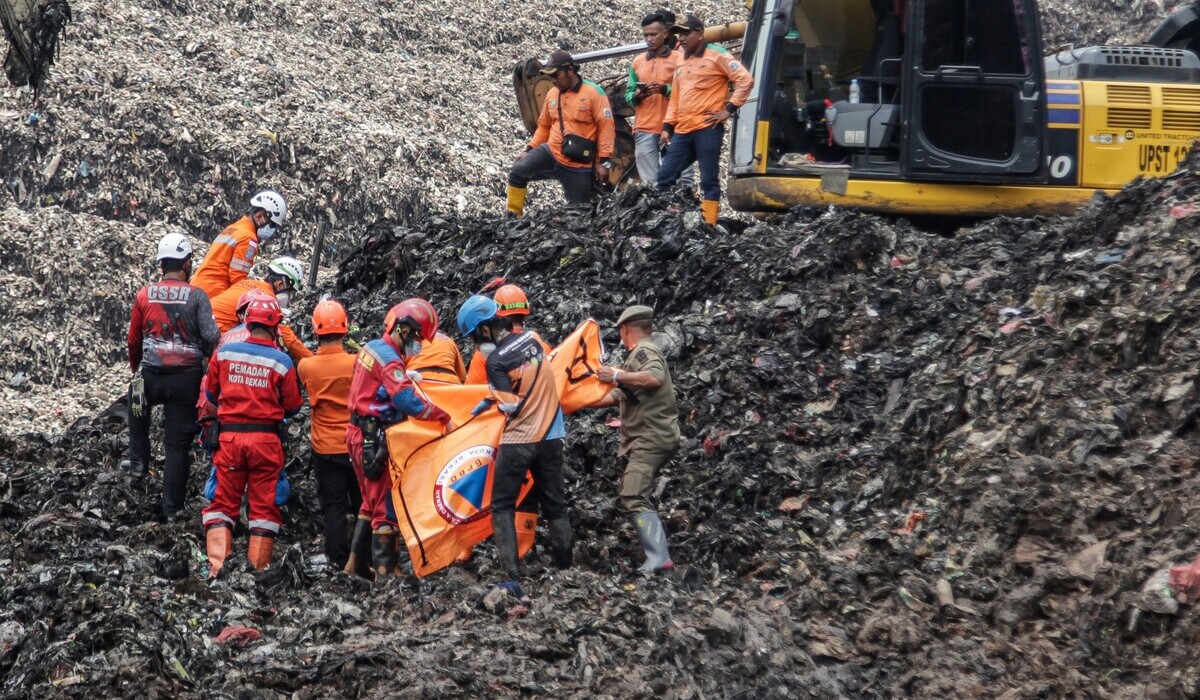
A tragic landslide of garbage at the Bantargebang Integrated Waste Management Centre (TPST) on Sunday, 8 March 2026, has sounded a serious alarm for the government. The Bantargebang landslide disaster demands comprehensive overhaul of Jakarta’s waste management system, which is no longer considered safe or sustainable.
Heavy rainfall that poured over the Bekasi region triggered the collapse of a garbage mound, burying garbage collection vehicles and nearby buildings. By Wednesday (11 March 2026), combined search and rescue teams reported seven fatalities and six survivors. The majority of Bantargebang landslide victims were truck drivers and food stall owners located in the affected area.
This disaster proves that reliance on final disposal sites (TPA) as a singular solution is a ticking time bomb. Ibar Akbar, Zero Waste Campaign Officer at Greenpeace Indonesia, believes the system centred on TPA must urgently shift towards prioritising waste reduction at source.
“The government, particularly the DKI Jakarta Province, needs to improve waste management governance, from reducing household organic waste to establishing sorting infrastructure at neighbourhood level,” Ibar stated. He emphasised the importance of consistent implementation of the Governor’s Regulation No. 77 of 2020 on Waste Management at Neighbourhood Association Level.
The Bantargebang TPST is often referred to as one of the world’s largest open-dumping landfill sites serving millions of Jakarta residents with massive daily waste volumes.
The DKI Jakarta Provincial Government inspected the incident location on Monday (9 March 2026). However, a statement from DKI Jakarta Governor Pramono Anung through social media, questioning why work activities continued during extreme rainfall, drew sharp criticism from environmental activists.
Jeanny Sirait, Climate Justice Campaign Officer at Greenpeace Indonesia, expressed regret over the statement. “That statement is class-biased and apathetic towards the situation of waste workers. Waste pickers are the most crucial actors in the waste economy chain. Without them, Jakarta’s waste burden would be far heavier,” she stated firmly.
Jeanny added that the climate crisis worsens the vulnerability of waste pickers, particularly regarding occupational safety. She urged the government to shift towards community-based solutions supported by strong regulation.
The Bantargebang landslide in March 2026 must become a turning point for Jakarta to stop ignoring waste pickers’ contribution and immediately implement a systematic waste sorting system. Without radical upstream measures, Bantargebang will continue to threaten residents and workers in the surrounding area.
The Bantargebang landslide in Zone 4A not only paralysed operations but also claimed lives amid critically overcapacity land conditions. Despite the increasingly critical condition of the Bantargebang TPST, Jakarta continues to send up to 8,000 tonnes of waste daily, triggering risks of larger environmental disasters.