
Greenland Crisis 2026: Warming Temperatures and the Threat of the 'Dark Zone' to Global Coastlines
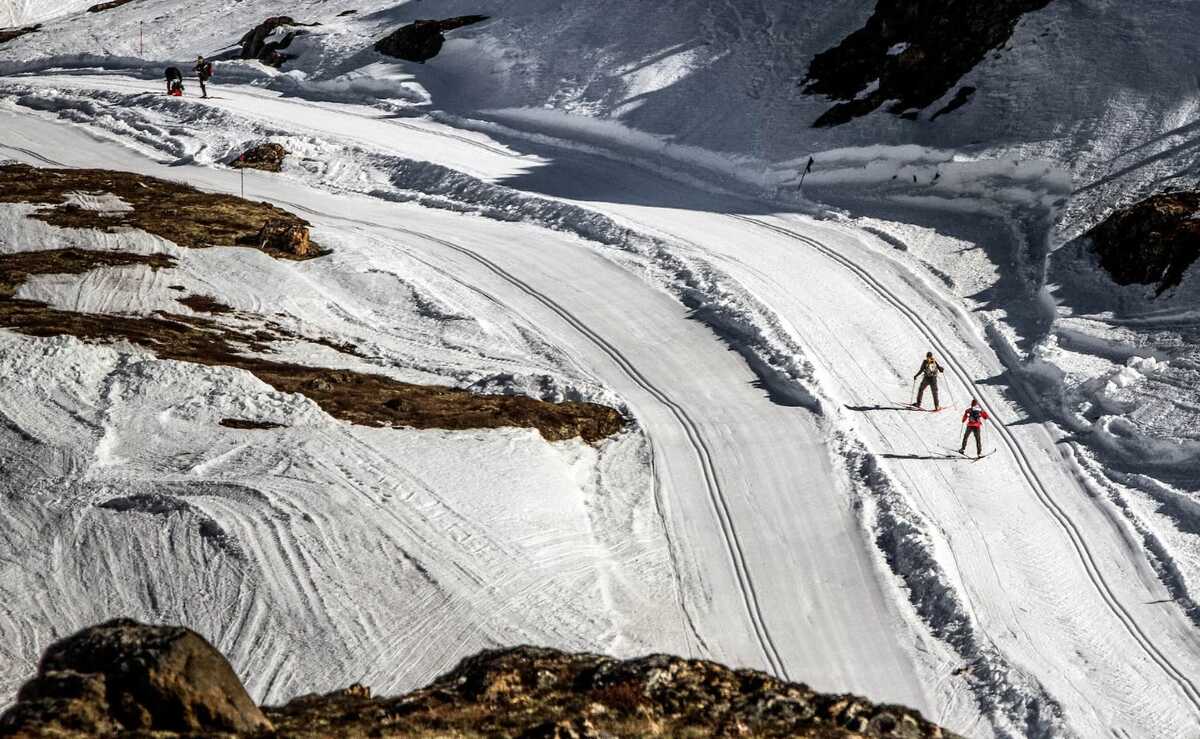
Climate conditions in Greenland in March 2026 indicate a trend increasingly worrying for scientists and the global community. According to the latest monitoring data, the Arctic region has just passed the hottest and wettest spell in 125 years, accelerating the retreat of the world’s second-largest ice sheet.
In early March 2026, temperatures in areas such as Nuuk and Ilulissat were recorded between -11°C and -7°C. While that sounds very cold, the figures indicate a warmth anomaly relative to long-term historical averages. Sea surface temperatures around Nuuk also remained at -1°C, contributing to instability of coastal ice shelves in the western Arctic region.
One of the most crucial findings in 2026 is the expansion of the “Dark Zone” in the western part of the Greenland ice sheet. Dust rich in phosphorus carried by the wind has triggered a bloom of algae on the ice surface. The algae have changed the ice’s colour from bright white to dark grey.
The impact is severe: dark ice absorbs more solar energy (lower albedo) than it reflects, so melting proceeds many times faster. Researchers from DTU Space even report that Greenland is now shifting about 2 centimetres per year toward the northwest due to the loss of the vast ancient ice load.
Although the melting of Greenland ice is a major contributor to sea level rise along the coasts of the United States and Asia, a local phenomenon has occurred in the region. Because the ice mass is so heavy, the gravitational pull that previously drew seawater toward the island has weakened. As a result, sea level around Greenland’s coast is projected to fall by up to one metre by the end of this century, while other parts of the world face inundation.
The melting of ice in Greenland is no longer a future threat, but an irreversible reality in 2026. The increasing frequency of extreme melt events demands more aggressive global climate action to slow the rate of sea level rise threatening major cities around the world.
Scientists have revealed the cause of the dark zone in the Greenland ice sheet. Phosphorus-rich dust triggers algae growth that accelerates ice melt due to climate change.
Greenland’s Prime Minister, Jens-Frederik Nielsen, rejected Donald Trump’s offer of a hospital ship and mocked the US healthcare system for being paid.
Greenland may see its coastline shift in a different direction from other world coastal cities. But overall, the world’s seas continue to rise.
US Secretary of State Marco Rubio is seeking to ease transatlantic tensions at Munich 2026. See Washington’s commitments and European leaders’ responses on NATO security.
Amid tensions with the US over Greenland and trade tariffs, German Chancellor Friedrich Merz warned of the collapse of the world order at the Munich Security Conference.