
Green Sukuk Positioned as Financing Source for 100 GW Solar Energy Programme
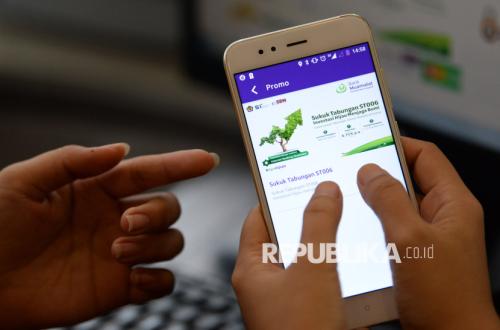
Jakarta — Islamic financing instruments known as green sukuk are considered to have significant potential as a strategic funding source to accelerate the development of solar energy in Indonesia. This scheme could support the target of building 100 gigawatt (GW) solar energy capacity amid growing clean energy investment requirements.
Indonesia possesses solar energy potential exceeding 3,000 GW, among the largest in the world. However, its utilisation to date remains relatively modest compared to available capacity.
The opportunity to use green sukuk to support energy transition was discussed in a forum titled “Green Sukuk for Energy Transition: Innovative Financing Model for the 100 GW Solar Energy Programme” in Jakarta on Tuesday, 10 March 2026.
Deni Ridwan, Director of Islamic Financing at the Directorate General of Financing and Risk Management of the Ministry of Finance, stated that the government is continuously optimising various fiscal instruments to support a green economy, including through the development of Islamic financing.
“The government is working to optimise various fiscal instruments at its disposal, whether from the perspective of revenue, expenditure, or financing, to support the development of a green economy and sustainable development targets,” Deni said.
Deni explained that Indonesia is one of the pioneers in issuing green sukuk in the global market. This instrument has been used to finance various environmentally-friendly projects, ranging from renewable energy, low-carbon transportation, to waste management and sustainable infrastructure development.
According to Deni, projects supported through green sukuk have also contributed to carbon emission reductions. “Projects supported through green sukuk financing have contributed to carbon emission reductions of more than 10 million tonnes of CO2,” Deni said.
Beyond supporting green projects, green sukuk issuance also opens opportunities to expand the investor base that focuses on environmental, social and governance (ESG) aspects. Consequently, this instrument is considered capable of becoming a strategic financing source in supporting the national energy transition agenda.
Waryono Abdul Ghafur, Director of Zakat and Awqaf at the Ministry of Religion, stated that the energy transition agenda also aligns with religious values.
“In Islamic teaching, caring for the environment is part of faith. Therefore, sustainability issues and energy transition are also a moral and spiritual responsibility,” Waryono said.
Waryono added that Islamic social finance instruments such as awqaf possess significant potential to support sustainable development. “With innovative and productive management, awqaf can contribute in supporting various green initiatives, including the development of renewable energy,” Waryono said.