
Green collaboration drives clean Indonesia vision in Papua
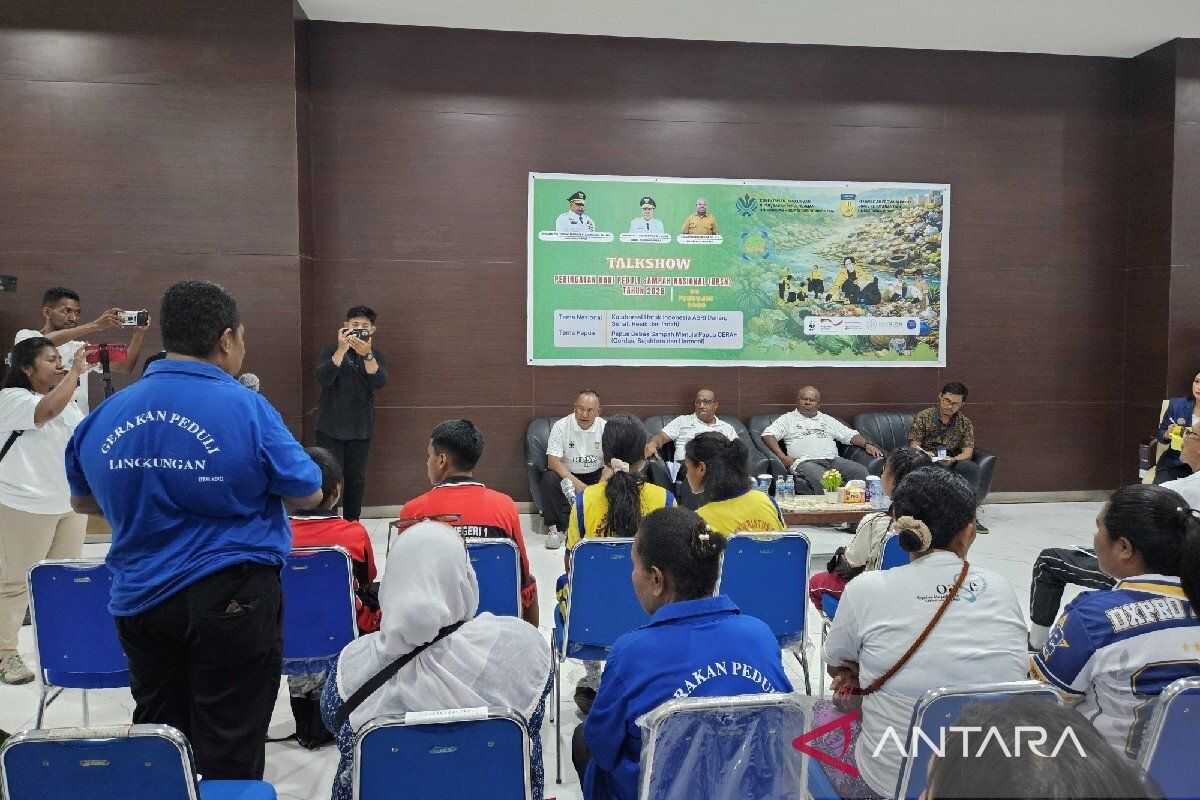
In addressing the complex challenges of forest preservation and waste management resulting from population growth and economic activities, strong collaboration is required. Waste is generated by human activities, and resolving the issue requires collective behavioral change. Without a strong system and changes in public behavior, waste problems risk causing serious environmental and social impacts. Acting Head of the Papua Provincial Forestry and Environment Office, Yaconias Maintindom, said that waste accumulation in Papua continues to increase and requires integrated planning. Based on population data across nine districts and municipalities, estimated at 1.07 million people in 2025, and assuming waste generation of 0.4 kilograms per person per day, total waste in Papua Province is projected to reach around 477 tons per day. This significant volume must be managed seriously by all districts, municipalities, and communities. One of the strategic steps being prepared by the government is the formulation of a waste management roadmap for Papua. “This document will contain data on waste volumes from all Districts and municipalities, strategies for reduction, transportation, processing, and monitoring. Each District and municipality must accurately calculate how much waste they manage. From this data, targeted policies can be formulated,” Maintindom said. He acknowledged that the environmental sector still faces budget constraints, and in some areas, allocations for environmental management remain very limited. However, limited budgets should not become a reason for inaction. Major changes can begin with simple steps at the household level by separating waste at its source. Mixed organic and non-organic waste makes processing difficult and inefficient. For the Papua Provincial Forestry and Environment Office, efforts can start with household waste. Separated organic waste can be processed into compost or animal feed, while plastic and other non-organic materials can be recycled into items with economic value. Therefore, the key to effective waste management lies in awareness and human resource capacity at the neighborhood and village levels. The Papua Provincial Government reminded village administrations that village funds should not be focused solely on infrastructure but also allocated to building environmental awareness. Good infrastructure will be meaningless if the surrounding environment is poorly maintained, and both aspects must be addressed in balance. Village heads are expected to regard waste management as a priority issue. If education reaches the grassroots level, change will occur more rapidly. Currently, most District and municipal governments already have waste management systems in place, but efforts need to be intensified further. Acting Papua Regional Secretary Christian Sohilait noted that on Feb. 21 the province commemorated National Waste Awareness Day 2026 as a moment of reflection and an opportunity for all stakeholders to strengthen efforts toward a cleaner Indonesia in Papua. Initiatives promoted by the provincial government include routine community clean-up activities every Friday at government offices, followed by similar activities at houses of worship, schools, markets, villages, and coastal areas. These efforts include cleaning drainage systems and rivers, planting shade trees, and utilizing home yards for productive plants with economic value. A remaining task for provincial, District, and municipal governments is to strengthen public outreach on waste separation based on the reduce, reuse, and recycle principles at the household level. Green collaboration Chairman of the Guardian Hollo Sentani Community, Boy Kallem, whose group focuses on tree planting and reforestation, particularly in the Cycloop Mountains area and river basins, said waste management is not a simple matter. Continuous green collaboration is essential because waste is generated every day. He emphasized that change must begin with individuals before expecting it from others. “Let us start with small steps at home. If done consistently, the impact will be significant for the environment and future generations,” he said. Representing the community, he acknowledged that efforts by both the government and society show that achieving a clean Indonesia in Papua requires cross-sector green collaboration. The government has prepared policies and regulations, public facilities are implementing sustainable management, and communities are promoting grassroots participation and education. Going forward, the greatest challenge is maintaining consistency and ensuring that every policy is properly implemented. The waste management roadmap must be supported by stronger budgets, improved capacity of sanitation workers, and strict monitoring. Building a culture of environmental awareness is a long-term task. Early education in schools, public campaigns, and exemplary conduct by government officials are key to ensuring awareness extends beyond ceremonial observances. Meanwhile, the Health Department of Sentani International Airport, represented by Harrys Hutahaean, said waste volume at the airport reaches around three tons per day, with approximately 40 percent consisting of organic waste. Waste management measures have been implemented. Collected waste is separated into organic and non-organic categories, transported by a dedicated team to temporary disposal sites, and then sent to final disposal facilities. Reusable materials are encouraged for recycling through cooperation with micro, small, and medium enterprises and waste banks. The high proportion of organic waste presents challenges due to the potential for odor and accumulation if not handled promptly. As an international airport, management strives to maintain cleanliness and aesthetics to ensure passenger comfort and operational efficiency. Trash bins are provided at strategic locations, including passenger terminals, operational areas, offices, an