
"Great Sin" vs Economic Reality
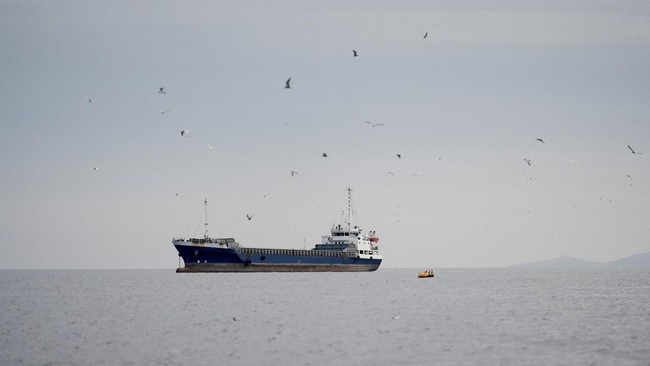
The conflict in the Middle East involving the United States and Israel against Iran, which escalated at the end of February 2026, has become a true stress test for all modern economic forecasting tools.
In just a matter of weeks, the supply shock has spread wildly: crude oil prices have skyrocketed past the psychological level of US$100 per barrel, natural gas prices have surged sharply, and international financial institutions are racing against time to rewrite their baseline global growth projections.
Amid this whirlpool of uncertainty, differences in views stand out as starkly as night and day. The World Bank has revised its estimate for Indonesia’s 2026 economic growth to 4.7%, down from the October 2025 forecast of 4.8%.
In contrast, the Asian Development Bank (ADB) has revised its projection upwards to 5.2%—from 5.1% in December 2025. Meanwhile, the International Monetary Fund (IMF), which calculated its figures in January (before the war erupted), is sticking to 5.1%.
This contrast has triggered strong reactions domestically. Finance Minister Purbaya Yudhi Sadewa described the World Bank’s projection as a “great sin” that risks spreading negative sentiment. Purbaya argued that the World Bank “miscalculated” because first-quarter 2026 growth alone is estimated to reach 5.5-5.6%—far above the average implied by the World Bank’s full-year projection of 4.7%.
Echoing Purbaya, Coordinating Minister for the Economy Airlangga Hartarto remains confident that the national economy can achieve the state budget target of 5.4% (CNBC Indonesia, 10/4/2026). This war of numbers reopens a fundamental question that never seems to fade: how reliable are economic forecasts really in the face of structural shocks?
Behind the Scenes: More Than Just Calculations
In an ideal world, economic forecasts are compiled through two main approaches: analysis of leading indicators and complex macroeconometric calculations. These models are like a grand map woven from dozens or even hundreds of simultaneous equations, reflecting interactions between household consumption, investment decisions, and global trade dynamics.
The process appears scientific: economists set assumptions for exogenous variables—such as the direction of interest rates, government spending, or world commodity prices. Then, the model engine is run to produce growth, inflation, and employment projections. However, the validity of the results depends heavily on two fragile foundations: the accuracy of initial assumptions and the model’s ability to capture real-world dynamics.
Unfortunately, modern economic history is often coloured by missed projections. The work of these “soothsayers” often resembles weather forecasts in the transitional season: clear skies on paper can suddenly be swept away by a tornado in the real world.
We can look back. The Great Depression that paralysed the United States in the 1930s was almost undetected by prominent economists of the time. Even the renowned economist Irving Fisher (1929) confidently stated that the stock market had reached a “permanent high plateau.” Just days later, a devastating crash hit Wall Street, and the Dow Jones Index then eroded by up to 89% from its peak in July 1932 (Galbraith, 1955).
In Indonesia, the story is similar; ahead of the 1997-1998 Monetary Crisis, the dominant narrative was about the strength of economic fundamentals—only months before the exchange rate storm devastated the banking sector and business world.
These two historical episodes are not just tales of individual forecasting failures. Both reflect the structural limits of conventional approaches that view the economy as a system that will return to equilibrium after a shock. This is where the perspective of complexity economics finds its relevance.
Complexity economics views the economy as a complex adaptive system that is non-linear, continually evolving, and resistant to precise prediction by simply drawing a straight line from past data (Arthur, 2014). Economic agents—from street vendors to multinational corporate CEOs—do not act based on perfect rational calculations.
They interact, experiment, learn from mistakes, and adapt continuously. The result is a richer and more complex dance of dynamics than conventional model assumptions can capture.
The 1997-1998 Crisis and the 2020 Pandemic are the most glaring empirical evidence. In 1998, Indonesia’s economy contracted sharply to minus 13.13% with inflation exploding to 77.63% according to BPS data (1999). Meanwhile, in 2020, the economy contracted by 2.07% amid inflation that was actually very tame at 1.68% (BPS, 2021).
Two crises with different shock characteristics—exchange rate crisis versus health crisis—but both transformed into systemic crises due to non-linear domino effects that evaded the radar of standard econometric models.
So, why can the ADB and the World Bank differ in their views by 0.5%? This difference is not just a margin of error that can be ignored. It represents fundamental differences in assumptions about which variables are more dominant: whether the external energy price shock will hit, or whether domestic consumption resilience can hold back the weakening pace?
In the framework of complexity economics, the answer depends on path dependency and the quality of collective adaptive responses—something that cannot be reduced to just one or two regression equations.
Contagious Expectations and Boomerang Risks
Understanding the economy as a complex system should change the way we view the role of expectations. Robert Lucas (1976) in his monumental critique reminded us that human behavioural parameters will change along with policy changes.
In other words,