
Great Potential: Indonesia Should Be Able to Produce 1.6 Million Tonnes of Biomethanol per Year
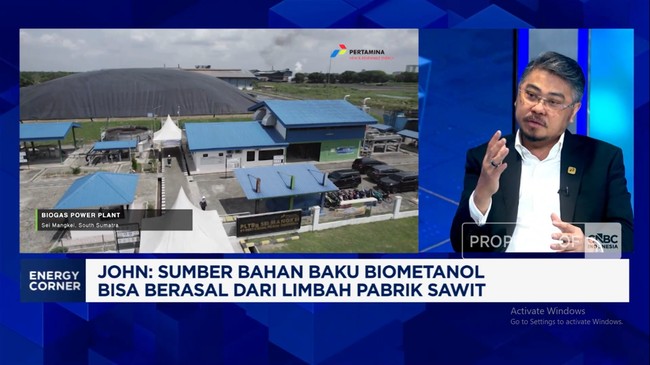
Indonesia is touted to have substantial potential in developing a biomethanol industry based on palm oil waste. With abundant raw materials available, national biomethanol production is estimated to reach up to 1.6 million tonnes per year.
Pertamina’s President Director of New & Renewable Energy, John Anis, revealed that this potential stems from liquid palm oil waste, or Palm Oil Mill Effluent (POME), amounting to approximately 150 million tonnes annually nationwide.
According to him, if processed, this POME potential could be converted into around 1.3 to 1.6 million tonnes of methanol per year. This figure is significant enough to support the development of green energy domestically.
“So the potential is very large, around 150 million tonnes per year, which could produce roughly 1.3 to 1.6 million tonnes of methanol per year using the process we estimate. That’s quite substantial,” John stated during the CNBC Indonesia Energy Corner event on Wednesday (22/4/2026).
For the initial project development phase, the raw material requirement remains relatively small, at about 1 million tonnes of POME on a proof-of-concept scale.
Nevertheless, several challenges must be addressed, particularly regarding the raw material supply chain. He noted that POME sources are spread across around 800 palm oil mills, many located in remote areas such as Sumatra and Kalimantan.
“The whole thing from around 800 mills— the quite challenging aspect is that they are in remote locations and scattered. As we know, palm plantations are in Sumatra and Kalimantan, but those are remote areas,” he said.