
Gran Max Widely Used in Free School Meals Projects, but Astra Daihatsu Struggles to Track Data
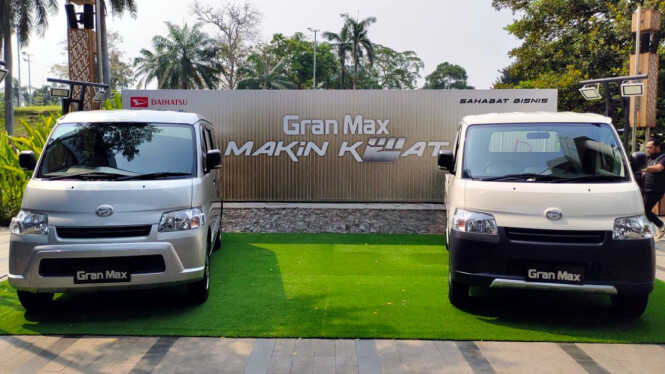
Jakarta — The light commercial vehicle segment is displaying markedly different momentum compared to the passenger car market, which continues to face recovery challenges. Demand for the Daihatsu Gran Max is trending positively, driven by rising logistics activity, infrastructure projects, and government expenditure through the free school meals (Makan Bergizi Gratis/MBG) programme.
Tri Mulyono, Marketing and Customer Relations Division Head at Astra International Daihatsu Sales Operation, acknowledged that the MBG project has indeed had an effect on Gran Max sales. However, the precise scale of the programme’s contribution cannot be calculated due to the nature of purchasing patterns.
“There is certainly an impact. But as for how large it is, we really cannot determine that,” he said recently, as quoted on Thursday, 19 February 2026.
He added that light commercial vehicle purchases are generally not directly linked to specific projects in the company’s records.
Tri explained that the majority of buyers acquire units using personal identification rather than institutional or corporate accounts. Once delivered, the vehicles are typically modified into box trucks, logistics vehicles, or customised to suit other operational requirements.
“For us, most usage involves the Gran Max pick-up or Gran Max van types. They are generally registered under personal names, so we cannot identify whether they are being used for a particular project,” he said.
This makes tracking the end use of vehicles quite complex at the distribution level.
Beyond government project-driven demand, Gran Max sales growth also stems from the logistics sector, which is expanding rapidly alongside the growth of e-commerce. The need for goods delivery to areas with limited road access has made compact transport vehicles increasingly sought after.
The Gran Max is considered well-suited to meeting this demand thanks to its compact dimensions, configuration flexibility, and relatively efficient operating costs. Its use extends beyond large logistics firms to include medium-sized enterprises, micro, small and medium enterprises (MSMEs), and field project contractors.
Demand is so strong that some Gran Max variants still face delivery waiting times. This illustrates that light commercial vehicles remain a primary productive asset for many business sectors amid broader economic fluctuations.