
GPPU pushes for policy synchronisation to protect poultry industry
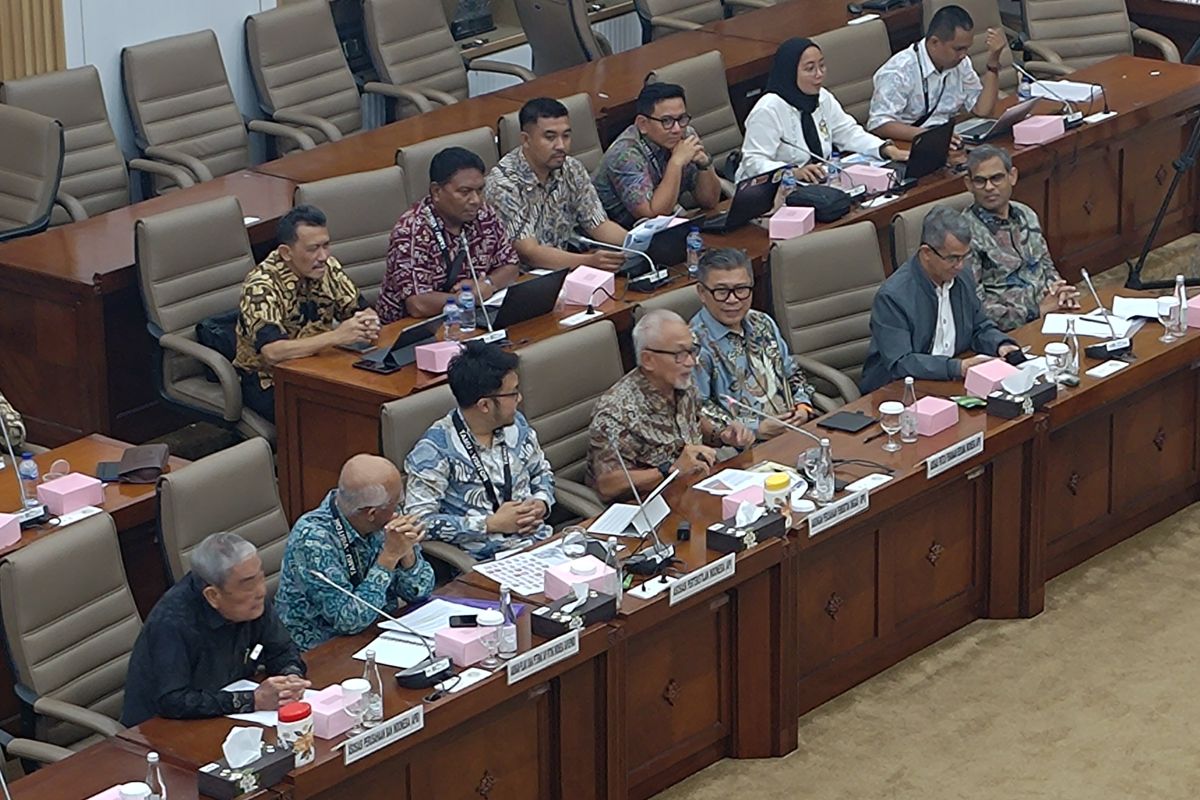
Jakarta (ANTARA) - The General Chairman of the Poultry Breeding Companies Association (GPPU), Achmad Dawami, is pushing for policy synchronisation between agencies in the revision of Law No. 5 of 1999 on the Prohibition of Monopolistic Practices and Unhealthy Business Competition, to safeguard the balance of the national poultry industry.
In a public hearing (RDPU) with Commission VI of the House of Representatives (DPR RI) regarding the drafting of the Business Competition Bill, he cited the policy on controlling poultry production, which in practice still has the potential to cause differing interpretations in business competition regulations.
“Broiler breeders that should lay eggs until 65 weeks of age can, through government policy, be culled earlier at 50-55 weeks to control the production of day-old chicks,” Dawami said in Jakarta on Monday.
He explained that managing the supply of day-old chicks (DOC) is one of the government’s instruments in maintaining balance between production and demand in the market.
According to him, this production control policy is mainly implemented when there is an excess supply that could depress prices at the farmer level.
However, on the other hand, this policy can also be seen as production regulation that potentially violates business competition principles.
He added that policies on supply control, price stabilisation, and distribution regulation need to run in harmony to avoid creating uncertainty for business actors.
“If prices rise high ahead of Eid, we are asked not to sell too expensively so that people can still afford to buy. But if prices are too low, we are also reminded not to disrupt the industry,” he said.
Dawami stated that the poultry industry has unique characteristics because its products are perishable, making it sensitive to supply changes and market issues.
In addition, production costs are influenced by fluctuating prices of feed raw materials such as corn and soybean meal, which in turn affect selling prices at the farmer level.
He views the revision of Law No. 5 of 1999 as an opportunity to clarify policy implementation so that it aligns with business competition principles.
“Going forward, strengthening understanding is needed so that policy implementation can align with business competition principles and not cause differing interpretations,” Dawami stated.
According to him, cross-sectoral coordination is important to ensure that policies in production, distribution, and business competition can run in balance.
In that meeting, GPPU also expressed support for government policies in increasing animal protein consumption through the provision of affordable poultry products.
Dawami added that the poultry sector plays a role in absorbing labour in various regions, so industry stability needs to be maintained.
“Our goal is one: how to provide protein for public needs at affordable prices while maintaining business sustainability,” he revealed.
He hopes that the discussion of the bill can produce more harmonious regulations and provide legal certainty for business actors in the poultry sector.
Agriculture Minister Andi Amran Sulaiman previously emphasised that poultry price stabilisation must be done from the upstream side, particularly through feed control, vaccines, and DOC.
He stated that imbalances in the upstream sector often become the main source of price fluctuations at the farmer and consumer levels.