
Gowa Targets Additional 3,000 Tonnes of Paddy Production by Optimising People's Reclaimed Rice Fields Programme
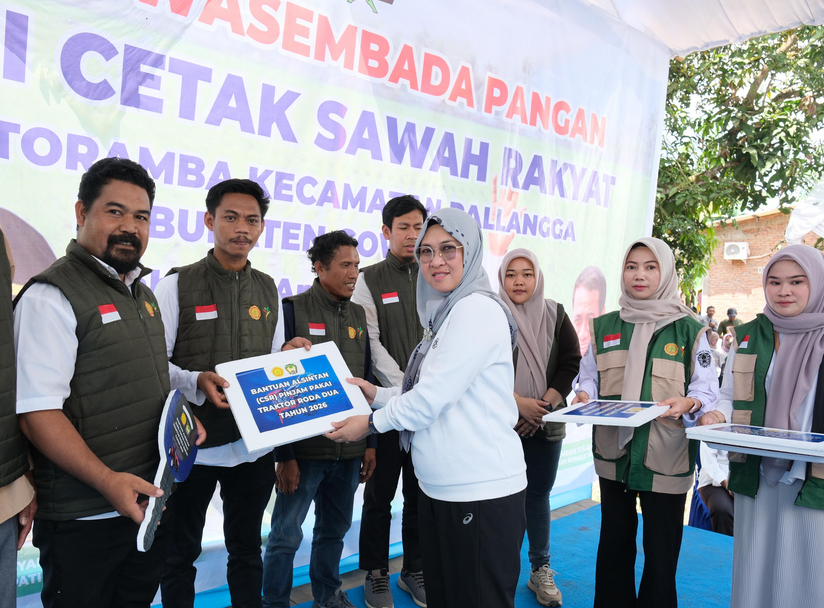
The government faces a policy dilemma with no truly comfortable solution. The government faces a policy dilemma with no truly comfortable solution. Gowa Regent Sitti Husniah Talenrang has targeted an increase in rice production of up to 3,000 tonnes of dry harvested grain (GKP) per planting season by optimising the People’s Reclaimed Rice Fields (CSR) programme across 40 hectares in Bontoramba Village, Pallangga Subdistrict, on Wednesday (8/4). This target forms part of the local government’s commitment to supporting national food self-sufficiency. “Gowa is one of the agricultural pillars in South Sulawesi. I will not stop pushing for our agriculture to advance further,” said Husniah. From the 40-hectare area, the local government targets an average productivity of 5 to 6 tonnes of dry harvested grain (GKP) per hectare. Head of the Gowa Food Crops and Horticulture Office, Zubair Usman, stated that the potential additional production could reach 2,500 to 3,000 tonnes of GKP every planting season. “The CSR programme is a concrete step to address food needs challenges. Gowa is grateful to be a beneficiary area. In 2026, we propose an additional 30 hectares,” explained Zubair. In addition to land expansion, Regent Sitti Husniah emphasised the importance of support for agricultural tools and machinery (alsintan), not just through a borrowing system but also direct ownership by farmers. Currently, four-wheeled tractors, two-wheeled tractors, crawlers, water pumps, and certified superior seeds such as Mekongga, Inpari 32, Inpari 9, Inpari 47, and Nutrizinc have been distributed. Director of Land Protection and Optimisation from the Ministry of Agriculture RI, Dede Sulaiman, who was present, stated that South Sulawesi, including Gowa, is a potential area for this national priority programme. Besides CSR, the central government is also preparing a programme to optimise existing rice fields covering nearly 60,000 hectares in South Sulawesi. “If there is still other potential in Gowa, we are ready to support it. Our hope is that existing rice fields can become productive land for sustainable self-sufficiency,” concluded Dede.