
Governor Supports Social Media Access Restrictions for Children Under 16, Citing Gadget Addiction
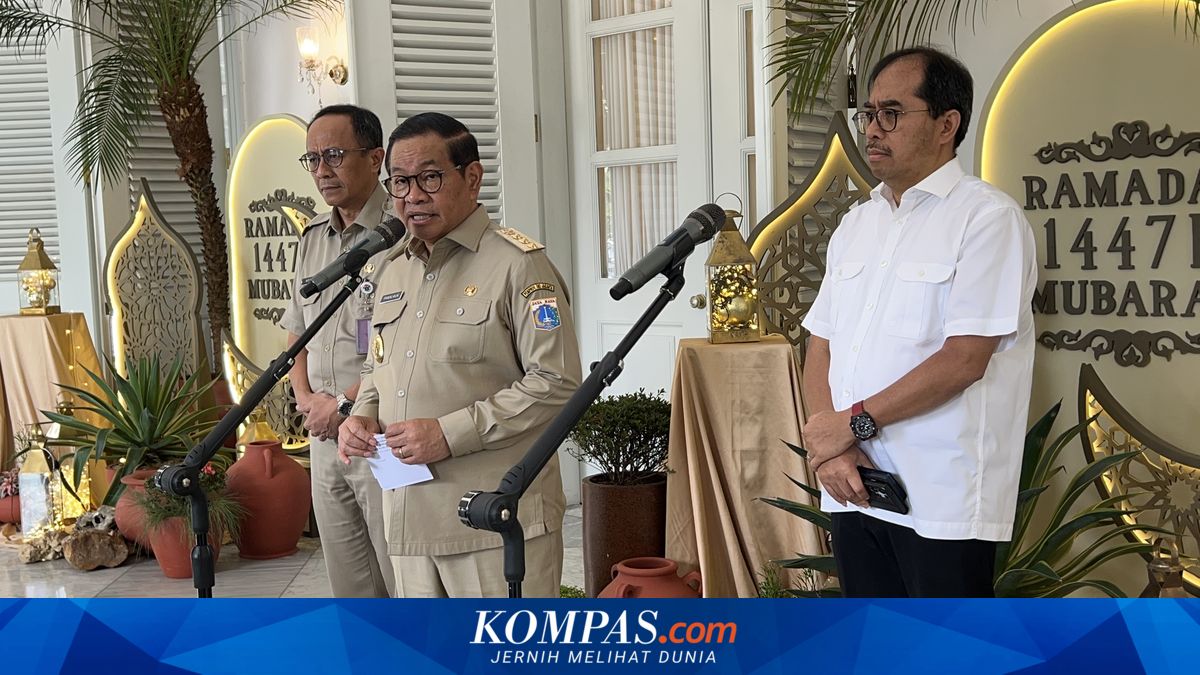
Jakarta — Jakarta Governor Pramono Anung has endorsed the policy restricting social media access for children under 16 years of age, which has been initiated by the government through the Ministry of Communication and Digital (Komdigi).
According to Pramono, the policy represents a positive step to protect children from the negative impacts of excessive social media usage.
“I will provide full support. I believe this ministerial regulation is good,” said Pramono at Jakarta City Hall on Monday, 9 March 2026.
“However, with these restrictions, I am confident it will be beneficial, especially for the children themselves,” he added.
Pramono assessed that many children currently suffer from device dependency. For this reason, restricting social media access is believed to help reduce the effects of such addiction.
On this occasion, Pramono also referenced his campaign relating to “moving to Jakarta”. He hopes that children and families can utilise technology more wisely.
According to him, if it is not possible to meet in person with family, communication can still take place through video calls without having to continually use social media.
Previously, the government through the Ministry of Communication and Digital announced it would implement the policy restricting social media access for children under 16 years of age starting 28 March 2026.
“The implementation phase will begin on 28 March 2026 with the deactivation of accounts for children under 16 years of age on high-risk digital platforms in accordance with applicable provisions,” said Meutya Hafid in a statement, cited on Sunday, 8 March 2026.
In the initial phase, the policy will be applied to high-risk platforms, particularly social media and networking services.
Several platforms in this category include YouTube, TikTok, Facebook, Threads, Instagram, X, Bigo Live, and Roblox.
Meutya acknowledged that implementation of the policy would require adjustments from various parties, including digital platform operators and society.
The policy is supported by the issuance of the Ministry of Communication and Digital Regulation Number 9 of 2026, which is an implementing regulation of Government Regulation Number 17 of 2025 on the Management of Electronic System Operations in Child Protection, or PP TUNAS.
The regulation serves as a technical guide for digital platforms in carrying out their child protection obligations in digital spaces.
“Our children face increasingly real threats, such as exposure to pornography, cyberbullying, and online fraud. The government is here so that parents no longer have to fight alone against the power of algorithms,” she explained.
Through this policy, the government hopes that digital spaces in Indonesia can become a safer, healthier, and more responsible environment for young people, whilst also ensuring that digital transformation proceeds in line with efforts to protect children.