
Government's Plan for One Day Weekly WFH Under Review, Academics and DPR Urge Caution
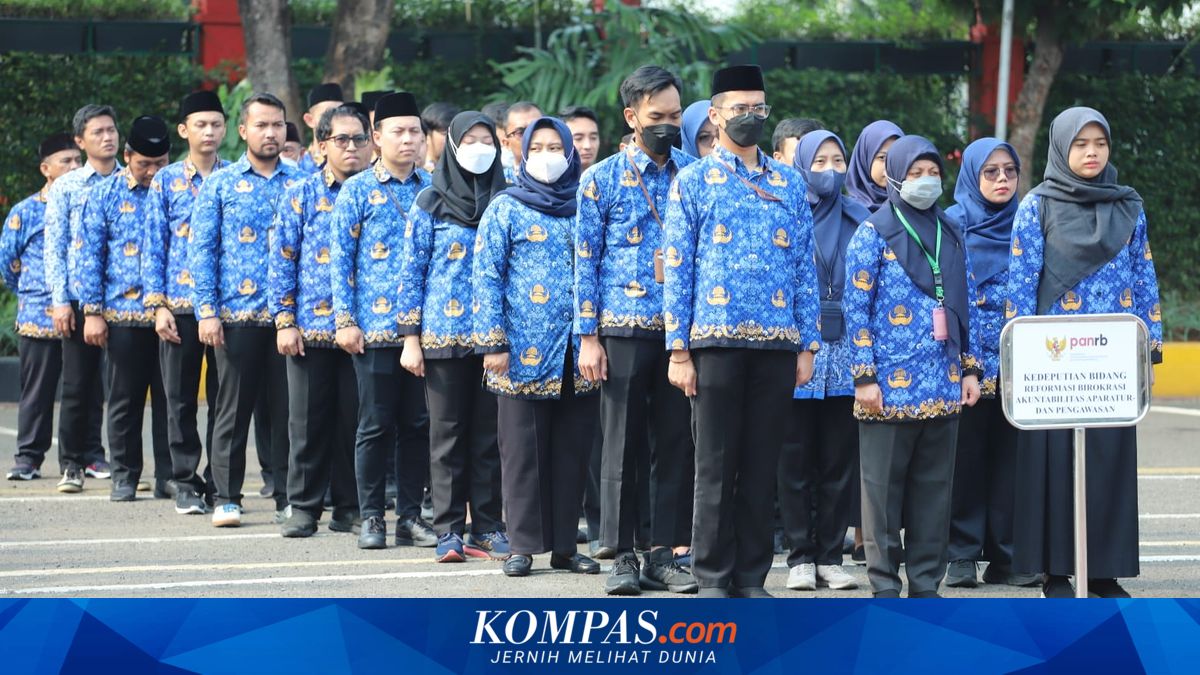
JAKARTA, KOMPAS.com - The government’s plan to implement a work from home (WFH) policy one day per week has drawn attention from academics and the House of Representatives (DPR). They have reminded that the policy should be formulated carefully through thorough studies, gradual trials, and appropriate sector mapping to avoid disrupting work productivity or the quality of public services. Public policy expert from Universitas Gadjah Mada (UGM), Agustinus Subarsono, believes that WFH implementation should not be done simultaneously across all agencies. According to him, the government needs to conduct a comprehensive study and start the policy through pilot projects. He suggests conducting trials in several ministries in Jakarta as well as some provincial governments. In this way, agencies will have time to prepare standard operating procedures (SOP), including determining the types of work that can be done remotely. According to Agustinus, readiness for WFH implementation is not only determined by the sector but also by the level of position in the bureaucracy. Structural officials at echelon I, II, and III levels are considered more feasible to carry out WFH because their work is conceptual and managerial in nature. In addition, the analyst group is also considered more flexible in working remotely, while operational and administrative work still requires physical presence in the office. Creative work such as graphic designers, video editors, as well as online tutors and course instructors, is also considered compatible with remote work systems. On the other hand, sectors that require direct presence such as medical personnel, transportation and logistics, machine operators, and quality control are considered unsuitable for implementing WFH. From a supervision perspective, Agustinus believes that employees carrying out WFH can be evaluated based on output through daily or weekly targets, key performance indicators (KPI), and task completion deadlines. Alternative methods include time-based monitoring through timesheets, screenshots of work activities, or periodic short online meetings.