
Government's 5 Energy-Saving Measures: WFH for Civil Servants to Efficiency in MBG Programme
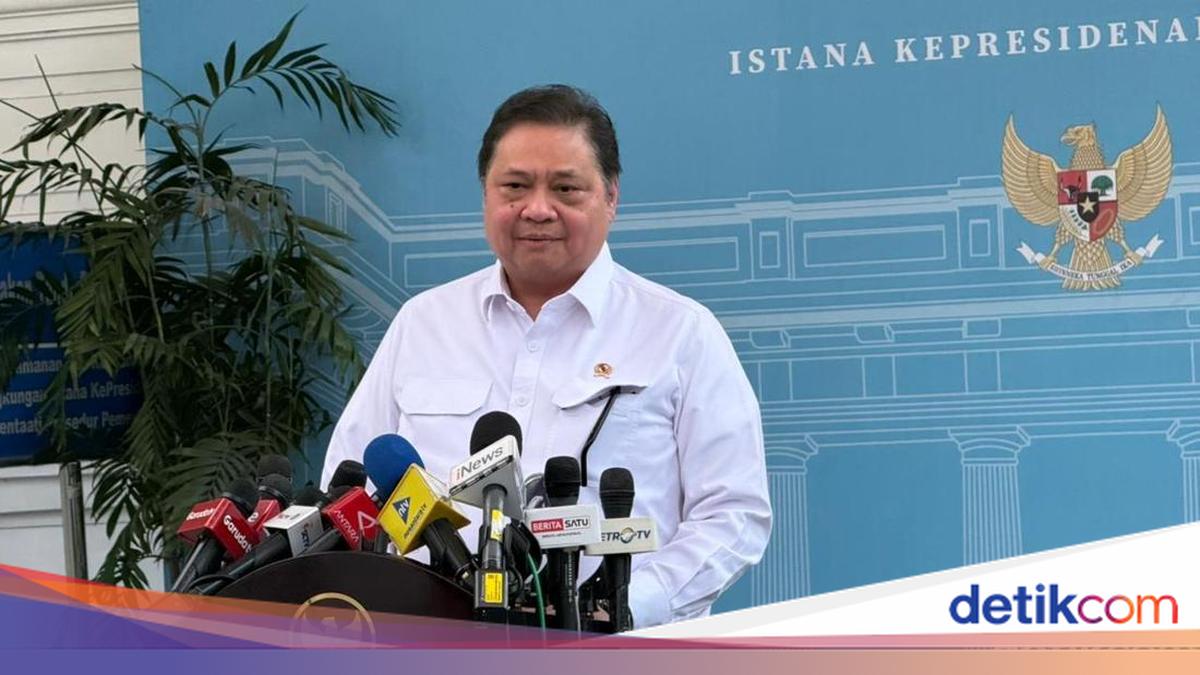
The central government has taken several steps to save energy amid the crisis caused by the war raging in the Middle East. Policies ranging from work from home (WFH) to budget efficiency are being implemented to cut costs.
This government decision was conveyed on Tuesday (31 March 2026) by Coordinating Minister for the Economy Airlangga Hartarto. These policies will take effect in April 2026.
Here are the steps taken by the government:
- WFH for Civil Servants Every Friday
Airlangga conveyed the government’s decision regarding working from home or WFH for civil servants for one day per week. That one day of WFH will apply every Friday.
“The implementation of work from home for civil servants in central and regional agencies for one working day per week, namely every Friday,” said Coordinating Minister for the Economy Airlangga Hartarto during a virtual press conference.
Airlangga stated that this policy only applies to civil servants (ASN). The policy also aims to encourage digital-based service governance.
Airlangga then explained the reason for choosing Friday for WFH for civil servants. He said the policy has been calculated based on post-COVID handling experience.
“Why Friday? Because some ministries have already done that, working four days a week with applications, this post-COVID,” said Airlangga.
- Private Sector WFH Tailored to Each Business Sector’s Needs
Then, Airlangga also revealed that there will be a WFH policy for private sector workers. However, the policy will be adjusted to the needs of each business sector.
“The implementation of work from home for the private sector will be further regulated in a Circular from the Minister of Manpower,” said Airlangga Hartarto during the press conference.
Airlangga stated that the WFH schedule will start from 1 April and will differ for each business sector. The policy follows the characteristics and needs of each business sector.
“While still considering the characteristics and needs of each business sector,” he said.
- Official Vehicle Usage Limited to 50%
Next, Airlangga mentioned that the government is also regulating the use of official vehicles. The government will limit the use of official vehicles to 50 per cent.
“Efficiency in mobility, including limiting official vehicles to 50 per cent except for operational and electric vehicles,” said Airlangga Hartarto.
Alongside this, he encouraged the use of public transport. In this way, he said the policy could reduce the use of fuel oil (BBM).
“Encouraging the use of public transport. So reducing official vehicles and using public transport to the maximum extent possible,” he stated.
- Domestic and International Official Travel Restricted
In addition, Airlangga restricted official travel for domestic and international purposes. Travel abroad is even limited to 70 per cent.
“Then efficiency in domestic official travel up to 50 per cent and abroad up to 70 per cent,” said Airlangga.
Airlangga stated that this policy will be regulated in a Circular from the Minister of Home Affairs. “This will be regulated by a Circular from the Minister of Home Affairs,” he emphasised.
This policy will take effect from 1 April. The government emphasises that the implemented efficiencies do not reduce the performance and services of civil servants to the public.
- Efficiency in the MBG Programme
Furthermore, the government is even carrying out efficiencies on President Prabowo Subianto’s priority programme, namely the Free Nutritious Meals (MBG). The policy is that MBG will only be provided for five days per week.
“The government is encouraging the optimisation of the MBG programme, and this programme is directed towards providing fresh food for five days a week,” said Airlangga.
However, Airlangga mentioned that the distribution of MBG must consider several exceptions, from 3T (Underdeveloped, Frontier, Outermost) areas to areas with high stunting rates. Airlangga said this policy saves the state budget by up to Rp 20 trillion.
“Still considering exceptions such as for dormitories, 3T areas, and areas with high stunting rates. The potential savings from this activity reach Rp 20 trillion,” he said.
Airlangga added that the various efficiency steps taken by the government are part of structural transformation towards an efficient economy. He also asked all of society to support it.
“The government invites all of society and the business world to remain productive and participate actively in supporting this efficiency and work culture,” he added.