
Government Urged to Take Responsibility for Death of Riau Firefighter Muharmizan
“Peace is not merely the absence of war. It is a virtue,” wrote the philosopher Baruch Spinoza.
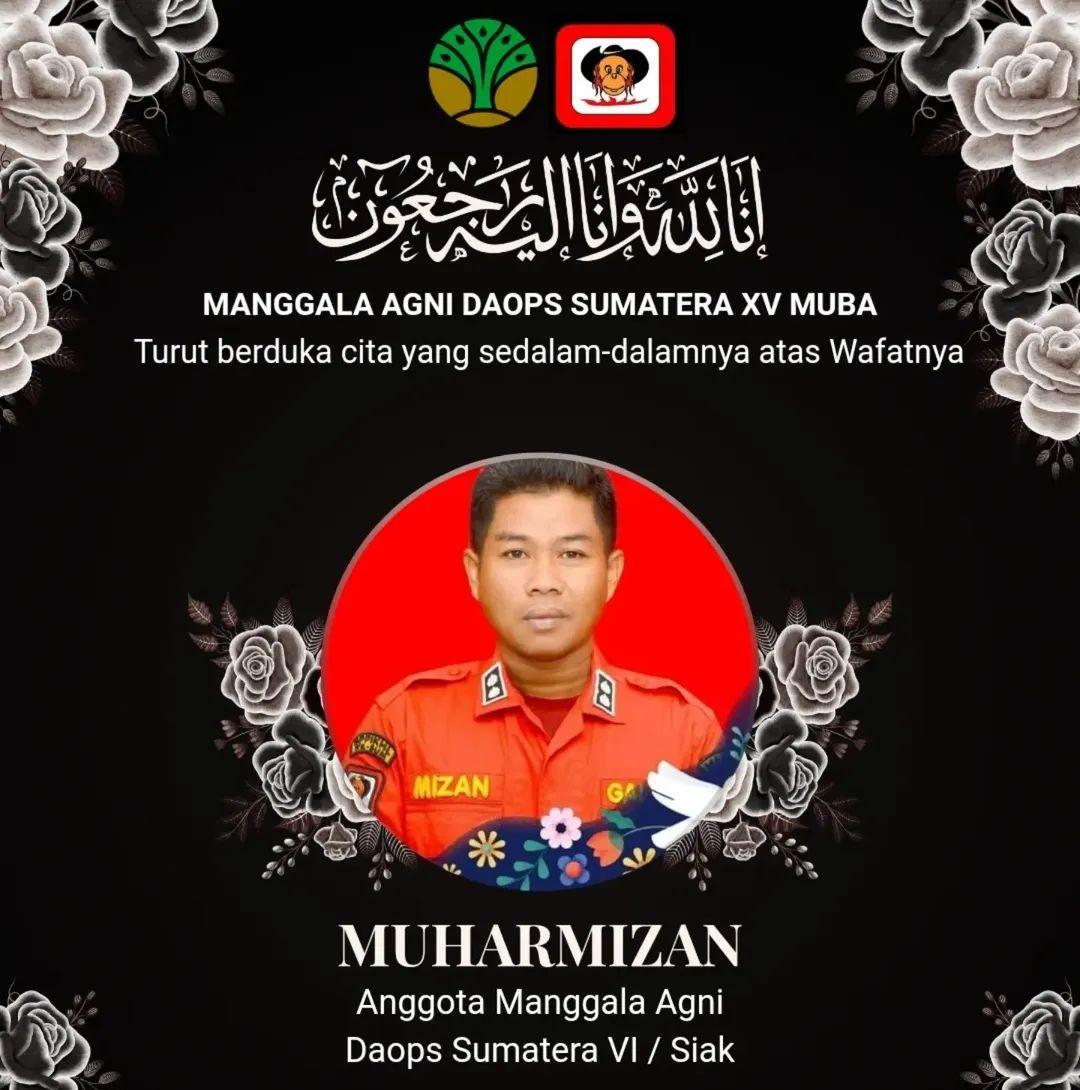
The Jaringan Kerja Penyelamat Hutan Riau (Jikalahari) has conveyed deep condolences over the death of Muharmizan, a member of Manggala Agni Daops Sumatra VI/Siak, while carrying out forest and land fire (karhutla) suppression duties on Bengkalis Island on 30 March 2026. This event is regarded not just as a misfortune, but as a severe warning regarding the failure of peat ecosystem governance in Riau.
Muharmizan breathed his last on Monday night (30/3), after two days of battling the fire in the field. The deceased reportedly collapsed while having dinner after the suppression operation and was pronounced dead by medical personnel. In addition to being a firefighter, Muharmizan was known as an instructor for the Fire-Concerned Community (MPA) in four Village Forest Management Institutions (LPHD) supported by Jikalahari.
“This tragic incident should not have happened if the causes of karhutla were seriously addressed. We see that there is no serious policy for peat ecosystem restoration in Riau; instead, policies at both central and local levels have experienced serious setbacks,” emphasised Jikalahari Coordinator Okto Yugo Setiyo on Wednesday (1/4).
Muharmizan’s passing adds to the long list of environmental fighters who have lost their lives due to karhutla in Riau. Jikalahari records similar previous incidents:
[Jikalahari assesses the deaths of these personnel as a direct impact of the central and local governments’ inability to permanently stop karhutla.]
Okto highlighted the dissolution of the Peat and Mangrove Restoration Agency (BRGM) during President Prabowo’s leadership via a letter from the Minister Secretary of State in April 2025 as a backward step. The splitting of restoration functions to various ministries is considered to make peat handling unfocused.
“The dissolution of BRGM has made peat restoration uncoordinated. It is no surprise if in the future, peat fires that are difficult to extinguish will grow larger,” said Okto.
Satellite imagery analysis from Suomi NPP–VIIRS detected 1,708 hotspots in Riau. As many as 1,530 points or 90% are located in peatlands with depths of 0.5 to more than 4 metres.
Jikalahari’s analysis found that hotspots are still frequently found in corporate concession areas. There are 306 hotspot points in concession areas, with details:
[Jikalahari assesses that the Riau Provincial Government is negligent in implementing Riau Provincial Regulation Number 1 of 2019 on Karhutla Prevention. Mandates for peatland arrangement, corporate infrastructure compliance audits, and periodic supervision are considered not to be running optimally.]
In response to these conditions, Jikalahari urges several concrete steps:
“The RTRW Provincial Regulation must be immediately discussed to rearrange and protect peatlands. This is the main key to stopping karhutla and preventing further loss of life,” concluded Okto.