
Government Urged to Monitor Imported Buffalo Meat Prices Ahead of Eid al-Fitr
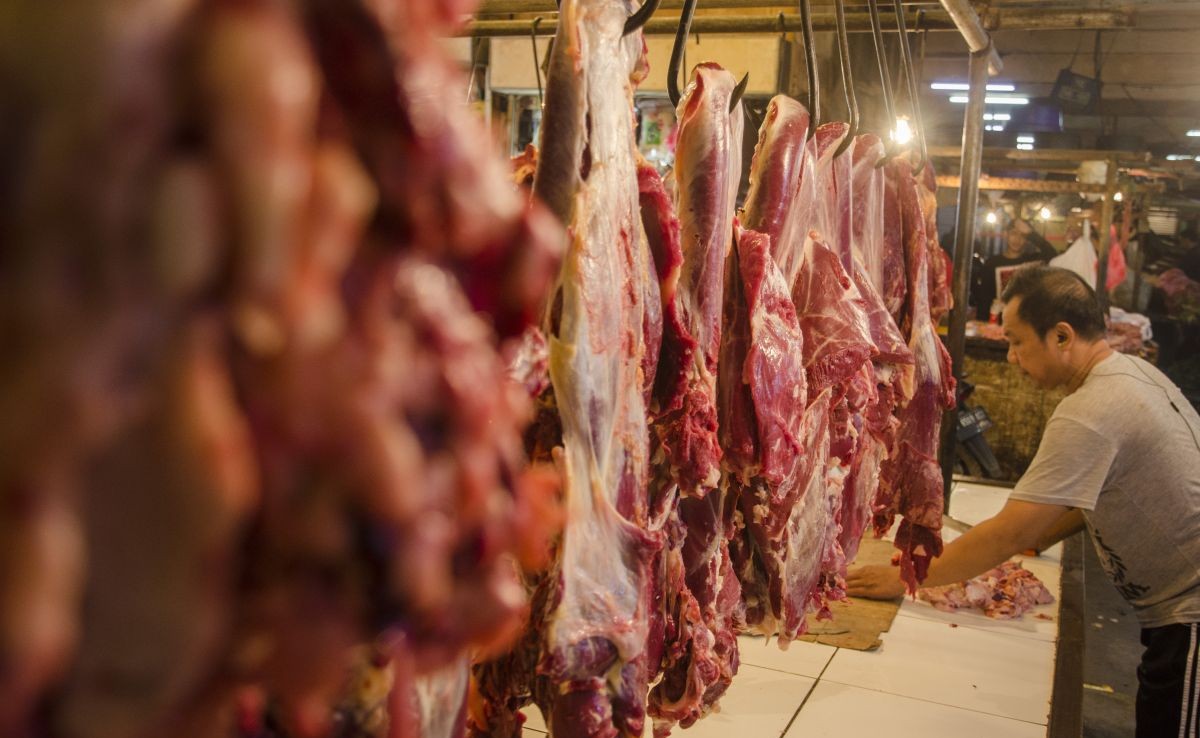
Indonesia’s Association of Meat Cutters and Traders (Jappdi) has urged the government to monitor not only beef trade but also imported buffalo meat circulating in the market ahead of Eid al-Fitr 1447 Hijri. Jappdi Chairman Asnawi contended that government oversight of food prices has been unbalanced. He argued that beef traders frequently face pressure when selling above reference prices, whilst imported buffalo meat prices, which far exceed the reference purchase price, are not subject to strict oversight.
“The government is unjust in monitoring food prices, particularly beef. Imported buffalo meat prices that have skyrocketed and violated the National Food Agency regulations are simply being permitted,” Asnawi stated in remarks made in Jakarta on Monday, 9 March.
He explained that this situation contradicts the National Food Agency (Bapanas) Regulation Number 12 of 2024, which establishes reference purchase and selling prices for various food commodities, including beef and buffalo meat. According to Bapanas data, the average price of imported buffalo meat on 9 March 2026 reached 107,667 rupiah per kilogram, well above the reference price set at 80,000 rupiah per kilogram. According to Asnawi, this difference indicates imported buffalo meat is nearly 35 per cent above the reference price, meaning the government should undertake market intervention.
However, he contended that such measures have not been implemented despite price increases occurring well before Ramadan. In fact, average prices on Java reached 120,000 rupiah per kilogram, or approximately 50 per cent above the reference price.
Asnawi argued that the government and the National Price, Food Security and Quality Enforcement Task Force (Satgas Saber) should address producers or distributors selling above reference prices. “They are not accused of criminality as beef traders are when they sell above the reference price. Instead, they are permitted to trade. This is deeply unjust,” he said.
Currently, the government has tasked two state-owned enterprises, PT Berdikari and PT Indonesia Trading Company (PPI), with importing buffalo meat. Based on the 2026 Commodity Balance Sheet, the total meat import quota reaches 297,000 tonnes. The majority of this quota is allocated to state-owned enterprises, whilst private companies receive only 30,000 tonnes, with approximately 17,000 tonnes allocated for industrial use.
Additionally, the government has allocated a beef import quota of 150,000 tonnes to Berdikari and PPI from Brazil and other countries. This policy is viewed as reducing the import allocation for private companies, which previously reached 180,000 tonnes last year, to 30,000 tonnes this year.
Responding to government claims that beef prices remain stable and within the reference price range, Asnawi contended that this condition may apply in areas outside the Greater Jakarta region. According to Bapanas Regulation Number 12 of 2024, reference prices for beef range from 130,000 rupiah per kilogram for front legs to 140,000 rupiah per kilogram for back legs. However, he argued that traders in the Greater Jakarta area struggle to sell at these reference prices.
“In Greater Jakarta, it is genuinely difficult for traders to sell at the reference price. Consequently, some traders reduce meat quality to be able to sell at the reference price,” he emphasised.
Beef prices in several markets in South Jakarta were reported as relatively stable ahead of Chinese New Year celebrations.
Heading into Ramadan, beef prices in markets have increased. The price surge occurred after traders ended a three-day trading boycott at the end of January.
Perumda Dharma Jaya has predicted beef prices will rise approximately 7 to 15 per cent during the Ramadan and Eid al-Fitr 2026 period.
Beef slaughterhouse operators at RPH Jatimulya Bekasi have reaffirmed their commitment to maintaining stable prices heading into Ramadan through Eid al-Fitr 2026.
In addition to chicken, red chilli and beef prices in Medan have also recorded increases in early February.