
Government Urged to Leverage Diaspora to Weather Trump Tariff Shocks
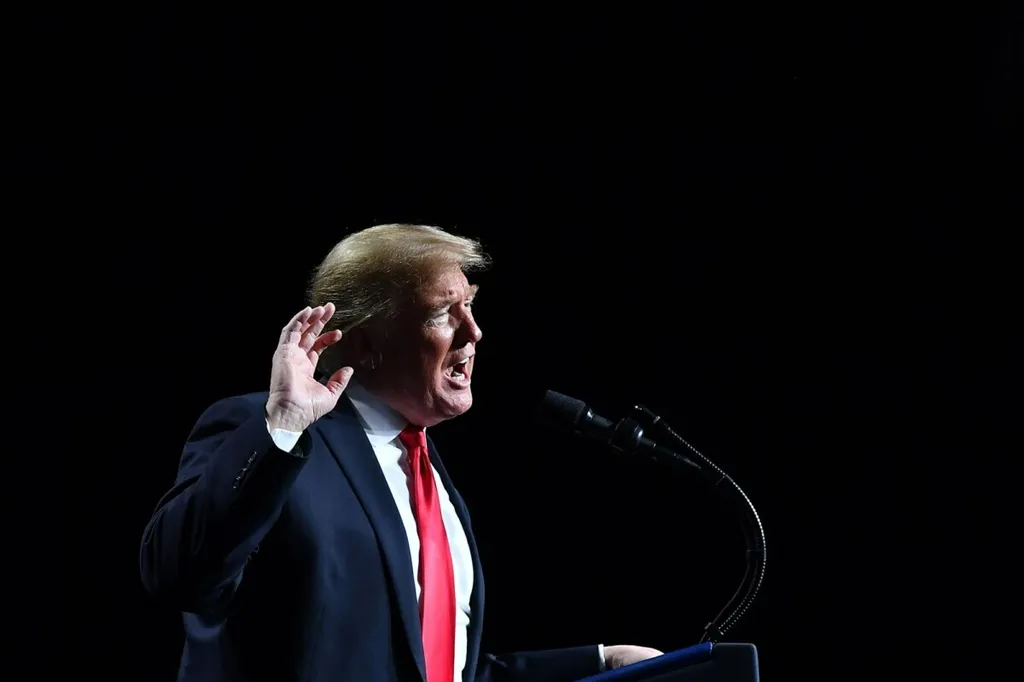
JAKARTA, KOMPAS — The government needs to be astute in optimising the Indonesian diaspora to withstand economic turbulence caused by United States President Donald Trump’s tariff policies. Diaspora communities can serve as keen assessors of market opportunities across various countries.
Amid the uncertainty surrounding Trump’s tariff decisions, Indonesia should be able to hold firm by harnessing the strength of its diaspora, who are considered capable of driving innovation and expanding Indonesia’s markets on the international stage.
“If we have diaspora contacts there, they can certainly provide additional income. We can also understand what the situation is like in those countries,” said Benny Sutrisno, Chairman of the Indonesian Exporters Association (GPEI), at the President Club Business Forum in Jakarta on Wednesday (28/5/2025).
The event, themed “Seizing Business Opportunities in the Era of Trump’s Tariff Policies”, featured several other speakers including Nurul Ichwan, Deputy for Investment Promotion at the Ministry of Investment and Downstreaming/BKPM, and Darmono, CEO of Jababeka Group, moderated by retired Kompas journalist Budiman Tanuredjo.
The role of the diaspora spread across numerous countries is considered vital, though their involvement needs to be revitalised to function optimally. Benny cited past collaboration with the Ministry of Foreign Affairs to hold online meetings with diaspora members, gathering Indonesian entrepreneurs abroad to discuss opportunities in their respective countries.
China has long employed this approach through its famous Chinatowns across the globe. Such efforts should serve as a foundation during times of global uncertainty like the present. Africa could become a promising market, with its population approaching 2 billion people requiring diverse goods ranging from basic necessities such as food to footwear and backpacks.
Benny urged the government to support diaspora efforts and avoid creating overly complex regulations. “If a permit isn’t needed, why require one?” he said.
He added that the government has the Indonesia Eximbank and the Indonesian Export Insurance Agency at its disposal. Both institutions should be utilised during difficult times such as these. “Export insurance means that when we export to a country where there are doubts about payment, it can be insured. The insurance agency works with local insurers there. But this hasn’t been maximised yet,” he said.
Diaspora members in other countries can act as sales agents gathering diverse information, making it essential to build and maintain relationships with them. Benny likened the current plight of struggling exporters to the Covid-19 pandemic era, arguing that the government should play its part by relaxing various policies from both the banking sector and the Financial Services Authority (OJK). Both institutions continue to apply normal policies despite the abnormal conditions.
At the same event, Nurul Ichwan said the government is working to anticipate the risks of rising US tariffs. The US is Indonesia’s second-largest export destination after China, accounting for 23.3 per cent in 2023, rising to 26.3 per cent in 2024.
Nurul expressed confidence that Indonesia, subject to a 32 per cent tariff, still has the opportunity to capture export share from neighbouring countries hit harder by Trump’s tariffs, including Vietnam (46 per cent), Bangladesh (37 per cent), Thailand (36 per cent), and China (34 per cent).
However, Indonesia’s export competitiveness also faces threats from countries with lower tariffs: the Philippines (17 per cent), Malaysia (24 per cent), South Korea (25 per cent), and India (26 per cent).
“Whichever products we can do better than India, those are what we should focus on. Footwear and leather products can seize opportunities from Vietnam and China, though we won’t compete directly with China. This should be our consideration,” he said.
Nevertheless, certain commodities remain unaffected by reciprocal tariffs and are difficult to negotiate, including specific energy and mineral resources unavailable in the US. However, natural resource advantages alone are insufficient due to limited technology. In the future, no country will be able to influence others whilst distancing itself from the technology sphere, as this will drive global political economy.
To attract more investors to Indonesia, the government is intensifying various incentives, including special economic zones (SEZs) where additional incentives beyond the standard offerings are provided. Among these, Nurul noted, is the super tax deduction — a tax incentive for industries participating in vocational programmes in accordance with existing regulations.
Tax incentives are provided for vocational activities as well as research and development (R&D). Training provided to individuals who are not employees of the company allows for gross income deductions of up to 200 per cent of the amount spent. For R&D, deductions can reach 300 per cent.
“We suggest to companies that when entering Indonesia, it takes 1.5 to 2 years to build the industry. But for the first two years, we encourage them to collaborate with universities and training institutions on the absorbed technologies that the industry will use in Indonesia,” said Nurul.
The expectation is that by the time a company is ready to operate in Indonesia, a trained workforce will be available for recruitment, having already completed training to the required standards.
According to Darmono, business leaders need to be perceptive in identifying opportunities amid economic turbulence, which should serve as a trigger for innovation. “The question is simply how we view the situation. In reality, money passes before our eyes every day, but some can see it and others cannot,” he said.
Optimism must be maintained as it is the key driver of innovation and the ability to spot business opportunities. The current economic turmoil has indeed had both positive and negative effects on many entrepreneurs — some have seen their exports surge unexpectedly, whilst others have faced delays as they are unable to ship their commodities.