
Government to Follow Global Tax Agreement, Here Are the Changes!
Jakarta, CNBC Indonesia - The government plans to extend the tax holiday incentive policy that ended on 31 December last year. However, there will be slight modifications to the policy considering the global agreement on the implementation of the global minimum tax (GMT).
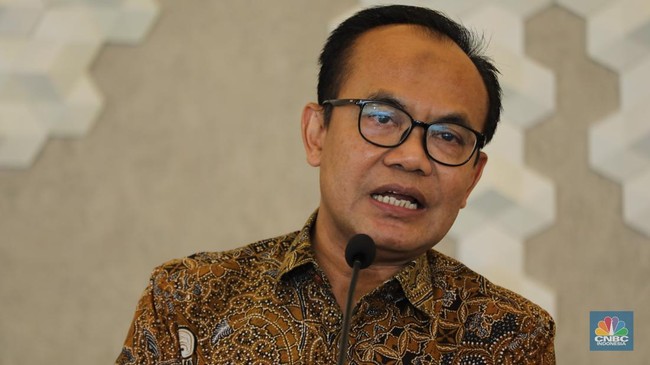
Secretary of the Coordinating Ministry for Economic Affairs, Susiwijono Moegiarso, explained that the GMT incentive scheme has been implemented in many countries. Therefore, Indonesia needs to adjust its policies accordingly.
“Various incentives of ours will begin to be reviewed, and I think not only in Indonesia, GMT is in all countries. We will see that so far various investment attractions of ours rely on tax holidays and tax loans,” said Susi when met at Djakarta Theater, Central Jakarta, Wednesday (15/4/2026).
As is known, the provision of tax holiday incentives is regulated in Minister of Finance Regulation (PMK) Number 130 of 2020 and ended on 31 December 2025. However, there are several regulations in the policy that need to be reviewed.
He revealed that the adjustment of tax incentives is part of the government’s strategy to anticipate global developments. Thus, Indonesia’s investment competitiveness can be maintained.
“I think it is also part of the government’s strategy to anticipate global developments, so that it is in line, because investors are cross-country, so the tax treatment, the incentives must be adjusted to our international commitments,” he said.
Previously reported, the Director General of Taxation of the Ministry of Finance, Bimo Wijayanto, revealed that the implementation of the Global Minimum Tax (GMT) policy in Indonesia will fully commence in 2026.
The GMT scheme applicable in Indonesia is the imposition of top-up tax for multinational companies (MNCs) with a minimum consolidated gross turnover of 750 million euros and not paying tax in the countries where they operate at a minimum rate of 15%.
“For the 2025 tax year, top-up tax payments are to be made no later than as stipulated on 31 December 2026,” said Bimo during a working meeting with Commission XI of the DPR, Jakarta, Monday (24/11/2025).
The calculation of top-up tax in Indonesia utilises the mechanisms of income inclusion rules (IIR), undertaxed payment rules (UTPR), and qualified domestic minimum top-up tax (QDMTT).
IIR is a provision that requires the Ultimate Parent Entity of an MNC Group to pay additional tax on its Constituent Entities that are subject to an effective tax rate of less than 15%. Meanwhile, QDMTT is a policy that ensures the minimum tax is at least paid in the country of origin.
Then, UTPR is a provision that applies if IIR is not implemented by the domicile country of the Ultimate Parent Entity/Intermediate Parent Entity in its domestic provisions. The additional tax imposed based on UTPR is the same as the additional tax based on IIR, which will then be allocated to all UTPR jurisdictions based on a certain formula.
Bimo explained that in 2025, the IIR and DMTT calculation mechanisms will actually begin to apply, accompanied by socialisation to taxpayers and tax authorities, IT infrastructure preparation, preparation of the Director General of Taxation Regulation on GMT Administration Procedures, and preparation of exchange of information (EOI) between countries.
Meanwhile, in 2026, he assured that UTPR will begin to apply, alongside the start of implementation of global minimum tax payments for the 2025 tax year, as well as socialisation to taxpayers and tax authorities, IT preparation, and EOI.
In 2027, he said that the submission of Global Anti-Base Erosion (GloBE) Information Return (GIR) and notifications from constituent entities to the Director General of Taxation, submission of tax returns in implementing GloBE, and implementation of EOI will also begin to apply.
Finally, in 2028, risk assessment will be conducted, accompanied by the exchange of GIR and notifications with countries that have agreed to implement GMT in accordance with the OECD initiative.