
Government to Examine Subsidies for CNG Gas to Replace LPG
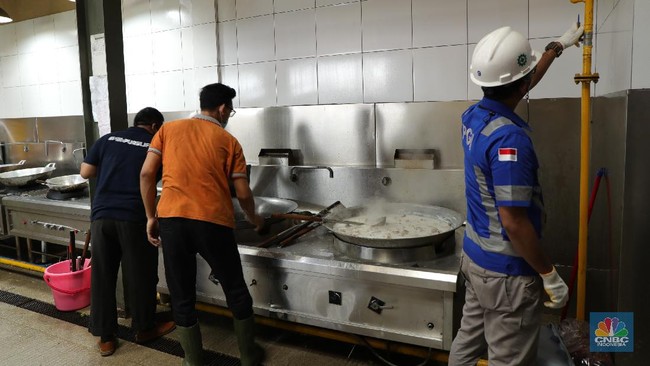
The Ministry of Energy and Mineral Resources (ESDM) continues to seek alternatives to the use of Liquefied Petroleum Gas (LPG). One option is the adoption of Compressed Natural Gas (CNG). Energy Minister Bahlil Lahadalia is examining the possibility of providing subsidies for CNG usage. “Everything is being studied. The subsidy option is still necessary; it’s just a matter of determining the volume, which we need to assess,” Bahlil explained after a limited meeting at the State Palace on Tuesday (5/5/2026). As is known, Indonesia’s LPG needs are still supported by imports amounting to 75% to 80%, with 7 to 8 million tonnes used for household purposes. The issue arises when political turbulence, like the current situation, requires certainty in LPG imports. “Therefore, we are formulating alternatives. CNG is one of them. CNG is already used by hotels, restaurants, and MBGs—it’s in place, but classified for 20kg and above, or 10kg and above,” Bahlil clarified. Currently, they are trialling CNG in smaller sizes, such as 3kg. It is estimated that the trial could be completed in 2-3 months. “In 2-3 months, we will have the results, and if it’s confirmed, we will proceed with the conversion. Why? Because CNG’s raw materials are all available domestically—C1, C2 gas,” Bahlil stated. Based on existing studies, Bahlil estimates that CNG usage will be cheaper than LPG, saving about 30%. “Why is it cheaper? First, the gas is available domestically, and the industry is here too, within the country. So, no imports are needed, and just the transportation costs alone can cover it. Second, it is available in almost all regions with gas sources, making it far more efficient. And if asked whether it performs well, on a large scale, it already does. In Java regions, CNG is already used by hotels, restaurants, and MBG kitchens,” Bahlil emphasised.