
Government to Build 34 Waste-to-Energy Power Plants by 2027
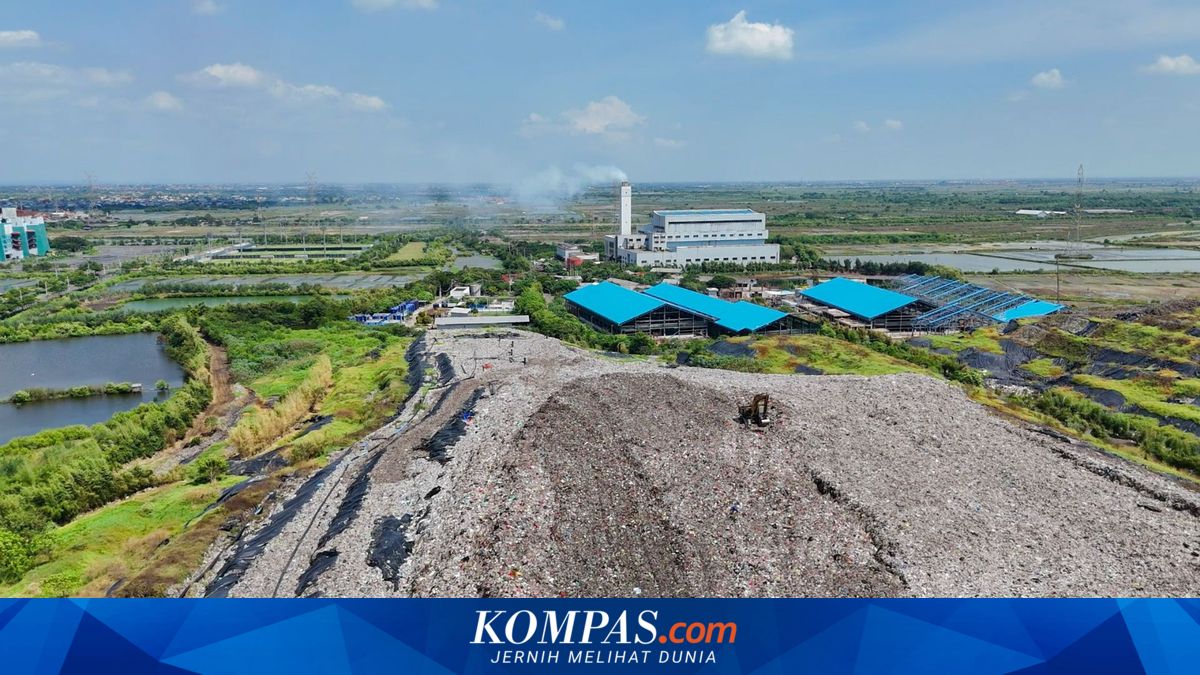
JAKARTA - The government will build 34 waste-to-energy (WtE) or Waste-to-Electricity Power Plant (PLTSa) projects spread across 34 cities through 2026-2027. These projects serve as a solution to the waste problem that is beginning to pose a real threat in various regions, where final disposal sites (TPA) are increasingly full while the volume of waste continues to increase every day. Vice Minister of Energy and Mineral Resources (ESDM) Yuliot Tanjung stated that the government projects that almost all TPAs in Indonesia will experience excess capacity at the latest by 2028 if there is no significant breakthrough. “Urban waste management is a priority activity that receives direct oversight from President Prabowo. Therefore, serious and systematic efforts are needed so that urban waste no longer becomes a source of problems, but instead provides benefits,” he said in a written statement on Thursday (16/4/2026). Yuliot also directly inspected one of the Waste-to-Electricity Power Plant (PSEL) projects at the Benowo TPA in Surabaya on Wednesday (15/4/2026). The power plant is built and operated by PT Sumber Organik and was inaugurated by the 7th President of the Republic of Indonesia Joko Widodo (Jokowi) on 6 May 2021. On that occasion, the President Director of PT Sumber Organik Agus Nugroho Santoso said that his company manages waste from the people of Surabaya and surrounding areas with a volume of 1,600 tonnes per day. Unlike waste management in many other places that only handles new waste, PT Sumber Organik also processes old waste piles so that they can be reused. “We process waste piles, both old and new waste, into useful materials,” said Agus. The facility will process plastic waste into renewable diesel-equivalent fuel through a pyrolysis process. This process begins with sorting or handpicking plastic waste, then heating it in a pyrolysis machine with a flue gas treatment system to meet the environmental emission standards set by the Ministry of Environment. Currently, the waste-to-fuel facility is still in the construction phase. Based on initial trials, the facility is projected to produce renewable fuel oil (BBMT) of 60-70 kilolitres per day, with processing capacity that can be adjusted to the waste volume in each city.