
Government targets swift inclusion of waste processing technology in e-catalogue
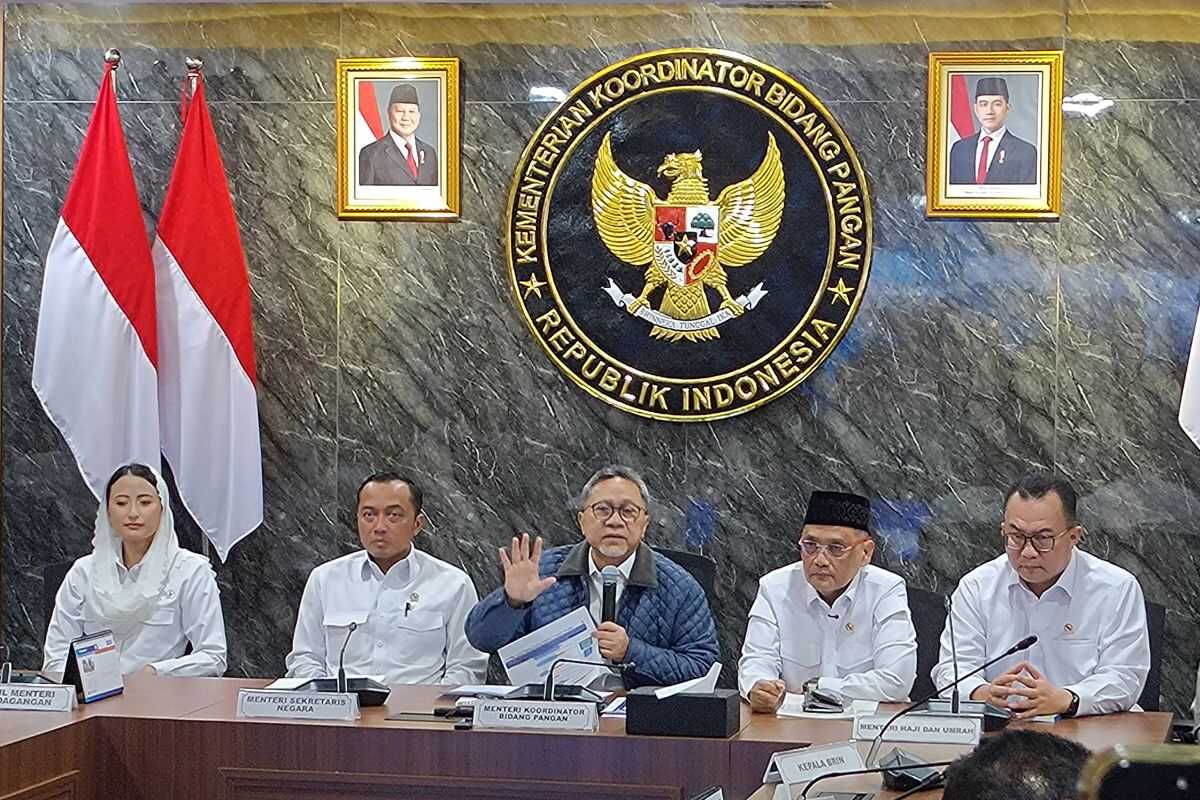
Jakarta (ANTARA) - Coordinating Minister for Food Zulkifli Hasan has set a target for waste processing technology equipment for regional needs to be listed in the electronic catalogue (e-catalogue) within one month, in order to accelerate the handling of the waste emergency.
“We are targeting [waste processing technology] to be in the e-catalogue within one month, so that communities can purchase or utilise it,” said Zulkifli Hasan, commonly known as Zulhas, following a limited cross-ministerial coordination meeting in Jakarta on Monday.
He explained that the coordination meeting he chaired addressed two main agenda items, one of which was the acceleration of waste processing technology implementation following President Prabowo Subianto’s directive that the waste problem had reached emergency levels.
Zulhas said the government would continue the waste-to-energy (WTE) programme through waste-to-electricity processing facilities (PSEL), now designated for 33 cities, reduced from the previous 34.
“PSEL remains in place — it was previously 34, now it covers 33 cities,” he said.
For DKI Jakarta, he noted that PSEL implementation is planned across three locations despite being within a single administrative area: two facilities in the Bantar Gebang area in Bekasi City and West Jakarta, and one facility in Sunter, North Jakarta.
However, according to Zulhas, the WTE rollout across the 33 cities is projected to resolve only around 20 per cent of the national waste problem, prompting the government to prepare further measures to address the remaining 80 per cent.
“If waste-to-energy is operational in all 33 cities, only 20 per cent of the waste problem will be resolved. There is still 80 per cent that we have yet to address,” he said.
He conveyed that the meeting decided to divide the handling of the remaining 80 per cent of waste into four technology categories: integrated waste processing facilities (TPST) without refuse-derived fuel (non-RDF), TPST with RDF, reduce-reuse-recycle waste processing sites (TPS 3R), and organic waste processing directly from sources or communities.
According to Zulhas, his office has coordinated with and requested the Head of the National Research and Innovation Agency (BRIN), the Minister of Higher Education, Science and Technology, and the Minister of Environment to promptly formulate the types and specifications of technology suited to regional needs, covering both rural and urban areas.
He added that the government would continue to consistently enforce the ban on open dumping practices, meaning that enforcement must be accompanied by the provision of technology solutions accessible to local governments.
“Open dumping is no longer permitted, but there must be solutions available,” he affirmed.
The government is targeting visible, tangible changes in national waste management within the next two years, including addressing large-scale open dumping sites, with a completion target of late 2027 or early 2028.
“In two years’ time, we will see the real results of major change. We can resolve this by the end of 2027 or early 2028,” Zulhas said.