
Government Targets End to Open Dumping by 2026, Regions Urged to Act Swiftly
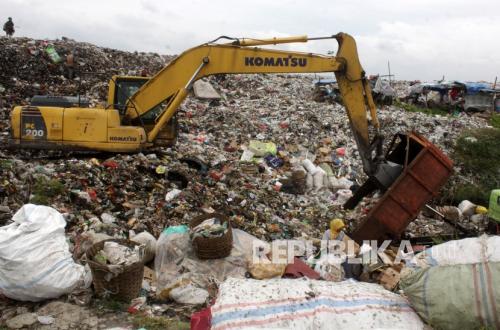
REPUBLIKA.CO.ID, JAKARTA – Environment Minister Hanif Faisol Nurofiq has emphasised that the government targets the cessation of open dumping practices nationwide by no later than 2026, in accordance with the mandate of Law No. 18 of 2008. He has requested that all regents and mayors begin halting such practices by August this year as the initial stage of transitioning to more controlled waste management.
“If by August it has not started, we will take a more intensive approach. At minimum, open dumping practices must shift to controlled landfills,” Hanif stated during the signing of a cooperation agreement on Waste Processing into Electricity (PSEL) with North Sulawesi Province on Monday (13/4/2026).
In this scheme, final processing sites (TPA) are not closed but their systems are modified, with waste piles covered using soil to reduce environmental impacts.
Hanif assessed this step as relatively simple yet significantly impactful on environmental quality. This is especially pertinent given projections from the Meteorology, Climatology, and Geophysics Agency indicating a longer dry season this year, peaking from August to October.
Such conditions heighten the risk of fires at TPA due to methane gas accumulation. The government does not wish to repeat the incidents from 2023–2024, when several TPA in various regions caught fire.
To strengthen enforcement, the Ministry of Environment and Forestry has coordinated with law enforcement agencies, including the police and the Attorney General’s Office, to operationalise criminal and civil sanctions for waste management violations.
Hanif also requested support from regional governments, particularly in North Sulawesi, to accelerate supervision and arrangement of TPA. He emphasised that changes in waste management systems will have broad impacts, from reducing fire risks and disease spread to controlling leachate pollution and microplastics.
Nationally, these efforts are targeted to increase waste management achievements from around 26% to 57%. However, this figure remains below the national target of 63.41%, necessitating additional interventions, including handling at temporary disposal sites (TPS) and illegal TPS.
Beyond downstream changes, Hanif stressed the importance of waste sorting at the source. He reminded that the obligation to sort waste is regulated by law and is the responsibility of the community, while regional governments play a role in coordination and supervision.
“The waste problem actually starts from the lack of sorting. If this does not proceed, there is potential for sanctions in accordance with regulations,” he said.
As an example, he highlighted the steps taken in Bali, which has stopped dumping fresh waste at the Suwung TPA since 1 April. Currently, the TPA only receives residue, while organic waste must be handled at the household level.
According to Hanif, source-level waste management is key to efficiency. Organic waste can be processed through simple methods like composting or burial, while inorganic waste is sorted for recycling or resale.
This approach is deemed capable of significantly reducing management costs. Currently, downstream waste handling costs range from Rp 300,000 to Rp 400,000 per tonne. With sorting, these costs can be reduced to around Rp 150,000 to Rp 200,000 per tonne.