
Government targets 53 per cent national waste management by 2026
Jakarta — The government is targeting a significant increase in national waste management, aiming to reach a minimum of 53 per cent by 2026.
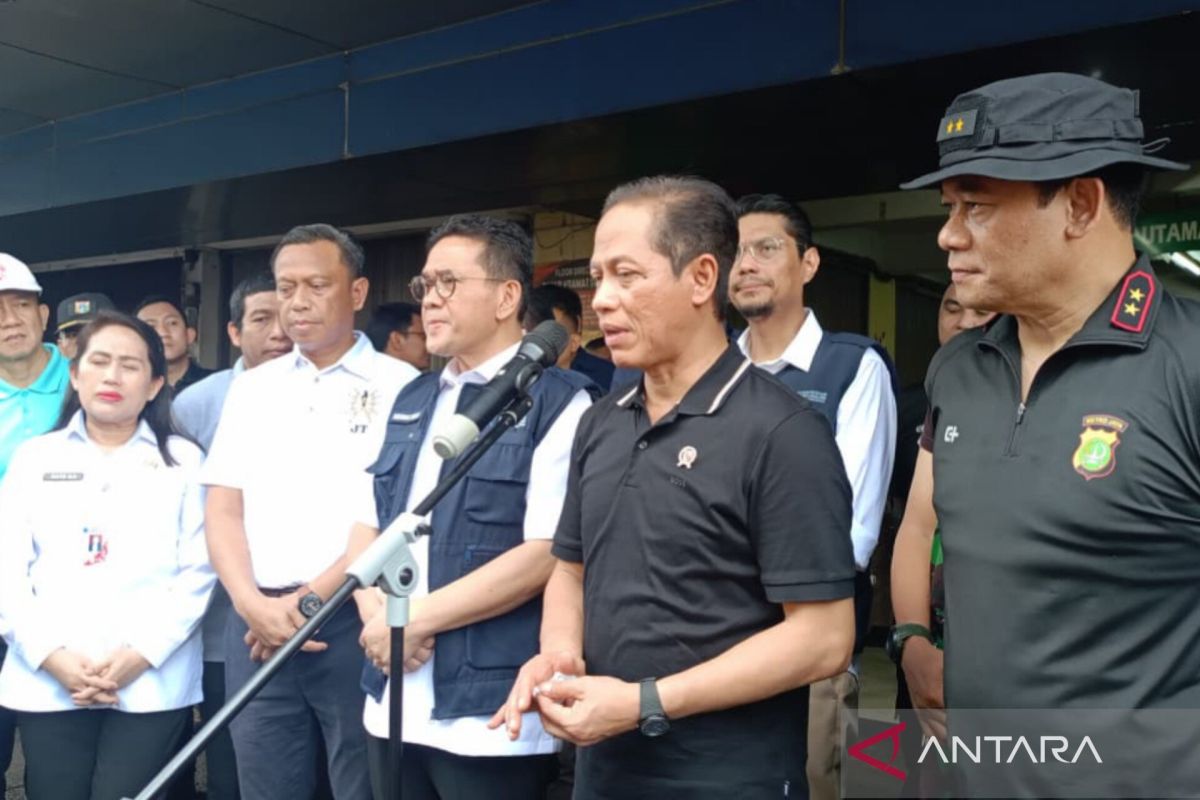
“Our current waste management achievement is only around 24 per cent. By 2026, we are targeting a minimum of 53 per cent. Hopefully, we can achieve the national target of 63 per cent, although that is not easy,” said Environment Minister Hanif Faisol Nurofiq at Kramat Jati Market in East Jakarta on Wednesday.
The target, he said, is part of the national agenda outlined in the National Medium-Term Development Plan (RPJMN) 2024-2029 and represents a direct instruction from President Prabowo Subianto to accelerate improvements in Indonesia’s waste management system.
Hanif noted that the current achievement remains at around 24 per cent, with the 53 per cent target representing an effort to improve national waste management governance. The government is continuing to pursue the national target and has opened the possibility of achieving results in the range of 57 per cent, contingent on consistent acceleration measures being implemented by central and regional governments.
He emphasised that accelerating waste management is critically important given that several landfill facilities (TPA) are already experiencing capacity overflows, including the Bantargebang area.
Hanif stated that the government is driving fundamental changes in the waste management system, particularly by strengthening upstream processing through waste segregation at source. “Waste sorting must be carried out systematically and immediately. Collection must also be scheduled so that organic waste is no longer mixed with inorganic waste,” he said.
He added that in the coming months, the delivery of waste to landfills such as Bantargebang must begin to be restricted. Organic waste is expected to be processed at the upstream level through composting and other treatment technologies, while only inorganic waste will be sent to landfills.
The Environment Ministry is also committed to tightening supervision of waste management in various areas, including industrial estates, residential areas, and by local authorities. Sanctions can include administrative and criminal penalties as stipulated in Law Number 32 of 2009 concerning Environmental Protection and Management.
Hanif disclosed that all area managers have been given a maximum of three months to improve their waste management systems after receiving a government enforcement notice. “We are using legal instruments to ensure all parties comply with waste management regulations,” he stated firmly.
The government views this reform momentum as a turning point in national waste management handling. With full support from the central government, Indonesia is expected to accelerate the transformation of its waste management system towards the national target by 2029. “This must be our turning point in waste management. With measurable targets and strong support from national leadership, we hope the waste problem can be addressed more seriously and sustainably,” Hanif concluded.