
Government strengthens interventions to maintain food prices from producers to consumers
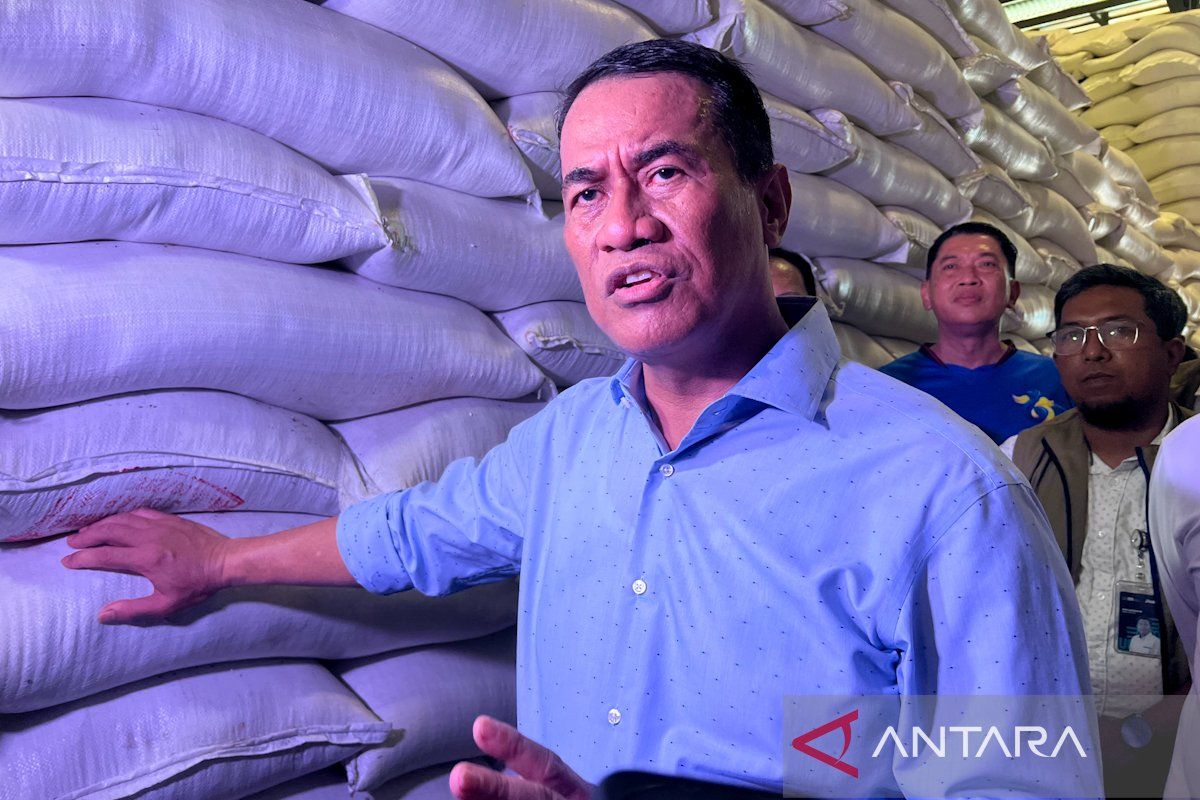
Jakarta (ANTARA) - The National Food Agency (Bapanas) has emphasised that the government is continuously strengthening interventions to maintain food price stability from the producer to consumer levels, aiming to protect farmers, ensure supply, and guarantee affordability for the public, including controlling inflation.
“Alhamdulillah, I convey my thanks. Prices are relatively stable, and all food items are relatively stable. This is shown by BPS (Statistics Indonesia) data. I must support this,” said the Head of Bapanas and Minister of Agriculture Andi Amran Sulaiman in a statement in Jakarta on Monday (4/5).
He appreciated the food situation following the National Major Religious Holiday (HBKN) of Ramadan and Eid al-Fitr 1447 Hijriah/2026 CE. Efforts to maintain food price stability will continue to be maximised, including in preparation for this year’s Eid al-Adha.
“Our dream is for the entire island of Indonesia to achieve self-sufficiency in food, protein, energy, and ethanol. This is our future dream. A strong national defence, if we are food sovereign on every island. Why? Inflation will automatically not occur,” he stated.
Therefore, continued Amran, the deflation occurring in April 2026 will be anticipated by the government by ensuring that prices at the producer level do not fall too low. On the other hand, consumer-level prices will continue to be kept reasonable for the public.
Bapanas recorded that the average price of live broiler chickens has been below the Producer Reference Purchase Price (HAP) set at Rp25,000 per kilogram (kg). As of 3 May, the average price was Rp23,401 per kg. This price has decreased compared to early April, which was Rp23,696 per kg.
The producer price of layer hen eggs has also been observed to continue declining over the past month. The producer HAP for layer hen eggs is set at Rp26,500 per kg. Meanwhile, as of 3 May, the average price was Rp24,890 per kg, whereas in early April it was still Rp25,642 per kg.
To help suppress livestock farmers’ production costs, Bapanas together with Perum Bulog has begun distributing the Food Supply and Price Stabilisation (SPHP) programme for feed maize. This is also to address maize price fluctuations that have exceeded 16.81% from the Reference Sales Price (HAP) at the farmer/consumer level, set at Rp5,800 per kg.
The SPHP feed maize programme targets more than 5,000 farmers consisting of micro, small, and medium scales with a total population of 53 million birds in 26 provinces. For this phase, it is estimated that 213.1 thousand tonnes will be distributed.
Furthermore, to address chilli deflation, Bapanas is promoting Food Distribution Facilitation (FDP) to distribute chilli stocks from surplus areas to regions experiencing chilli price fluctuations.
Eastern Indonesia still records high chilli prices, so FDP of chilli stocks from producer areas such as South Sulawesi or North Sulawesi is possible to overcome this.
The trend of declining inflation in April 2026, including in the volatile food price component (volatile food) or food inflation, indicates the easing of food price pressures following the HBKN of Ramadan and Eid al-Fitr 2026.
Statistics Indonesia (BPS) recorded several strategic food commodities as the main contributors to April’s deflation, including broiler chicken meat, layer hen eggs, bird’s eye chillies, and red chillies.
“The inflation rate in the food, beverages, and tobacco group is generally lower in periods coinciding with the post-Eid moment. This is also in line with the normalisation of demand following the HBKN,” said Deputy for Distribution and Services Statistics of BPS Ateng Hartono in Jakarta on Monday (4/5).
In his presentation, it was mentioned that broiler chicken meat experienced monthly inflation from 3.30% in March to deflation of 6.20% in April. Layer hen egg inflation from 2.34% in March dropped to deflation of 4.29% in April. Bird’s eye chillies and red chillies also experienced deflation of 14.98% and 2.59%, respectively.
As an implication, the food inflation rate, both annually and monthly, also declined. Annual food inflation decreased from 4.24% in March to 3.37% in April.
This figure remains within the government’s target range of 3 to 5%. Meanwhile, dominant commodities contributing to inflation include broiler chicken meat, rice, and layer hen eggs.
Meanwhile, monthly food inflation recorded deflation of 0.88%. The occurrence of deflation every April has been a recurring trend since 2024. In April 2024, deflation was 0.31%. Similarly, in April 2025, deflation was recorded at 0.04%. Food deflation in April 2026 is the deepest.