
Government Strengthens Food Reserves to Face Potential "Godzilla El Nino"
The National Food Agency (Bapanas) states that the government is strengthening the national food reserve to address the potential extreme El Nino or “Godzilla El Nino” in order to maintain the stability of food supply and prices, as well as to anticipate the impacts of prolonged drought.
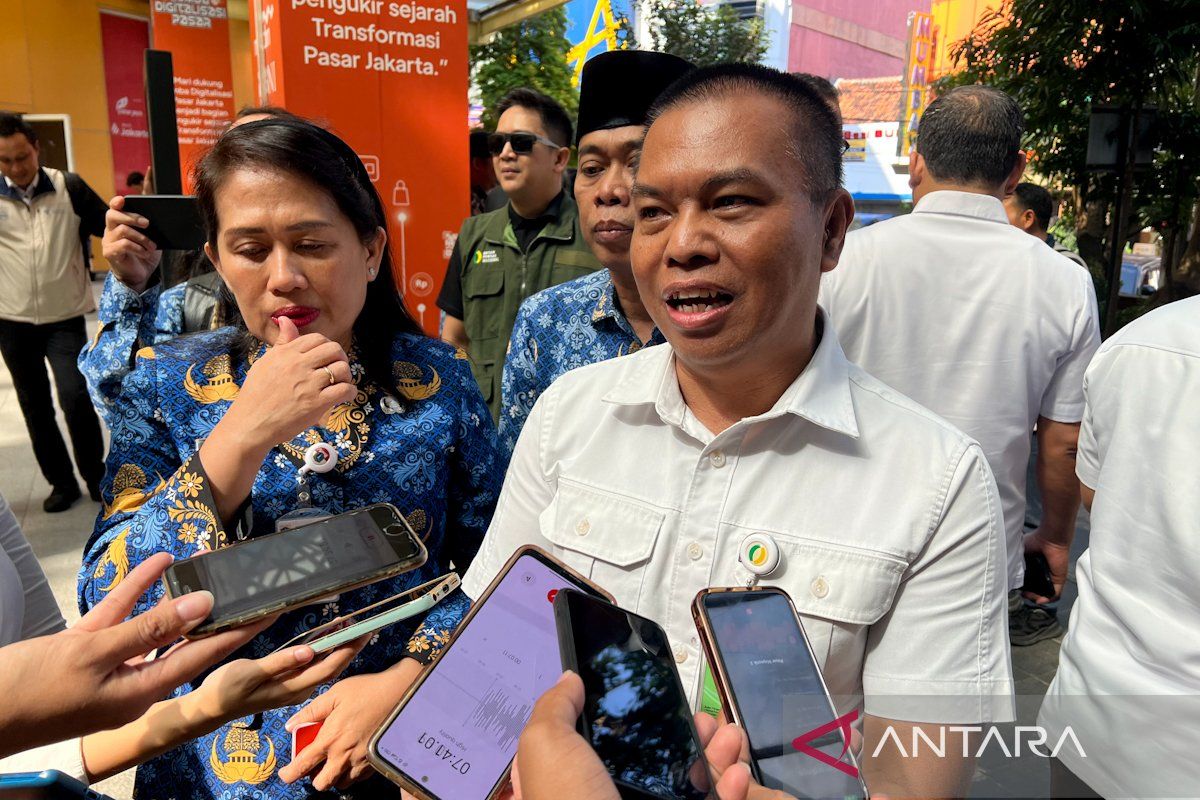
“The prediction of Godzilla El Nino has become a concern for the government. We, in line with the directives of the Head of Bapanas, Mr Andi Amran Sulaiman, are ensuring that the resilience of CPP (government food reserve) stocks is continuously strengthened so that when needed, they can be immediately distributed to assist the public,” said Deputy for Food Availability and Stabilisation of Bapanas, I Gusti Ketut Astawa, when confirmed in Jakarta on Wednesday.
The Godzilla El Nino climate phenomenon, predicted to be strengthened by the positive Indian Ocean Dipole (IOD) phenomenon, is estimated to result in a longer and drier dry season in Indonesia.
The National Research and Innovation Agency (BRIN) states that both phenomena are likely to occur simultaneously starting in April.
He emphasised that with the robust CPP stocks prioritising the absorption of domestic production, food intervention programmes can be implemented quickly and accurately when weather anomalies occur.
“In the Bapanas report as of 25 March, the stocks of strategic staple foods that constitute CPP and are managed by food SOEs, both Perum Bulog and ID Food, are still adequate, with rice as the CPP with the largest stock,” he said.
Meanwhile, other CPP items are also being continuously strengthened, such as maize, cooking oil, consumer sugar, beef/buffalo meat, chicken meat, and chicken eggs.
“Most of the supply is sourced from domestic production because Bulog has carried out rice absorption equivalent to 1.24 million tonnes from early 2026 until today,” he explained.
The CPP maize stock is around 144,000 tonnes, most of which is sourced from domestic maize harvest absorption. The realisation of domestic maize production absorption in 2026 has reached 101,960 tonnes.
“It should be noted that Indonesia has not imported feed maize since 2025,” Ketut stressed.
The CPP beef/buffalo meat stock is 11,000 tonnes, also mostly managed by ID Food. Chicken meat is 39 tonnes at ID Food. Meanwhile, CPP chicken eggs of 62 tonnes are managed by Bulog.
Previously, the Head of Bapanas, who is also the Minister of Agriculture Andi Amran Sulaiman, emphasised that national food resilience is in line with President Prabowo Subianto’s vision of food self-sufficiency. Indonesia must be able to stand on its own feet, without depending on other countries.
“The world is facing a serious food crisis threat. Therefore, every country must strengthen food resilience and must not depend on other countries. We must not be afraid,” said Amran.
“The safest is a country that can produce its own food. That is why we must strengthen domestic production. We must be optimistic,” added Amran.
Regarding the explanation of Godzilla El Nino, BRIN uses the term to describe the potential strong variation of El Nino, leading to predictions of a longer and drier dry season. Indonesia may experience conditions with minimal clouds and rain.
However, the impacts may not occur uniformly across all regions of Indonesia.
BRIN invites related ministries/institutions to mitigate by considering the drought impacts in southern Indonesia and flood impacts in northeastern Indonesia (Sulawesi, Halmahera, Maluku).