
Government Strengthens Food Reserves to Anticipate El Nino Threat from Domestic Production
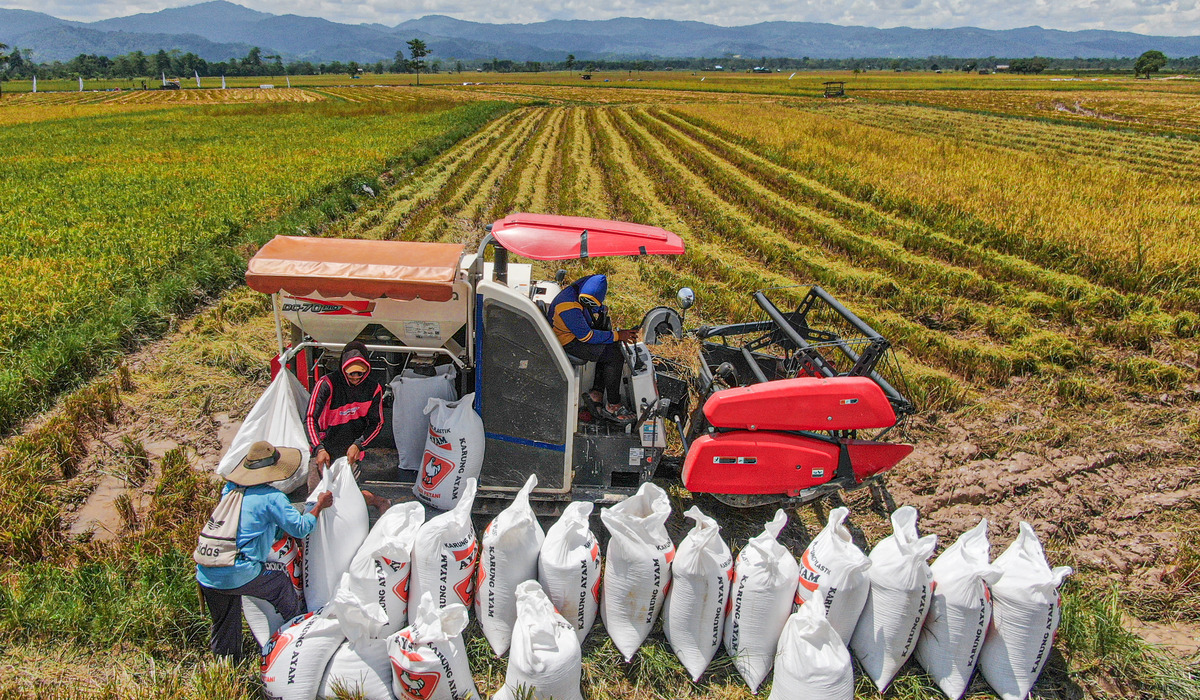
The government is strengthening the Government Food Reserves (CPP) as a proactive measure to address the potential El Niño phenomenon expected to begin in May 2026. This reinforcement of stocks is deemed crucial to maintain food availability amid risks of production declines due to drought.
The National Food Agency (Bapanas) has prepared early mitigation steps, including bolstering food stocks from domestic production.
Deputy for Food Availability and Stabilisation at Bapanas, I Gusti Ketut Astawa, stated that strengthening food reserves is the primary strategy in facing the potential impacts of El Niño.
“As soon as we heard about the potential El Niño, we immediately prepared vigilance. Strengthening food reserves is at the forefront,” he said, quoted from a press release received in Jakarta on Friday (3/4).
Based on a report from the National Research and Innovation Agency (BRIN), the El Niño phenomenon is expected to affect southern regions of Indonesia, such as Lampung, Java Island, Bali, and Nusa Tenggara.
To this end, the government is enhancing national food production through coordination with the Ministry of Agriculture and increasing absorption of harvests by Perum Bulog to add to government rice reserves.
“We are collaborating with the Ministry of Agriculture to maintain production. Bulog’s absorption of unmilled rice is crucial in strengthening the CPP,” Ketut added.
In addition to rice, the government is also reinforcing stocks of other commodities such as feed corn, cooking oil, sugar, and meat. As of 2 April 2026, CPP stocks were recorded at 4.4 million tonnes of rice, 168,000 tonnes of feed corn, 121,000 kilolitres of cooking oil, and other commodities in adequate quantities.
Intervention programmes are also continuing, including the distribution of Stabilisation of Food Supply and Prices (SPHP) rice, which has reached 70,000 tonnes since early March. Meanwhile, food assistance has been realised in the form of 21.3 million kilograms of rice and 4.2 million litres of cooking oil.
On the other hand, the government is preparing an SPHP programme for feed corn with a distribution target of 242,000 tonnes, a significant increase compared to the previous year.
A climatology researcher from BRIN, Erma Yulihastin, warned that the potential El Niño this year is classified as strong or even in the Super El Niño category.
“This will be updated every week. The potential is quite large with higher heat and drought impacts,” she said.
Meanwhile, the Head of Bapanas, who is also the Minister of Agriculture, Andi Amran Sulaiman, assured that the government has accelerated mitigation steps, both in terms of production and food reserves.
“The government’s rice stock is currently 4.4 million tonnes and is targeted to reach 5 million tonnes in the near future. Our preparations are far better than before,” he emphasised.
He added that this achievement shows a significant improvement compared to previous years, so it is hoped to serve as a buffer in maintaining national food stability amid the El Niño threat.
Bapanas recorded the realisation of rice and cooking oil food assistance distribution as of 25 March reaching up to 382,529 recipients in 24 provinces.
The government targets stable prices for strategic staple foods to continue moving towards stability post-Eid al-Fitr.
The government through the National Food Agency (Bapanas) states it is open to the public if they find anomalies in staple food prices in the market.
Trends in prices of two strategic food commodities, namely red cayenne pepper and broiler chicken meat, show a significant national decline in early March 2026.
The price of red cayenne pepper has stabilised around Rp60,000 per kg in line with improving weather and peak harvests in production centres.
Minister of Agriculture (Mentan) Andi Amran Sulaiman is accelerating mitigation steps to face the potential El Niño through the implementation of five main field strategies.
Indonesia is assessed to have strong food resilience, so it remains safe even though many other countries face difficulties due to global turmoil.
Based on the food balance up to April 2026, Indonesia has achieved self-sufficiency in nine strategic commodities with a strong production surplus position.
Based on the Food Balance, projections until the end of March 2026, several main commodities show availability far exceeding consumption needs for February and March 2026.
The Toba Regency Government (Pemkab) in North Sumatra commits to continuing to maintain food availability and ensure stable food prices at the community level.