
Government Spending Exceeds 346 Trillion Rupiah as Free Nutritious Meal Programme Expands
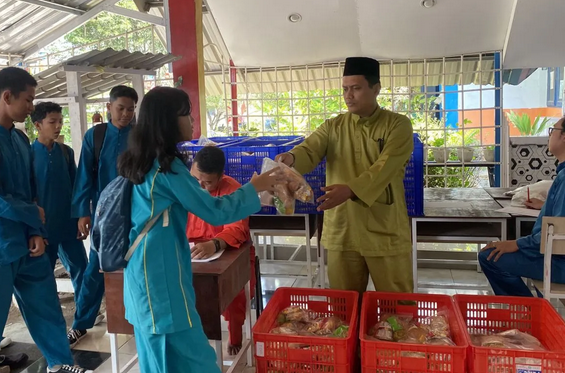
Central government spending realisations demonstrated significant growth in early 2026, alongside acceleration of several priority programmes, including the increasingly expansive Free Nutritious Meal (MBG) Programme.
By the end of February 2026, government spending realisations reached 346.1 trillion rupiah, growing 63.6% compared to the same period in the previous year of 211.5 trillion rupiah. This figure represents the highest for a February period since 2017, reflecting acceleration of state spending in the year’s opening months.
The spending increase occurred in ministry and agency (K/L) expenditure of 155.0 trillion rupiah, rising 85.5% year-on-year, and non-K/L spending reaching 191.0 trillion rupiah with growth of 49.4%, according to BRI Chief Economist Anton Hendranata.
In detail, goods spending surged from 18.3 trillion to 67.6 trillion rupiah (growing 269.4%) and capital spending rose from 3.1 trillion to 15.3 trillion rupiah (growing 393.5%). Employee spending recorded 45.1 trillion rupiah, whilst social assistance reached 27.0 trillion rupiah.
In the subsidy sector, fuel oil distribution rose 11.2% to 1,647.9 thousand kilolitres, 3 kilogramme liquefied petroleum gas increased 7.5% to 740.9 million kilograms, subsidised electricity rose 2.2%, fertiliser 16.6%, and KUR debtors grew 42.5%.
Hendranata added, “Increased government spending can stimulate short-term domestic economic activity, however it remains necessary to maintain fiscal balance as spending has not yet been fully matched by state revenues.”
Meanwhile, the MBG Programme demonstrated rapid development. By February 2026, budget realisation reached 44.0 trillion rupiah or 13.1% of the 2026 national budget target of 335 trillion rupiah. The number of programme beneficiaries increased from 39.7 million persons in October 2025 to 60.4 million persons in February 2026, reflecting rapid programme implementation expansion.
The distribution of beneficiaries remained concentrated on the island of Java with 35.5 million persons and Sumatra with 12.6 million persons. Other regions such as Kalimantan, Sulawesi, Maluku-Papua, and Bali-Nusa Tenggara had relatively smaller numbers of beneficiaries.
The MBG Programme has potential to increase domestic demand through public consumption whilst simultaneously strengthening human resource investment. However, the programme’s large scale demands careful budget management. Hendranata emphasised, “A programme of large scale requires balanced by prudent budget management.”
Employee spending was recorded at 102 trillion rupiah or 33.3% of the budget allocated in the national budget of 513.22 trillion rupiah. ALFI Institute Chairman Yukki Nugrahawan Hanafi observed that first quarter 2025 economic growth remained resilient despite indications of slowdown in economic growth.