
Government Simplifies Business Licensing with Fixed Timelines Under New Regulation
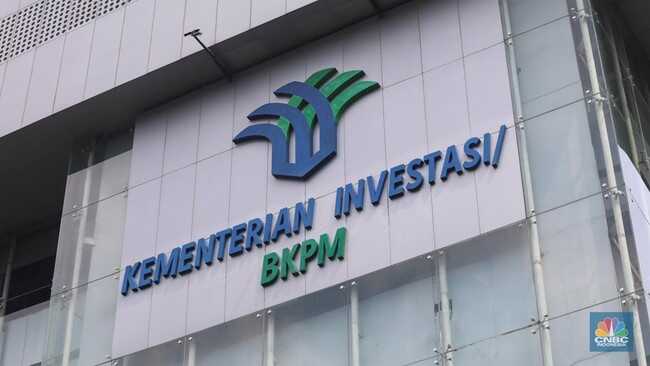
Jakarta, CNBC Indonesia - The government has simplified and accelerated the business licensing process in Indonesia. This policy was established through the issuance of Government Regulation Number 28 of 2025, forming part of the deregulation package driven by President Prabowo to strengthen Indonesia’s competitiveness.
Deputy for Investment Climate Development at the Ministry of Investment and Downstreaming/BKPM, Riyatno, explained that the first key provision in GR 28/2025 is that each business licence issuance now has a definite timeframe. This applies to the issuance of basic requirements, business licences (PB), and business licences supporting business activities (PB UMKU).
The issuance process for basic requirements, PB, and PB UMKU must comply with the established service level agreement (SLA).
“We have already implemented this, and there are at least four company licences that are now issued automatically, meaning they are not verified by ministries or agencies,” Riyatno told reporters at the Coordinating Ministry for Economic Affairs office on Monday (30 June 2025).
Riyatno explained that the verification system will operate automatically for company licence applications, ensuring that both domestic and foreign investors receive swift certainty.
“For example, if a company licence application is submitted and the SLA is 10 days but the licence has not been issued within that period, the system will issue it automatically. For high-risk and medium-high-risk categories, verification will be conducted. Meanwhile, for low-risk and medium-low-risk categories, licences are issued automatically without verification by central government officials,” he said.
Going forward, approximately 61 ministerial regulations or agency head regulations from various ministries will be issued as derivatives of GR 28/2025. The deadline for completing all supporting regulations is four months from issuance, namely 5 October 2025. Nevertheless, Riyatno assured that his office would complete them by July 2025.
“The target is hopefully to finish within this month. Because October is for operational systems in accordance with the provisions in GR 28 — the regulations need to come first. God willing, the target is July,” he said.
Under the new regulation, the government stipulates that PB UMKU is to be applied for by business operators at the operational and/or commercial stage, meaning the phase after commencing business activities.
The government has also reduced the number of PB UMKU by classifying them into four groups: product distribution, operational feasibility, product or service standardisation, and smooth business operations. All operational business licences not falling within these four groups are excluded from the PB UMKU category.
This, Riyatno said, has had a significant impact in reducing the number of PB UMKU from over 1,000 to approximately 350.
Finally, the fourth key provision concerns strengthened supervision. This enhanced oversight adopts the concept of integrated inspection and reporting, aimed at simplifying the implementation of supervision and strengthening its substance to ensure compliance with established standards. Supervision will be conducted in an integrated manner using the OSS RBA supervision subsystem, ensuring coordination so that businesses are not subjected to repeated inspections from multiple agencies.