
Government Sets Rp13,000 Trillion Investment Realisation Target Over Five Years to Achieve 8 Per Cent Growth
JAKARTA - The Indonesian government has once again set ambitious targets in the investment sector. Over the next five years, the government has established an investment realisation target of Rp13,000 trillion, a figure believed capable of driving economic growth to 8 per cent, in line with the vision of President Prabowo Subianto.
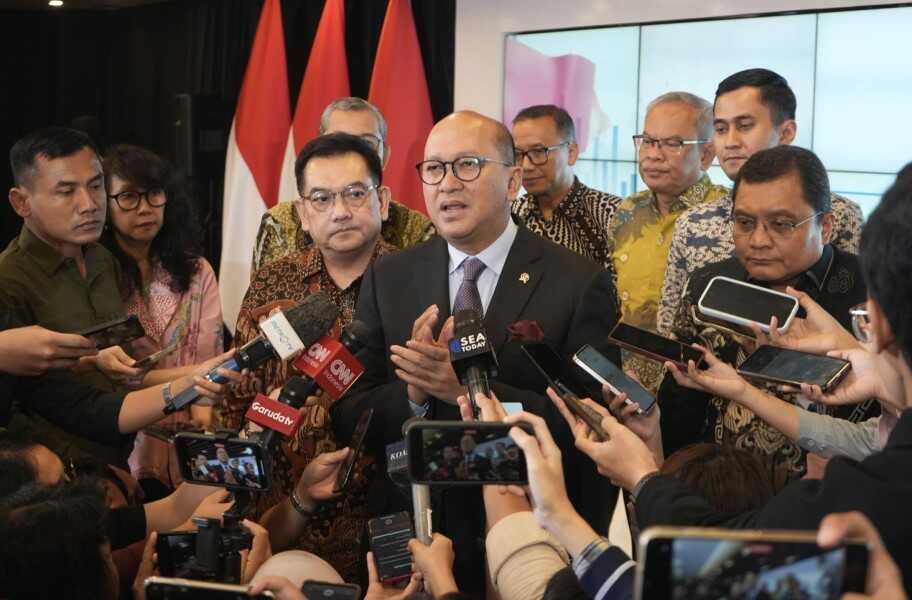
Deputy Minister of Investment and Downstreaming, who also serves as Deputy Head of the Investment Coordinating Board (BKPM), Todotua Pasaribu, stated that the government’s focus is not merely on securing investment commitments but on ensuring that funds are actually realised on the ground.
“Over the next five years, as we all know, we have a target of Rp13,000 trillion — and we are talking about investment realisation, not investment plans, but actual investment realisation,” said Todotua when met in Jakarta on Thursday.
Not an Ordinary Target
The government’s emphasis that Rp13,000 trillion represents a realisation target, not merely commitments on paper, marks a new approach in the national investment strategy. Realisation serves as the primary benchmark because it reflects economic activity that actually takes place, from infrastructure development to industrial expansion and downstreaming.
Todotua added that the government has drawn lessons from investment achievements over the past decade, which have been quite impressive. Over ten years, Indonesia successfully realised Rp9,900 trillion in investment. He said this achievement provides an optimistic foundation for reaching a far greater target going forward.
“So over the next five years, to reach the 8 per cent figure, we need investment realisation of Rp13,000 trillion,” he affirmed.
Optimistic Projections for 2025
This year, the government through BKPM is targeting investment realisation of Rp1,900 trillion, an increase from the previous year’s achievement. In 2024, national investment realisation reached Rp1,700 trillion, exceeding the initial target of Rp1,650 trillion.
First-quarter 2025 performance provides a strong basis for the government’s confidence. In the first three months, realised investment reached Rp465 trillion, or nearly 25 per cent of the annual target.
“We are optimistic that this achievement can serve as a foundation for maintaining investment momentum through the end of the year,” said Todotua.
Aligned with the Economic Transformation Agenda
The push for investment is also in line with the economic transformation programme championed by the new administration. The government is targeting Indonesian economic growth of 8 per cent over the next five years, which naturally requires strong support from the investment sector.
Investment plays a vital role in boosting national production capacity, creating new employment, and accelerating the downstreaming of natural resources to generate added value domestically. With higher projected economic growth, investment serves not only as a source of capital but also as a catalyst for creating a healthy and globally competitive business ecosystem.
International Collaboration and Opportunities
A number of strategic partnerships with global partners continue to be developed. For instance, the collaboration between Indonesian company Danantara and a Saudi Arabian firm, with investment valued at Rp162 trillion, exemplifies the strong commitment of foreign investors to Indonesia’s economic potential.
Beyond the Middle East, the government is also exploring opportunities from East Asia, Europe, and Latin America to broaden the investor base capable of strengthening various national priority sectors. Key focus areas include renewable energy, digital technology, sustainable manufacturing, modern agriculture, and livestock farming.
Strategic Role of Investment in the Livestock Sector
The Ministry of Agriculture has also emphasised the importance of investment in the national livestock sector, considered strategic for supporting food security and increasing rural incomes. The ministry continues to promote technology-based innovation in livestock breeding and processing, ensuring the sector keeps pace with other industries.
Investment in this area is important not only for boosting domestic production but also for opening export opportunities to countries with high demand for animal protein.
Rational Optimism
Given the positive achievement trends in recent years and full support from the new administration for the downstreaming and industrialisation agenda, Todotua Pasaribu is confident that the Rp13,000 trillion target is not an empty dream — provided there is consistency in regulatory reform, accelerated licensing, infrastructure improvement, and cross-ministerial coordination to maintain a competitive investment climate.
It should be noted that investment comes not only from abroad (foreign direct investment) but also from domestic sources, which have made significant contributions to national target achievements.
Global challenges are considerable — geopolitical tensions, climate change, and global economic uncertainty. However, with a national strategy focused on realisation rather than mere investment promises, Indonesia appears ready to break new ground in its economic journey.
If the Rp13,000 trillion target can be achieved, not only will 8 per cent economic growth be felt, but also a great leap towards the Golden Indonesia 2045 vision.