
Government Seeks Solutions to Stabilise Palm Oil Farmers' Prices
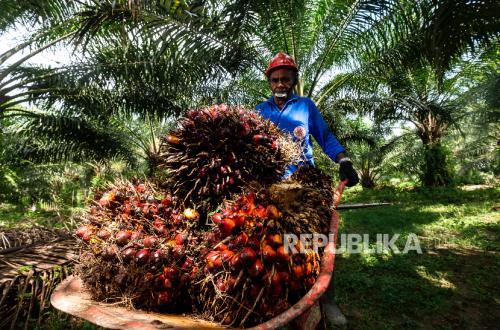
The government is optimistic that volatility in fresh fruit bunch (FFB) palm oil prices for farmers can be resolved soon, following industry players and palm oil associations agreeing to maintain normal trade during the single-door export policy transition period. Deputy Agriculture Minister Sudaryono stated that global palm oil prices remain on a positive trend with sustained high demand, meaning the decline in FFB prices at the farmer level does not reflect international market conditions. “The meeting proceeded well with good intentions, essentially a ‘good problem’,” Sudaryono said after the palm oil industry stakeholders meeting at the Agriculture Ministry headquarters in Jakarta on Friday (29 May 2026). According to Sudaryono, the issue stems largely from uncertainty in the trade chain following the announcement of the single-door natural resources export policy. Therefore, the government has requested refineries and exporters to continue transactions normally based on KPBN auction prices. “This is global pricing, the buying price is good, so why are farmers getting poor prices? That’s what we need to resolve,” he said. The Agriculture Ministry previously found 139 palm oil mills (PKS) purchasing FFB below regional price regulations. Of these, 16 mills have reportedly adjusted their purchase prices following government coordination with industry players. The meeting was attended by the National Food Agency, PTPN, Agrinas Palma, the Indonesian Palm Oil Association (GAPKI), farmer associations, exporters, and refineries. The government has also urged local authorities to strengthen oversight of the implementation of Agriculture Ministry Regulation No. 13 of 2024 regarding FFB price management. In addition to discussing FFB prices, the government outlined the implementation stages of the single-door export policy via PT Danantara Sumberdaya Indonesia (DSI). The transition period will run from 1 June to 31 August 2026 before full implementation on 1 January 2027. Sudaryono stressed that DSI functions as a transparent and accountable manager and overseer of natural resources exports, not to profit from export activities. “The objective is not to make a profit, DSI is not for that, but to bring order. Those that are orderly continue, while those that are not are regulated,” he said. The Indonesian Palm Oil Farmers Association (Apkasindo) praised the government’s swift response to the FFB price decline. The farmers’ organisation hopes prices will quickly return to normal once trade mechanisms are clarified. “We hope that after this announcement, the KPBN tender prices do not withdraw, and FFB prices return to normal so our farmer friends can smile again,” said Apkasindo representative Qayuum Amri. All meeting participants, from farmer associations and exporters to refinery companies and the Agriculture Ministry’s Plantation Directorate General, signed a joint conclusion as the basis for follow-up actions in restructuring palm oil trade during the policy transition period.