
Government Rice Import Plans from United States Draw Scrutiny and Debate
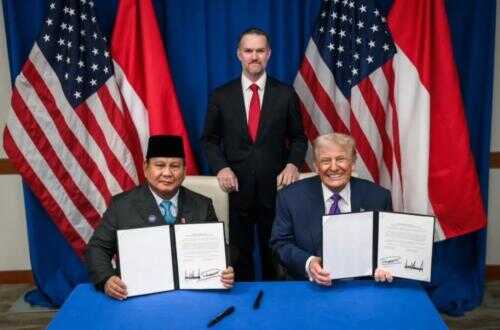
A parliamentary member from Commission IV of the People’s Consultative Assembly, Johan Rosihan, has called on the government to openly explain its commitment to import 1,000 tonnes of rice from the United States as part of bilateral trade negotiations.
Rosihan emphasised that Commission IV will examine this issue objectively, prioritising farmer protection and national food security. He noted that the 1,000-tonne volume is relatively small compared to national production. Nevertheless, he stressed that trade in strategic food commodities must be strictly monitored to prevent market disruptions or pressure on farmers’ grain prices.
The parliamentary representative underscored his desire to avoid politicising the matter, stating that the priority is ensuring any policy does not disrupt grain purchases from farmers, depress producer prices, or undermine momentum in domestic production.
The proposed rice import from the United States has become contentious for several reasons. Firstly, the timing is considered inappropriate as Indonesian farmers are entering the harvest season. There is widespread concern that the rice import will disrupt local rice prices and negatively affect farmers. Additionally, critics question whether the import aligns with actual needs, given that domestic rice production still meets public demand. The decision is also viewed as inconsistent with the government’s food self-sufficiency programme.
The Indonesian government plans to import the 1,000 tonnes specifically to meet rice requirements with certain specifications, not due to national rice stock shortages. Indonesia has achieved rice self-sufficiency, with national rice production reaching 34.69 million tonnes in 2025. The import is more closely related to international trade commitments and the domestic food and beverage industry’s raw material needs. The government aims to ensure the availability of raw materials with specific quality standards for this sector, with the import forming part of a trade agreement between Indonesia and the United States.
The import does not therefore indicate Indonesia’s inability to meet its own rice needs, but rather reflects a strategic trading approach and the fulfilment of specific domestic industrial requirements.
Nevertheless, importing rice shortly after Indonesia announced rice self-sufficiency understandably invites controversy. Notably, whilst Indonesia has achieved rice self-sufficiency, rice imports remain necessary under certain conditions. Despite sufficient domestic rice production, imports can occur for several reasons. Firstly, quality and variety considerations mean rice imports can meet demand for specific quality or varieties not produced domestically. Secondly, price and market stability—imports can help maintain stable rice prices in the domestic market, particularly if price fluctuations occur domestically. Thirdly, Indonesia may have international trade commitments requiring rice imports from other countries.
Importantly, rice self-sufficiency does not mean Indonesia must cease all rice imports. Imports can continue if there are specific or strategic needs. The FAO even permits a 10 per cent rice import rate for nations achieving rice self-sufficiency. However, self-sufficiency does not mandate import restrictions. If special needs or emergencies arise, the government can still import rice. Currently, however, the government’s focus is on increasing production and rice exports.
The government’s rice export policy to Saudi Arabia for the Hajj pilgrimage is a step worthy of full support. Furthermore, resuming rice imports at this stage may affect national pride, particularly if domestic production suffices for needs. Nevertheless, self-sufficiency does not require isolating the country from international trade.
In fact, importing and exporting a commodity within the international trading system is standard practice. However, the situation differs when the commodity in question is rice. As a politically sensitive commodity, rice holds a special position in Indonesia’s national and societal life. This explains why the plan to import the specialised 1,000 tonnes from the United States has become a subject of heated discussion.
It is hoped that the spirit of achieving sustainable rice self-sufficiency will continue to be realised, even as the ups and downs of rice imports continue to characterise Indonesia’s rice sector. Self-sufficiency does not prohibit imports.