
Government Regulation on Child Protection in Digital Spaces Requires Inclusive Education and Risk-Based Enforcement
Jakarta — The implementation of Government Regulation No. 17 of 2025 on Child Protection in Digital Spaces (PP Tunas) is assessed to require an inclusive educational approach that is not uniform, reflecting the diverse conditions of society and different digital platform service models.
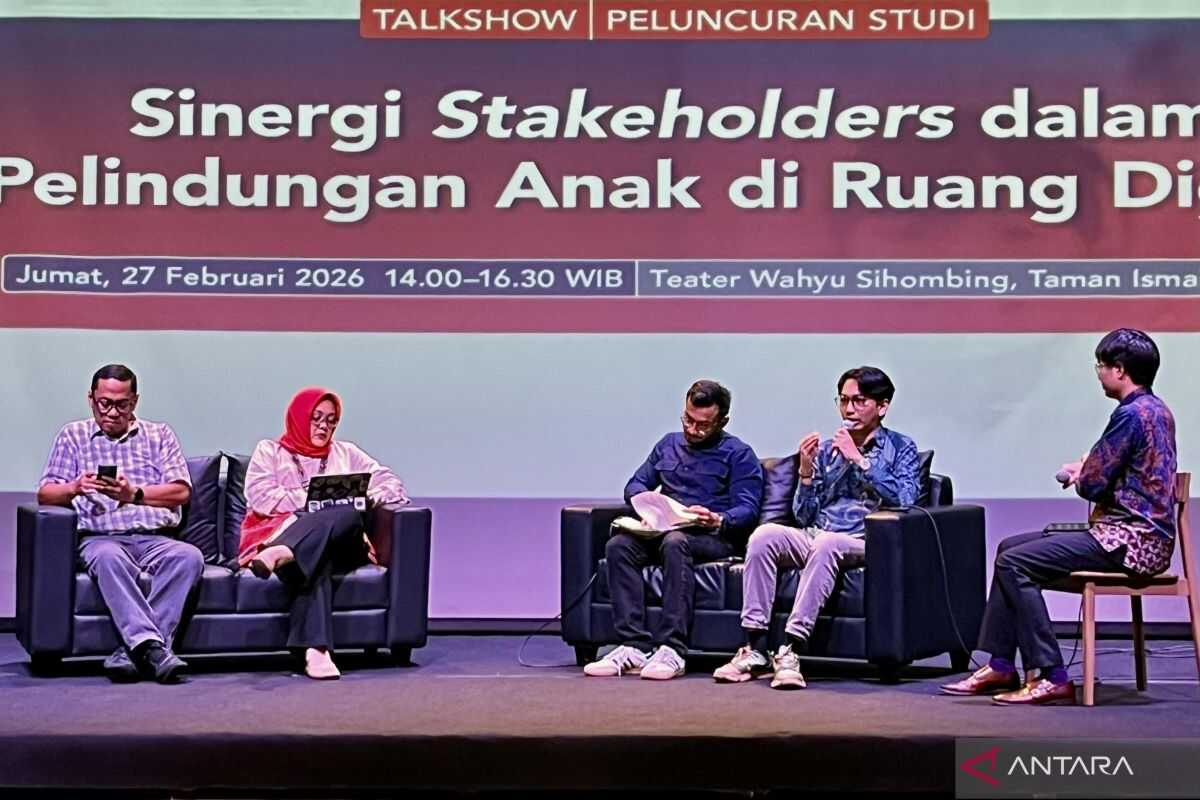
“What form of education, what kind of socialisation, what kind of packaging will make PP Tunas and digital literacy understandable to all segments of society, not just in the form of documents or guidelines,” said Indriyatno Banyumurti, Executive Director of ICT Watch, during a discussion held by the Center for Indonesian Policy Studies (CIPS) at Taman Ismail Marzuki in Jakarta on Friday (27 February).
He stated that education is not only the responsibility of Electronic System Operators (PSE), but also the government, parents, and the broader public. According to him, PP Tunas itself has emphasised the importance of education for both parents and children. However, the primary challenge is determining the appropriate form of education that can be genuinely understood and implemented.
Indriyatno emphasised that the principles of “no one left behind” and “no one size fits all” should form the basis of digital literacy education. He assessed that approaches designed in major cities may not be effective when applied to regions with different characteristics.
He also encouraged cross-sector collaboration through a pentahelix approach involving government, industry, civil society, think tanks, and communities. However, he cautioned that a horizontal approach alone is insufficient without strengthening at the local level.
“The approach to local governments and local communities remains a work in progress,” he said.
Meanwhile, Jimmy Daniel Berlianto, Senior Research and Policy Analyst at CIPS, highlighted the potential risks if PP Tunas implementation is applied too uniformly across all types of digital services.
He assessed that the risk-based approach in the regulation was fundamentally designed to avoid imposing the same obligations on all features and services. The focus is on ensuring that high-risk services reduce their risk levels or have adequate safety parameters.
“Service models, platform purposes, forms of interaction, and company sizes differ. Their risks also differ,” he said.
He gave the example that the risk of interaction with unknown individuals has different contexts across social media, instant messaging services, and application-based services such as online transportation. Consequently, safety parameters and forms of compliance cannot be standardised.
Jimmy added that differences in company scale need to be considered so that compliance implementation and internal governance can function effectively.
Both experts agreed that PP Tunas implementation requires collaborative work and contextual approaches, both in terms of public education and in assessing digital platform compliance.