
Government Regulation 28/2025 Set to Boost Investor Confidence with Streamlined Permits
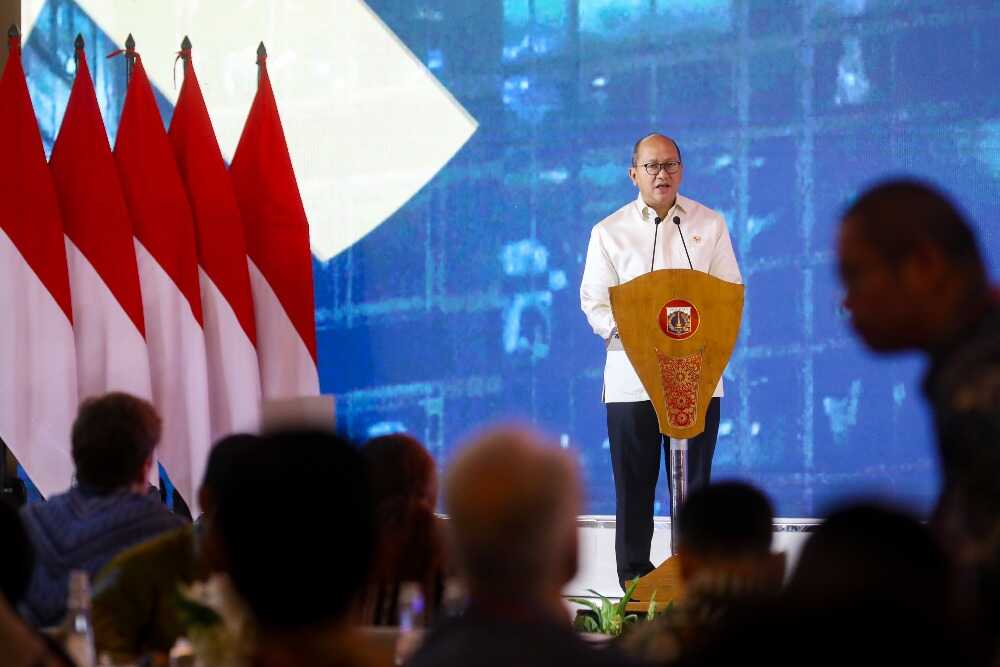
JAKARTA — The Ministry of Investment and Downstream Industries/BKPM considers that the implementation of Government Regulation (PP) Number 28/2025 will strengthen investor confidence in Indonesia’s investment climate.
Deputy for Investment Climate Development at the Ministry of Investment and Downstream Industries/BKPM, Riyatno, expressed optimism that the investment target of Rp1,905.6 trillion for 2025 will be easier to achieve following the new regulation.
“First quarter investment realisation is already above 24%. With PP 28/2025, our confidence is even higher that we can meet the target as directed by the President in the RPJMN,” he said at the Coordinating Ministry for Economic Affairs office in Central Jakarta on Monday (30/6/2025).
He assessed that the regulation governing risk-based business licensing would be a game changer in creating legal and temporal certainty for businesses.
Riyatno explained that under PP 28/2025, the licensing system is not only simpler but also more measurable through the implementation of Service Level Agreements (SLA) and a deemed-approved (fictive positive) policy.
“All types of permits — from basic permits, business permits, to supporting permits — now have service time limits. This provides certainty for investors, both domestic and foreign,” he explained.
With the SLA in force, every stage of the permit application process now has a deadline. If the relevant agency does not respond within the specified timeframe, the OSS-RBA (Online Single Submission-Risk Based Approach) system will automatically issue the permit, particularly for low-risk businesses.
“For example, if the SLA is 10 days and there is no response from the relevant ministry or agency, the system will automatically issue the permit. This is primarily for low-risk and medium-low-risk businesses that do not require official verification,” he said.
For high-risk and medium-high-risk sectors, the system still requires verification by technical agencies, but within strict time limits.
Full implementation of PP 28/2025 will commence on 5 October 2025, following a four-month transition period from the regulation’s issuance. BKPM will also issue implementing regulations for PP 28/2025 in July 2025.
Differences Between PP 28/2025 and Previous Regulations
Secretary of the Coordinating Ministry for Economic Affairs, Susiwijono Moegiarso, explained three key substantive differences between PP 28/2025 and previous regulations.
First, the implementation of service level agreements. For the first time, every stage in the business licensing process, from registration to permit issuance, will have clear service time limits.
“Business operators have long complained about time uncertainty. Under PP 28, for instance, the spatial use conformity approval process at ATR/BPN is set at a maximum of 25 working days without revision, or 40 days if amendments are required,” he explained during a socialisation event at the Coordinating Ministry for Economic Affairs on Monday (30/6/2025).
Second, the deemed-approved policy, whereby business permits will be issued automatically if the relevant agency fails to make a decision within the stipulated SLA timeframe. This policy will be implemented in stages across permit-issuing ministries and agencies, including ATR/BPN, the Ministry of Environment and Forestry, the Ministry of Marine Affairs and Fisheries, the Ministry of Public Works, as well as technical sectors such as agriculture, energy and mineral resources, industry, tourism, and manpower.
Third, all licensing processes — whether basic, sectoral, or supporting — must be conducted through the OSS-RBA system managed by the Ministry of Investment/BKPM.
“This regulation requires all ministry and agency systems to be integrated into OSS-RBA. There will no longer be standalone sectoral licensing systems,” said Susiwijono.
In addition to the three existing systems (information, services, and supervision), OSS-RBA will be strengthened with three new subsystems: basic requirements, business facilities, and partnerships.
PP 28/2025 also establishes OSS-RBA as the sole legal reference for risk-based licensing. Accordingly, no additional requirements or permits beyond those stipulated in this regulation may be imposed by central ministries, agencies, regional governments, or zone administrators.
“The primary objective of this regulation is to create business certainty and alignment between central and regional policies, so that Indonesia’s investment climate becomes increasingly competitive,” said Susiwijono.