
Government recognises journalists as defenders of human rights
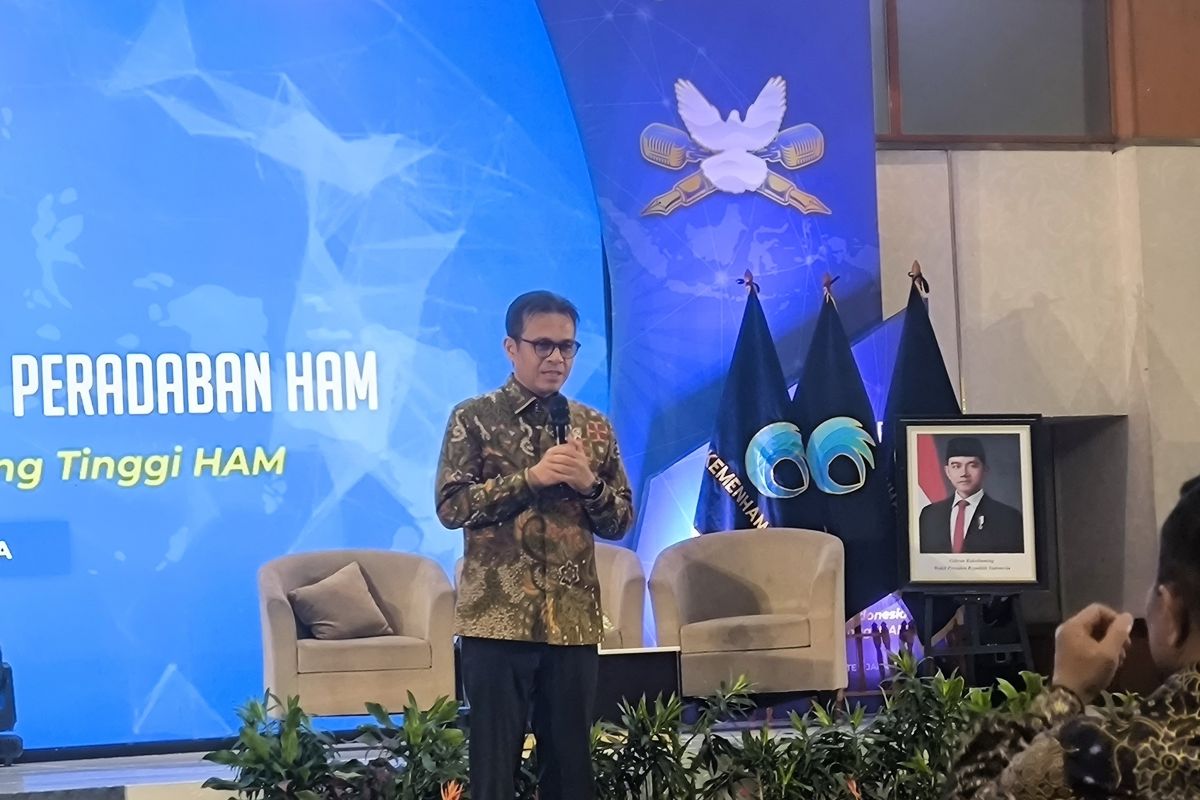
Jakarta — The Indonesian government views journalists as holding a strategic role in the protection of human rights, given that the press’s function extends beyond merely conveying information to the public to encompassing the exposure of violations and the oversight of the exercise of power.
Deputy Minister of Communication and Digital Affairs Nezar Patria stated that this perspective has previously been affirmed by the National Commission on Human Rights, which has positioned journalists as part of the human rights defenders constituency.
“The National Commission on Human Rights has previously issued a statement that journalists are also human rights defenders, that journalists are also defenders of human rights,” said Nezar following the launch of the Media Press and Human Rights Civilisation Development Programme in Jakarta on Wednesday.
According to him, the task of journalists in reporting various human rights violations and monitoring the functioning of power has rendered the profession a direct contributor to efforts to protect the rights of the public.
“The task of journalists is to report human rights violations and to serve as a watchdog monitoring the exercise of power,” he said.
Beyond exposing various cases, the press is also considered to have a role in promoting advocacy and defence for communities who become victims of human rights violations.
“The media or press also promotes advocacy or defence for communities who become victims of the exercise of power and also victims of human rights violations,” he said.
However, Nezar noted that this landscape is now undergoing change due to developments in digital technology that enable the broader public to voice various human rights concerns through social media platforms.
“Now those who are human rights defenders are no longer only journalists, but also those who are active on social media,” he said.
He added that reports concerning human rights violations now come not only from mainstream media outlets but also from citizens who are active in digital spaces.
“Reports of human rights violations are no longer reported only by media organisations, but also by those who are active on social media,” said Nezar.
According to him, this shift marks an expansion of actors in human rights advocacy whilst introducing new dynamics into the information and democracy ecosystem.
“We ask ourselves whether the media remains the fourth pillar, or whether media plus social media constitute the fourth pillar,” he said.