
Government Processes Flood-Carried Timber from Sumatra into Temporary Housing Construction Materials
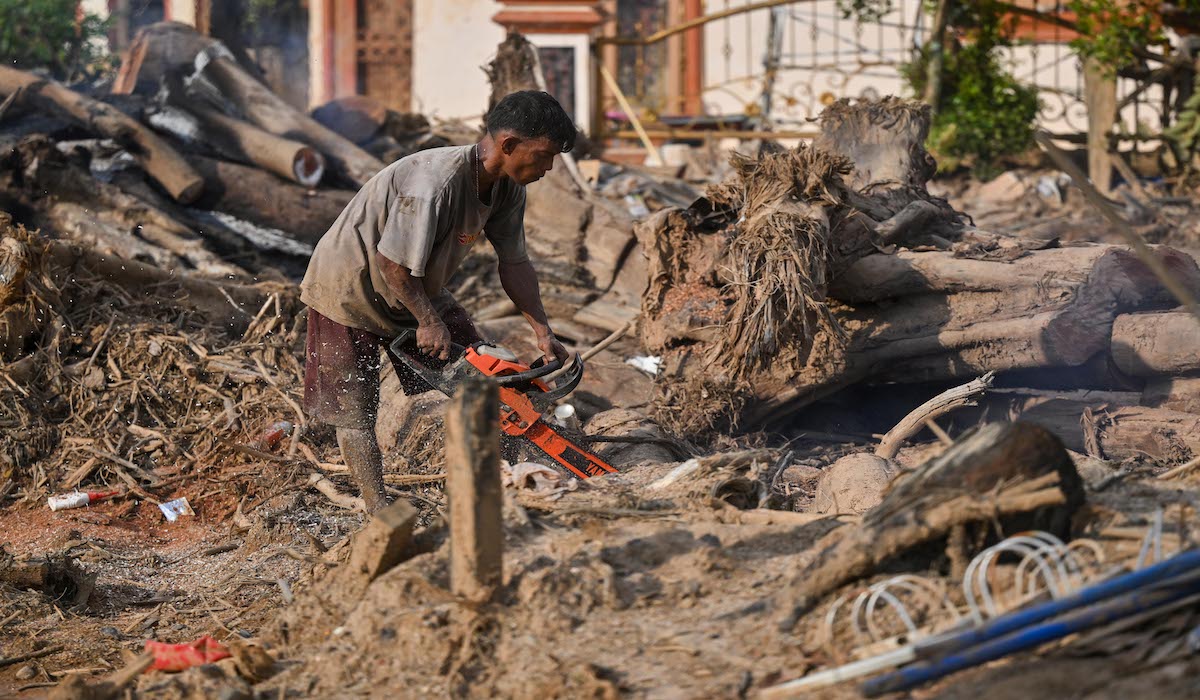
Timber swept away by floods and landslides in several Sumatra regions is beginning to be utilised as construction material for temporary housing (Huntara) for disaster-affected residents. The government is encouraging the use of this material to speed up post-disaster rehabilitation and reconstruction.
Task Force Chairman for Accelerating Post-Disaster Rehabilitation and Reconstruction in Sumatra, Tito Karnavian, stated that a scheme for utilising floating timber has been prepared. In addition to building temporary housing, the timber can also be directly used by the community.
“It can be used by the community to build their own homes,” said Tito in a press release on Friday (3/4).
The utilisation of floating timber is underway in several areas. In North Aceh Regency, more than 2,000 cubic metres of timber have been used to build temporary housing. Meanwhile, in Aceh Tamiang, hundreds of cubic metres of timber are awaiting a decision from the local government regarding its allocation.
In North Sumatra, the utilisation of timber is taking place in South Tapanuli and Central Tapanuli Regencies. In those areas, the timber is used not only for temporary housing but also for constructing public facilities and social facilities.
Meanwhile, in West Sumatra, nearly 2,000 cubic metres of timber in Padang City has been handed over to the local government to support the post-disaster recovery process.
Tito stated that this policy refers to Ministerial Decree Number 191/2026, which regulates the use of floating timber as a material source for emergency handling up to the reconstruction stage.
In addition to construction needs, the government also sees economic potential from leftover timber that is not used. Small-sized or low-value timber can be processed into other materials, such as bricks or energy sources, through cooperation schemes that provide income for the region.
“The mechanism is through cooperation, and the income becomes regional own-source revenue,” said Tito.
The government targets all piles of floating timber to be handled soon. As of early April, handling in West Sumatra is nearly complete, while in North Sumatra and Aceh, some timber remains, especially in remote areas.
“The floating timber in Aceh is about 70% handled, with 30% remaining, especially in remote areas. In West Sumatra, 99% has been handled, and in North Sumatra, 90%, particularly in Central Tapanuli and South Tapanuli,” said Tito.