
Government Prepares Special Market for Halal-Certified UMKM Products
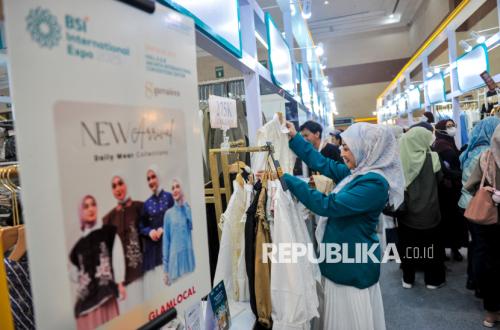
The government is preparing a special or captive market for products from UMKM with halal certification. This step is intended to ensure that halal certification is not merely an administrative obligation but also provides real economic benefits for small business actors.
Rosy Wediawaty, Director of Sharia Economy and SOEs at the Ministry of National Development Planning/Bappenas, stated that market incentives are crucial to encourage more UMKM to obtain halal certification.
“The halal certification obligation should not just become an administrative burden, but must provide market certainty for business actors,” said Rosy during a webinar titled “Accelerating Halal Industry Development: Sharia Economy Bill for Job Creation,” on Friday (8/5/2026).
According to her, the micro-business sector forms the main foundation of the national sharia economy because it dominates Indonesia’s business structure, particularly in the food and beverage sector.
However, out of around 56.2 million national business actors, only about 2.6 million have products that are halal-certified. The majority come from the food and beverage sector.
Rosy said that many UMKM still view halal certification as a complicated and expensive process. Therefore, the government is preparing several strategies to accelerate halal certification for small businesses.
One of them is through the integration of the OSS and SIHALAL systems so that the process of obtaining business permits and halal certification can run more simply and quickly. The government is also continuing subsidies for halal certification costs through the Sehati programme.
In addition, halal certification assistance is being expanded through universities, pesantren, and sharia economic communities in various regions.
According to Rosy, a special market for halal UMKM products is needed so that business actors have a clear economic incentive after obtaining certification.
“If the market is already formed, UMKM will also be more motivated to improve their product quality,” she said.
Kris Sasono Ngudi Wibowo, Head of the Halal Industry Centre at the Ministry of Industry, stated that strengthening halal UMKM is important because the Indonesian halal market is now being targeted by many countries.
Halal products from China, South Korea, Japan, to the United States are now increasingly entering the domestic market. This situation requires local business actors to enhance their competitiveness so as not to lose in their own market.
Therefore, the government is also strengthening the halal industry ecosystem through the development of halal industrial zones, halal hubs, halal raw material centres, and the expansion of halal certification for various industrial sectors in 2026.
The government hopes that strengthening halal UMKM can increase the competitiveness of local products while enlarging Indonesia’s contribution to the global halal industry.