
Government Prepares Murur Scheme for 50% of Hajj Pilgrims
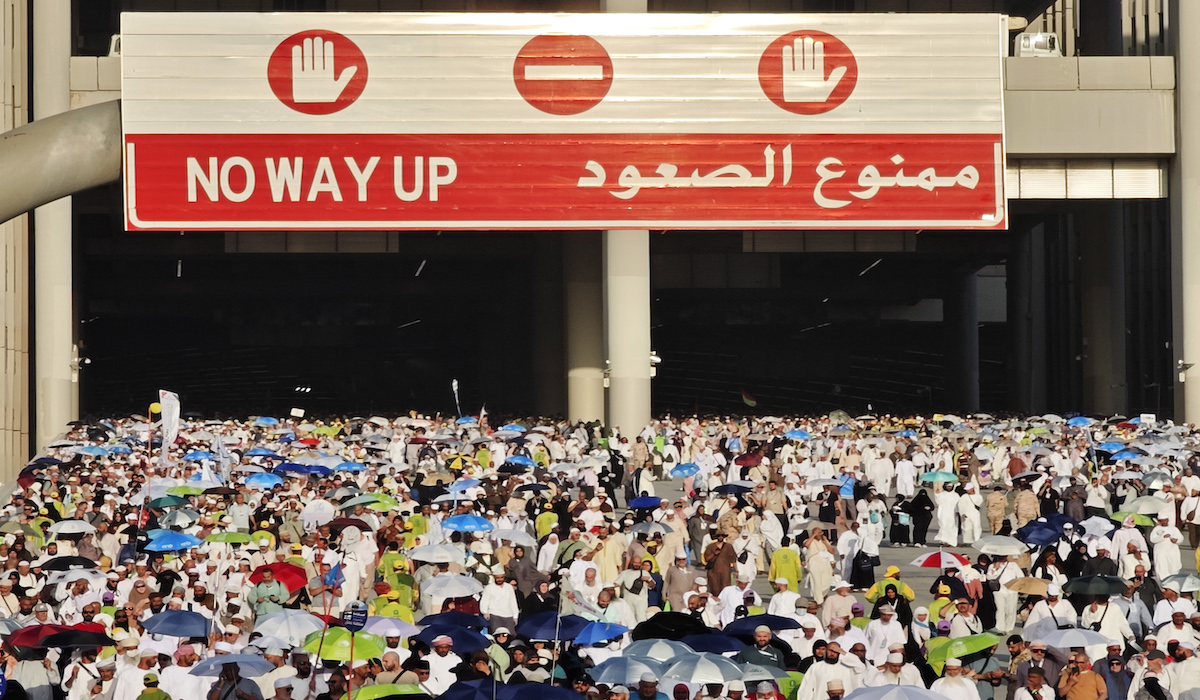
The government faces a policy dilemma with no truly comfortable option. The government has decided that around 50% of Indonesian regular Hajj pilgrims will follow the Murur scheme for the 2026 Hajj pilgrimage. This policy is prepared as a primary measure to reduce extreme density during the peak Hajj phase, particularly in the Muzdalifah area, which has long been the most vulnerable point in pilgrim movement flows.
Minister of Hajj and Umrah, Mochamad Irfan Yusuf, stated that the total number of pilgrims entering this scheme reaches 100,930 people, equivalent to half of Indonesia’s regular Hajj quota.
“Murur pilgrims will be taken from each kloter with the number of Murur pilgrims amounting to 100,930 people or about 50% of the total regular Hajj quota,” said Irfan during a working meeting with Commission VIII of the DPR RI in Jakarta on Wednesday.
The Murur scheme is a movement pattern for pilgrims from Arafah to Mina crossing Muzdalifah using buses without disembarking from the vehicle. This scheme is implemented as a form of religious leniency or rukhsah, as well as a strategy to protect pilgrims amid high density.
According to Irfan, the density in Muzdalifah can no longer be handled with conventional service patterns. Therefore, a new approach is needed to ensure pilgrim mobility runs smoothly without sacrificing safety aspects.
In addition to Murur, the government is also implementing the Tanazul Programme in Mina. Through this programme, pilgrims are not required to stay overnight in Mina tents and can return to hotels in Makkah. This scheme is planned to be followed by 76,412 pilgrims from 196 kloters, particularly those occupying the Syisyah, Raudhah, and Aziziyah areas.
Irfan emphasised that these two policies mark a change in the government’s Hajj service approach. Hajj implementation no longer focuses solely on the smoothness of rituals but also on risk management, mobility regulation, and comprehensive pilgrim protection.
“These policies are the embodiment of the principle of safeguarding lives and the real implementation of the concept of ease or rukhsah in facing extreme density challenges,” he said.
In its implementation, the Murur scheme will be supported by a special bus fleet from each markaz with escorting officers. Pilgrim departures will be staggered starting at 19:00 Saudi Arabia time for zones 3 and 4, then continued for zone 5 approaching midnight.
On the other hand, the Muzdalifah and Mina Task Force is prepared to escort the pilgrim transfer process to keep it controlled until they arrive at their respective tents, while preventing build-ups at crucial points during the peak Hajj phase.
The Ministry of Religious Affairs has officially extended the payment period for the Second Stage Regular Hajj Travel Cost (Bipih) for the 1447 Hijriah/2026 CE Hajj season.