
Government Prepares Adult Measles Vaccine, Who Can Get It?
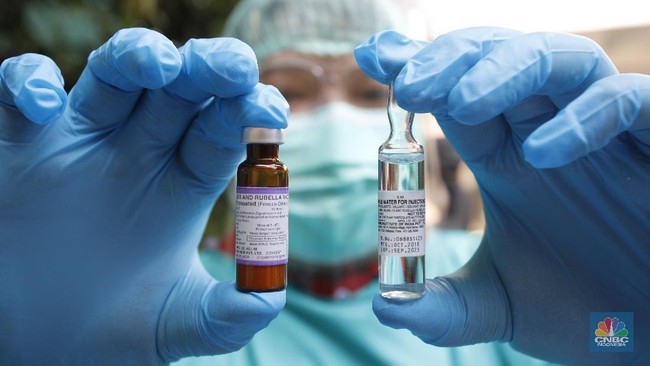
The measles outbreak in Indonesia has not fully subsided. Although case trends are declining, the government has now decided to open access to measles vaccination for adults. The National Agency of Drug and Food Control (BPOM) has officially granted permission for the use of measles vaccines for adults, amid extraordinary events (KLB) still occurring in several regions. Up to week 11 of 2026, the Ministry of Health recorded 58 measles KLB in 38 districts/cities across 14 provinces. Cases peaked at 2,220 at the beginning of the year before dropping dramatically by 93% to 146 cases in mid-March. However, the threat remains. There have been 10 deaths recorded, with around 8% of cases occurring in the over-18 age group, which has not been the primary vaccination target. BPOM Head Taruna Ikrar stated that this policy is being taken to broaden protection, especially for high-risk groups. “BPOM has issued approval for the use of measles vaccines not only for children but also for adults,” he said in an official statement quoted on Friday (10/4/2026). The approved vaccines include combinations of Measles-Rubella (MR), Measles-Mumps-Rubella (MMR), and single measles vaccines. Who can get it? The adult groups prioritised for vaccination include frontline healthcare workers, individuals with high international travel mobility, and those in close contact with patients who have weakened immune systems. This step is considered important because adults are at risk of experiencing more severe symptoms, especially if they have comorbidities or high exposure levels. Taruna Ikrar emphasised that this decision has undergone rigorous scientific evaluation, including reviews by the National Vaccine Committee involving experts from various fields. Based on World Health Organization (WHO) data and real-world evidence, measles vaccines are deemed safe and effective for adults. The vaccines used in this programme are produced by several companies, including Bio Farma, Serum Institute of India, GlaxoSmithKline (GSK), and Merck Sharp Dohme (MSD). BPOM is also coordinating with the Ministry of Health for the implementation of vaccination, particularly for healthcare workers, as part of the national KLB control strategy. Previously, Indonesia’s measles vaccination programme focused on children and has proven effective in suppressing cases. However, changes in epidemiological patterns now make protection for adults crucial. BPOM reminds that strengthening surveillance remains key, from early detection and rapid reporting to increasing vaccination coverage. “Handling measles KLB requires collaboration from all parties so that the response taken is quick, precise, and sustainable,” said Taruna.