
Government Plans to Implement Mandatory B50, but Challenges Remain
Jakarta — CNBC Indonesia — The government plans to implement a biodiesel mandate up to 50%, or B50, in the second half of 2026. The policy is projected to reshape the direction of domestic palm oil industry development.
Satya Widya Yudha, a member of the National Energy Council (DEN), said that to realise B50, there are several challenges to be faced, ranging from supply availability, palm oil productivity, land, domestic needs, to state revenue.
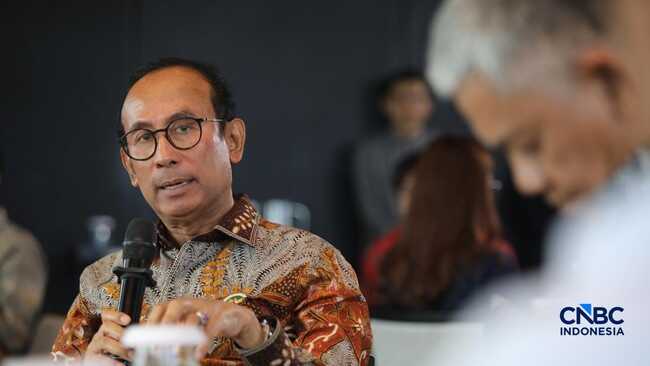
‘There must be a balance, because on one hand we want to reduce carbon emissions, but also obtain state revenue as revenue. So how to implement the steps to make this program successful without harming all streams,’ Satya said at CNBC Indonesia Energy Forum 2026, Thursday (5 March 2026).
On the productivity improvement challenge, he said it cannot be solved merely by adding more land. Productivity can still rise on existing land if it is managed well.
‘Because some companies have productivity up to 80%, but others average 20-40%; this must be improved and a solution found,’ he said.
Besides CPO (crude palm oil) as a blend, petrol and diesel prices remain volatile and depend on world oil prices. If there is conflict or supply difficulties, the price of biodiesel will also be affected.
Palm oil is also one of Indonesia’s flagship export commodities, which must remain competitive and meet domestic needs. Beyond the upstream side, Satya emphasised, the end users, namely the automotive industry, must also be ready.
Thus, the use of B50 must be in line with the performance standards set by the automotive industry so that its use can be more widespread.
‘With that blend, the aim is to reduce but the vehicle performance should still be adequate. In the past, when we had the idea to convert from BBM to BBG, it was the same story. It wasn’t about manufacturers, it was about us. We added, what was it called, a converter kit. Eventually vehicle performance wasn’t as expected,’ he said.
In the same event, GAPKI Executive Director Mukti Sardjono revealed that CPO consumption has risen year on year, while production over the past five years has remained in the range of 48-51 million tonnes per year. If B50 is applied, demand would rise from 12 million kilolitres for B40 to 16-18 million kilolitres.
‘Consequences domestically are that it is a staple to the extent that food security must be protected, likewise energy security must be protected. Whether we like it or not, exports will be sacrificed if exports fall; export levies have also fallen, and those levies have been used to subsidise biodiesel,’ he said.
Echoing Satya, he said productivity improvements in palm oil should be done, but not by opening new land. Productivity improvements can be achieved through replanting that is currently slow.
From the automotive industry side, GA IKINDO Secretary General Kukuh Kumara said that results from B50 trials show it has reached 10,000 kilometres and shows no negative impact. He acknowledged a decrease in performance, which is tolerable to users as it remains around 2.5-3%.
Kukuh warned that increasing biodiesel blending should not be done hastily. The rise from B35 to a much higher level must be gradual so that various technical issues can be identified first.
According to Kukuh, a sudden increase in blending, for example from B35 directly to B50, could raise problems, especially if various technical issues have not been mapped out well.
‘This is especially for commercial vehicles that use diesel. They operate off-city, possibly in the forest. It would be unfair if they encounter problems,’ he said.