
Government Pays Rp18 Trillion for Various Allowances for 1.6 Million Civil Servant Teachers
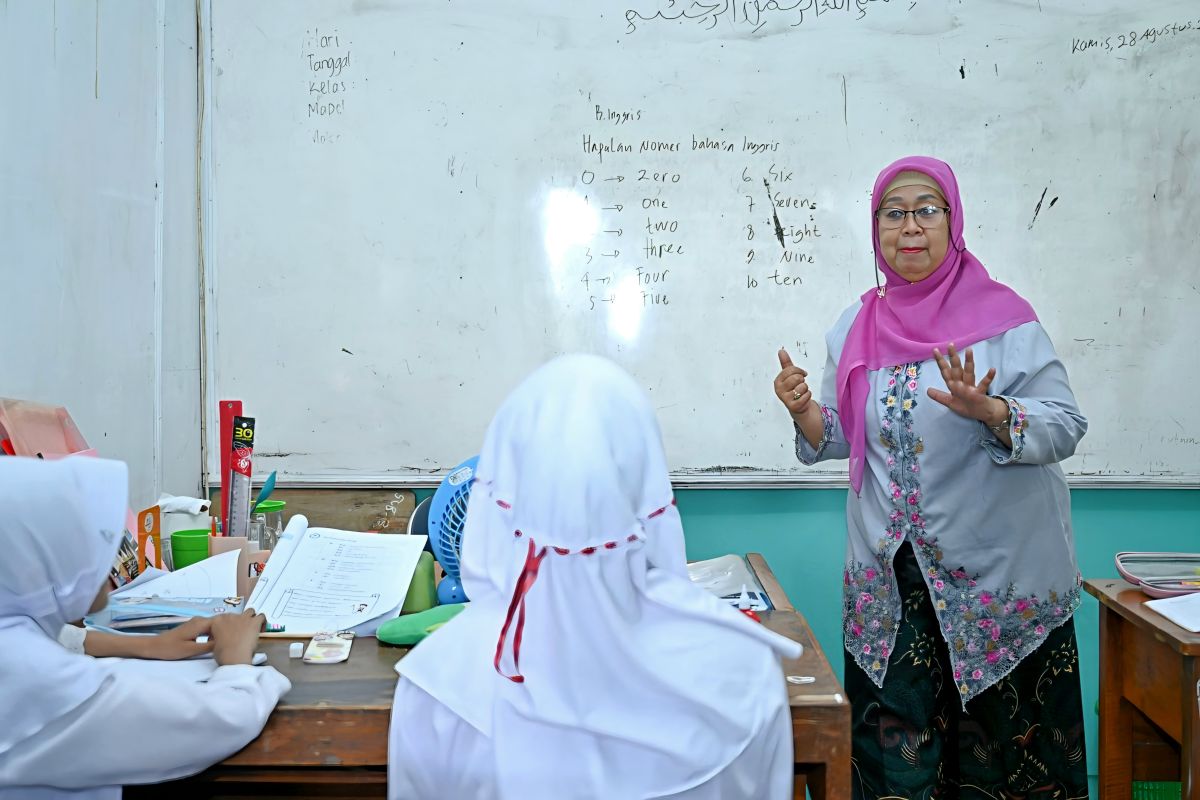
Starting in 2026, the distribution of teacher allowances, previously conducted every three months, is now carried out monthly. This acceleration in distribution aims to provide certainty to teachers regarding their entitlements.
Jakarta (ANTARA) - The Ministry of Basic and Secondary Education (Kemendikdasmen) reports that from January to March 2026, it has disbursed more than Rp18 trillion in various allowances for over 1.6 million regional civil servant (ASN) teachers throughout Indonesia.
The Director General of Teachers, Education Personnel, and Teacher Education (Dirjen GTKPG) of Kemendikdasmen, Nunuk Suryani, emphasised that the change in the mechanism for distributing various teacher allowances to monthly payments is part of the government’s efforts to provide better services to teachers.
“Starting in 2026, teacher allowance distributions, which were previously done every three months, are now monthly. This acceleration in distribution is to provide certainty to teachers about their rights. For the government, teacher allowances are not just figures in the budget, but a form of appreciation for the dedication of teachers who are present every day to educate the nation’s generation,” said Dirjen GTKPG Kemendikdasmen Nunuk in Jakarta on Thursday.
She added that fulfilling teachers’ rights more quickly is expected to have a direct impact on improving the quality of learning.
The distribution of teacher allowances in the first quarter of 2026, she said, includes the Teacher Professional Allowance (TPG) to around 1.6 million teachers with a total disbursement of Rp18 trillion, then Additional Income Funds (DTP) to around 20,000 teachers with a total disbursement of Rp14.8 billion, and Special Teacher Allowance (TKG) to around 62,000 teachers with a total disbursement of Rp641.6 billion.
The change in the distribution of the Teacher Professional Allowance (TPG) to monthly is directly felt by teachers in various regions. They say they are more assisted due to the certainty of the receipt time and ease in managing finances.
“With monthly distributions, we no longer have to wait as long as before. This is very helpful in managing needs and allows us to focus more on teaching,” she said.
The same sentiment was expressed by Tarto Hadi Lukito, a teacher at Pembina State Kindergarten in Batang (Central Java), who appreciated the change.
“We are very grateful for this policy. Monthly routine distributions make us feel more valued and certainly very helpful in family financial planning,” he said.