
Government Outlines Three Scenarios for 2026 Hajj Pilgrimage Amid Middle East Escalation
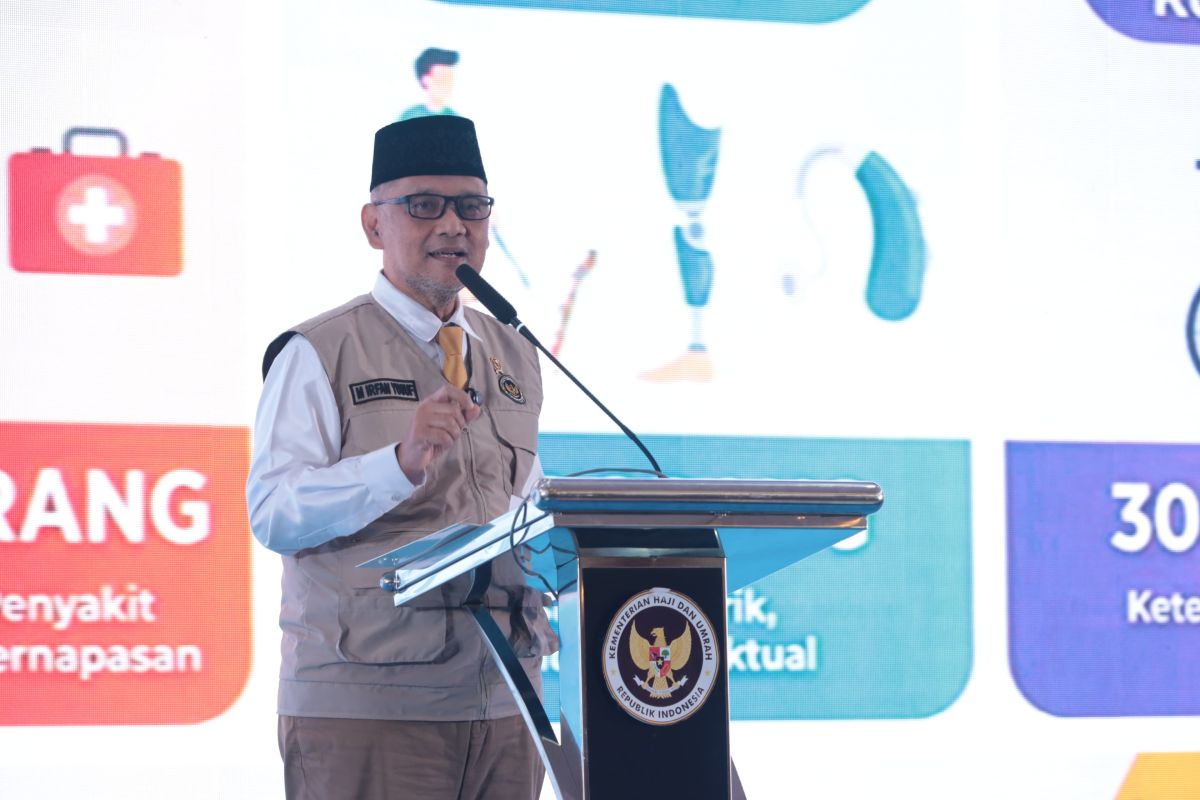
Jakarta — The government, through the Ministry of Hajj and Umrah (Kemenhaj), has outlined three scenarios for conducting the 1447 Hijri/2026 hajj pilgrimage amid escalating conflict in the Middle East between the United States, Israel, and Iran.
“The primary principle in formulating these scenarios is safeguarding the security and safety of hajj pilgrims as the highest mandate,” said Minister of Hajj and Umrah Mochamad Irfan Yusuf during a working session with Commission VIII of the House of Representatives in Jakarta on Wednesday.
In formulating hajj policy under crisis conditions, the government adheres to several principles, including placing pilgrim safety as the top priority and exercising caution in decision-making. Minister Yusuf’s directive aligns with guidance from President Prabowo Subianto, who has emphasised the importance of ensuring the security of Indonesian hajj pilgrims.
The first scenario involves proceeding with hajj whilst implementing air route mitigation by rerouting flights through safer corridors. The government would conduct security diplomacy to secure guarantees of safe passage for Indonesian pilgrims as non-combatants.
Several regions potentially to be avoided in flight routes include Iraq, Syria, Iran, Israel, the United Arab Emirates, and Qatar. As an alternative, flights could be rerouted via the southern route across the Indian Ocean and through East African airspace or other safe corridors in coordination with Saudi Arabian aviation authorities. However, such rerouting may increase flight duration. For aircraft with limited range, airlines may need to make technical landings in third countries for refuelling.
“The consequence will naturally impact increased flight budget expenditure,” said Minister Yusuf.
The second scenario involves Saudi Arabia maintaining hajj operations whilst Indonesia decides to postpone pilgrim departures due to excessive global security risks. In this situation, the government must conduct diplomacy with Saudi Arabia to ensure that fees already paid for accommodation, catering, transport, and services are preserved and transferable to the following year’s hajj without penalty.
The government has also prepared financial mitigation options for pilgrims, including refunding hajj fees without forfeiting departure rights in the following year, or retaining the funds with compensation in the form of higher benefit value.
The third scenario involves Saudi Arabia closing hajj operations due to an uncontrollable situation. In this case, the government would focus on recovering funds already paid for services and halting all service provision processes, including accommodation, catering, transport, and other services.
The government would also prioritise departures during the next hajj season for pilgrims who have completed fee payments and fall within this year’s departure allocation.
“The Ministry of Hajj and Umrah will act as a risk navigator to ensure that every decision is taken based on security intelligence and the principle of protecting Indonesian citizens,” said Minister Yusuf.