
Government Launches Nutrition Labelling to Strengthen Education on Healthy Consumption
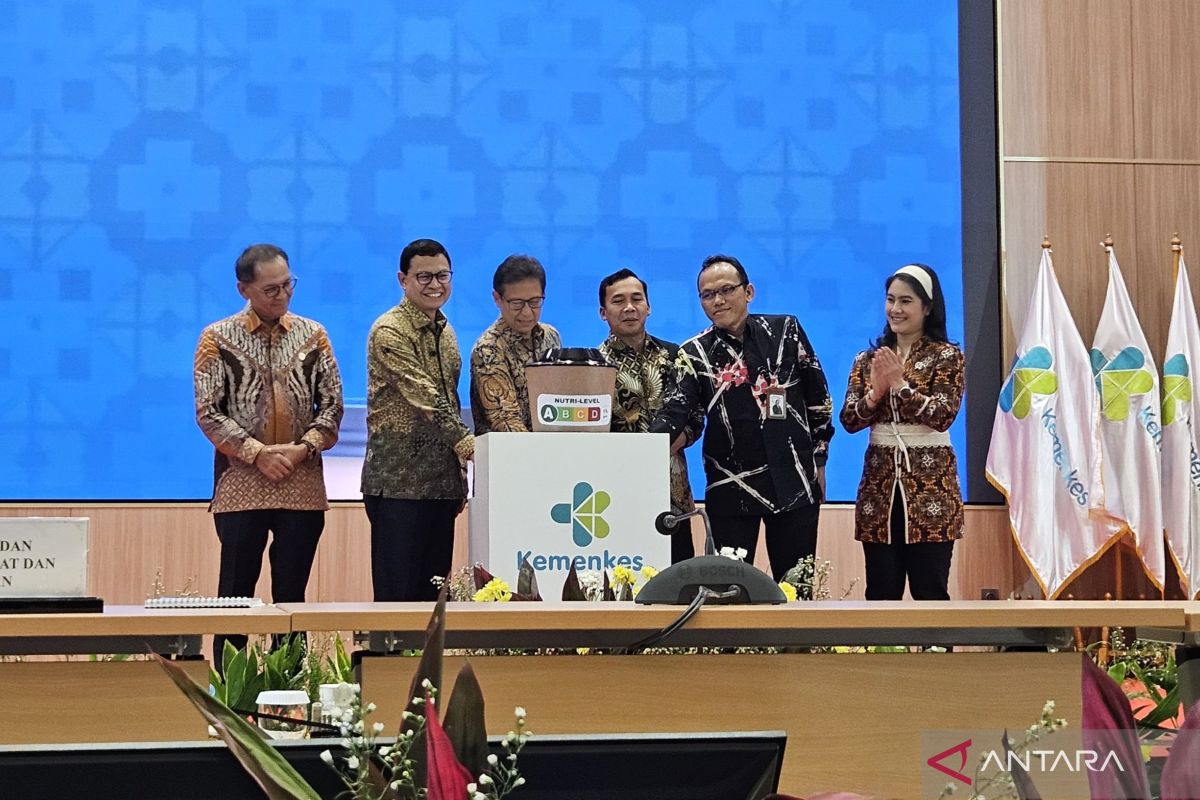
Jakarta (ANTARA) - The government has officially launched a policy on the inclusion of nutrition labelling or Nutri-level, as an effort to educate the public about healthy food and drink consumption and to reduce the burden of non-communicable diseases due to excessive sugar, salt, and fat (GGL) intake.
Health Minister Budi Gunadi Sadikin stated in Jakarta on Tuesday that this policy complements the Free Health Check (CKG) as a medium to educate the public, so that in the future they can choose food according to their nutritional needs for consumption.
He said that excessive consumption of sugar, salt, and fat is a cause of diseases with high mortality and high costs.
“Research on this is abundant worldwide, and the standards have also been provided by the WHO. The burden of these diseases is significant; rather than treating them after falling ill, it is better to prevent them to stay healthy. And how to prevent? As mentioned earlier, we must regulate our food consumption, especially sugar, salt, and fat,” he said.
Moreover, he said, the results of the Free Health Check (CKG) show quite high diabetes rates among children. Although he does not know the exact figures, he believes that children should not suffer from diabetes.
He hopes that this policy can also initiate a movement for healthy living. According to him, when something is made into a movement, more people will follow it. For example, running.
“Suddenly running becomes FOMO (fear of missing out). It becomes cool, stylish, and trendy. We see that if health programmes are approached as a movement, more cool, stylish, lifestyle-oriented, and trendy, the adoption is much better than forcing it as a programme,” he said.
The same goes for drinking coffee. When coffee with sugar or milk was once considered more stylish, he said, now drinking coffee without sugar like espresso or Americano is cooler.
Regarding implementation in industry, it is currently in a transitional period, approximately one or two years, but the details will be available when the regulations are issued.
“For now, temporarily, we have a transition period; for the inclusion of Nutri-level, we still ask them to do it themselves. Gradually, we will make it mandatory; they must do it,” he said.
As for the policy, Budi said, it is coordinated with the National Agency of Drug and Food Control (BPOM), the Ministry of Population and Family Development, BPJS Health, and the Financial Services Authority (OJK).