
Government investigates errors in export data worth hundreds of trillions of rupiah
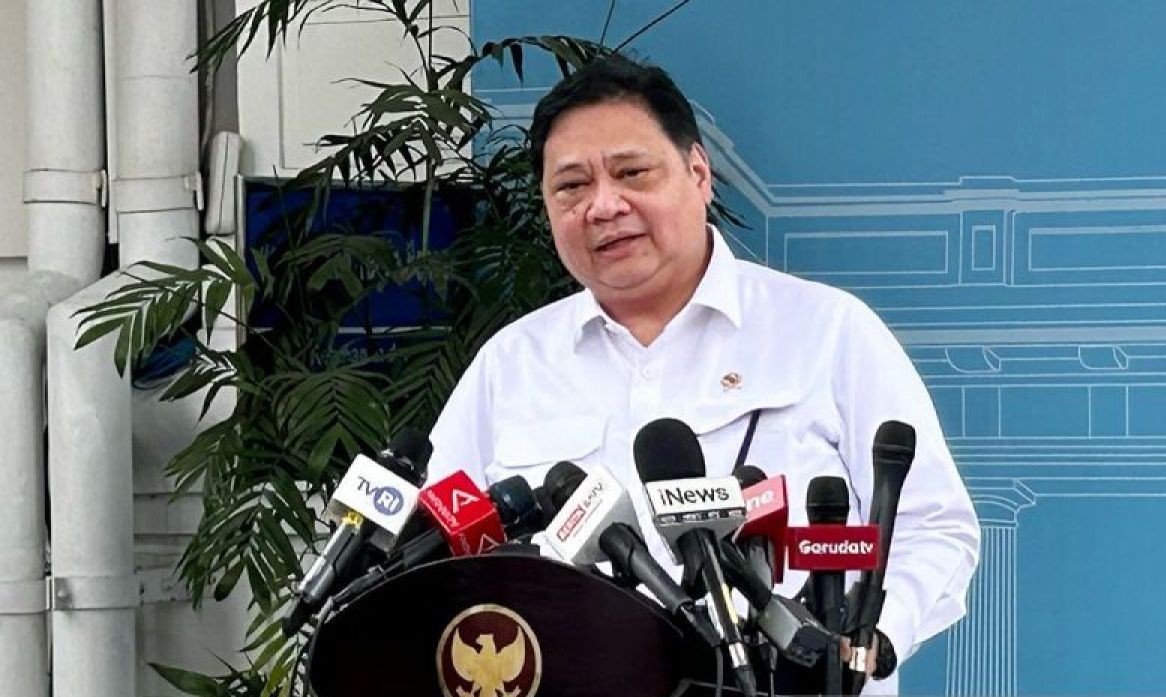
The government is investigating discrepancies in Indonesia’s export data with key trading partners. Coordinating Minister for Economic Affairs Airlangga Hartarto stated that these recording differences are a concern for the government as they impact trade transparency, state revenue, and the valuation of exporting companies in the capital markets.
Airlangga cited examples of discrepancies in trade with the United States. According to Indonesian records, the trade deficit with the US is around US$16-17 billion (Rp283.6 trillion to Rp301.3 trillion), while US data shows approximately US$20 billion (Rp354.5 trillion). Similar discrepancies were found in trade with China.
“With China, there is a delta of around US$20-30 billion between Indonesia’s export data and China’s import data from Indonesia,” Airlangga said at the National Conference on Regional Economic Development in Balai Kartini, Jakarta, on Monday (25 May).
These data discrepancies, Airlangga added, are one reason the government is strengthening export governance through PT Danantara Sumberdaya Indonesia (DSI). He said this move aims to help the government trace the causes of the trade data differences.
“This is what we’re looking for with PT DSI so we can obtain results from the investigation,” he said.
He noted that strengthening export governance would positively impact exporting companies in the capital markets. Transparency in export revenue is expected to boost company valuations and increase government revenue from taxes and royalties.
“With increased revenue, we hope tax, royalty, and other government receipts will also rise,” Airlangga explained.
The government has requested banking sector support to ensure all prepared mechanisms function optimally. Airlangga said supportive regulations will continue to be prepared, and oversight of PT DSI will be strengthened to support the national economy.
“Because Danantara’s tasks have now been expanded to include commercial functions,” he added.
As an initial phase, the government will implement a single-window export mechanism through Danantara starting 1 June 2026 for coal and crude palm oil (CPO). Under this scheme, exporters and owners must register via LNSW, listing PT DSI as a co-exporter.
Airlangga explained that companies can still export through their own partners via “on behalf of” or QQ (Quality/Quantity) schemes. However, all export reports will be submitted to PT DSI.
“With the QQ mechanism, all export reports will go to PT DSI,” he stated.
The government will run this initial phase for three months before further evaluation. Full implementation is targeted to take effect from 1 January next year.
“We will evaluate in parallel for the next three months, and full implementation will be on 1 January,” he said.
However, the government assured that existing business-to-business (B2B) contracts will be honoured provided there is no under-valuation or under-invoicing.
“Contracts will be respected as long as they are not under-valuation or under-invoicing,” he concluded.