
Government: Indonesians Should Be Proud to Be Citizens as Many Foreign Nationals Desire Indonesian Citizenship
Writer
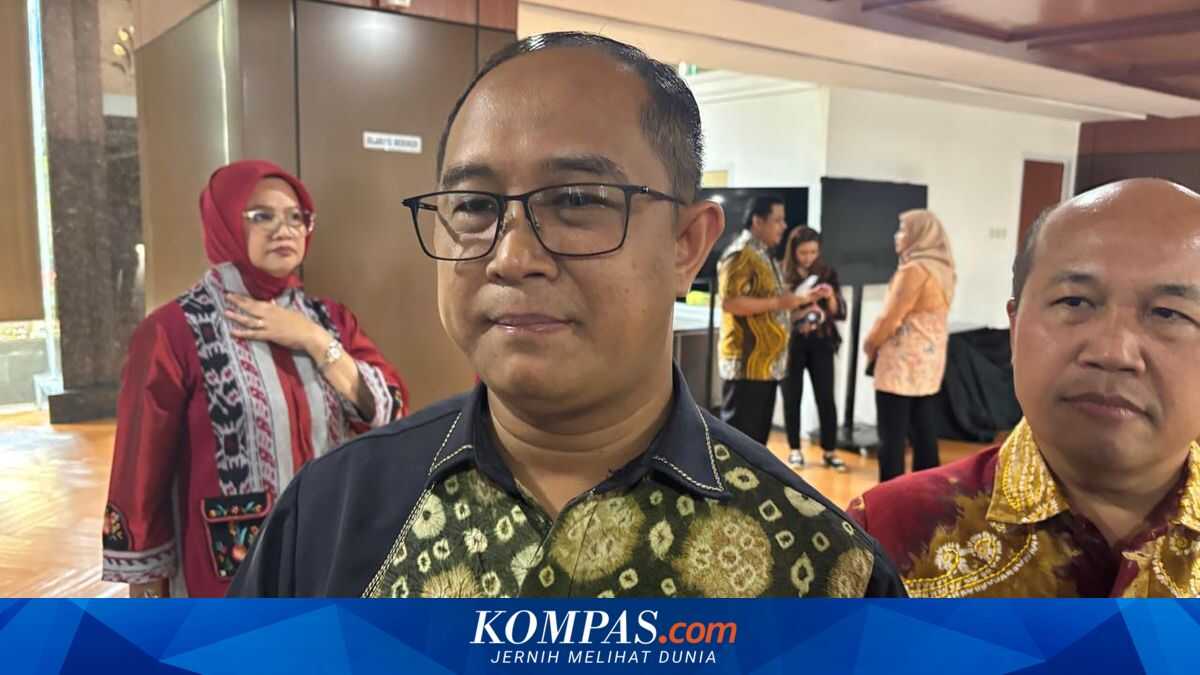
JAKARTA, KOMPAS.com - Director General of Legal Administration (AHU), Widodo, stated that many people want to become Indonesian citizens (WNI), so Indonesians should be proud to be WNI.
“This shows how much foreign citizens love Indonesia and want to become Indonesian citizens, and of course, we should be proud to be Indonesian citizens and we will certainly maintain and love Indonesia as it is,” said Widodo in a press conference in Jakarta, as reported by ANTARA, Thursday (26/2/2026).
“The data at the Directorate General of AHU, especially at the Directorate of State Affairs which handles citizenship matters, shows that in recent years, both in 2026, 2025, and in the past few years, the demand and interest in becoming WNI in our country has been quite high,” he said.
In 2020, there were 37 applications to become WNI, but only 29 applications were accepted.
Meanwhile, in 2022, as many as 63 applications to become WNI were fully accepted.
The number of applications increased again in 2023, to 69 applications, three of which were not accepted.
“Interestingly, in 2024, out of 165 applications, only 20 were accepted; and in 2025, out of 147 applications, only two have been fully processed and accepted as Indonesian citizens,” Widodo said.
According to him, this data shows that becoming a WNI is a source of pride and a dream for foreigners.
The reasons they convey during the interview sessions are also diverse.
It is not only limited to economic issues, but also socio-cultural issues, such as being impressed by the friendliness of the Indonesian people and environment, and wanting to spend the rest of their lives here.
Regarding citizenship, recently the public has been discussing the case of an LPDP scholarship recipient named Dwi Sasetyaningtyas who is grateful that her child is no longer an Indonesian citizen but has become a British citizen.
Widodo explained that the UK, where DS resides, does not adhere to the ius soli system or automatic citizenship based on place of birth, so citizenship status is not automatically granted even if the child is born there.
“If it does not adhere to the place of birth and also does not have a lineage, then the lineage is an Indonesian citizen, in that place he is not recognized, it means that the child’s status is an Indonesian citizen,” said Widodo.
Regardless of that, considering the child’s young age, DS’s child has not yet reached the age to determine their own citizenship status.
In that context, Widodo said that DS potentially violated her child’s rights. “This is certainly a lesson for all of us, especially since the Child Protection Law does not allow forcing anything on the rights of children, meaning that parents are too intervening in their children,” he said.
KOMPAS.com is committed to providing clear, trustworthy, and balanced facts. Support the sustainability of clear journalism and enjoy comfortable reading without ads through Membership. Join KOMPAS.com Plus now.