
Government Increases Nickel HMA, Export Tax on Downstream Products Still Under Review
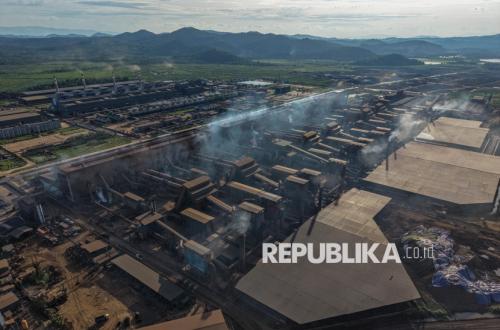
Energy and Mineral Resources Minister Bahlil Lahadalia stated that nickel policy will focus on balancing supply and demand, particularly to meet the needs of domestic smelters. “We will also create a balance between supply and demand for nickel in its RKAB. We will determine the needs of our factories so that prices do not fall too low,” Bahlil said when met at the Coordinating Ministry for the Economy office on Friday (27/3/2026). He emphasised that the government has decided to increase the reference price as an instrument to safeguard the market. “It’s not a possibility; it has become our decision that we will raise the HMA,” he asserted. On the other hand, the government is also reviewing fiscal policy in the form of export taxes on downstream nickel products, such as Nickel Pig Iron (NPI) and other derivatives. According to Bahlil, the policy is still in the calculation stage and has not been finalised. “For NPI, a nickel product, we are calculating the formulation for imposing taxes on NPI,” he explained. Meanwhile, for coal commodities, the government will not implement export taxes in the near future. The plan, originally targeted for 1 April, is still awaiting technical studies with the Ministry of Finance. Bahlil stressed the need for caution, considering the characteristics of Indonesian coal, which is dominated by low-calorie types. “Why? Because not all of our coal has high calorie standards. Low-calorie coal accounts for 60 to 70 percent. So we must not make the wrong policy,” he said. With this approach, the government seeks to maintain a balance between optimising state revenues and the sustainability of the industry amid global market dynamics.