
Government implements risk-based approach to protect children
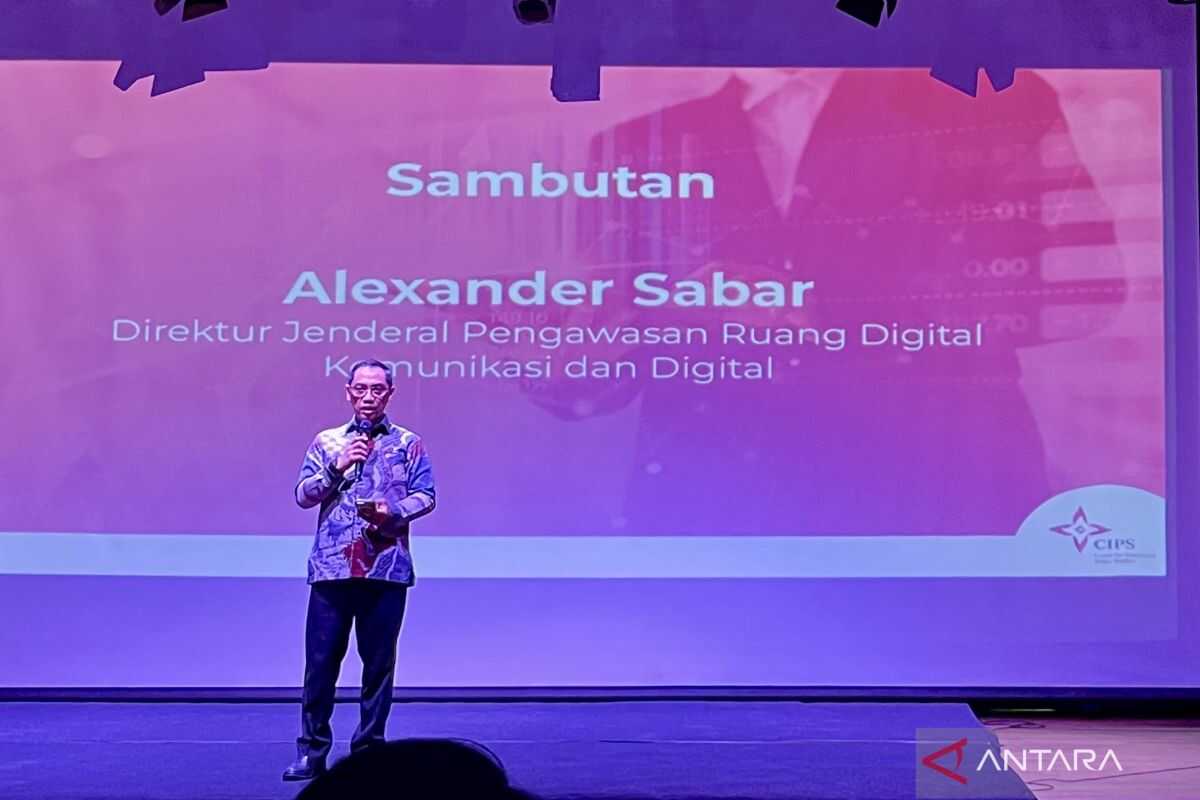
Jakarta — The Director-General of Digital Space Surveillance at the Ministry of Communication and Digital Affairs, Alexander Sabar, has stated that the government is implementing a risk-based approach to protect children in the digital space.
“This approach stems from the understanding that the digital ecosystem is not homogeneous. Social media, online games, and other digital services have different interaction characteristics and risk profiles,” he said during a discussion and launch of a study held by the Center for Indonesian Policy Studies (CIPS) at Taman Ismail Marzuki in Central Jakarta on Friday.
Sabar noted that technological development has changed how Indonesian children learn, interact, and build their social identities.
He cited data from the Association of Indonesian Internet Service Providers (APJII) for 2025, which showed that internet penetration among Generation Z (born 1997-2012) reached 87.8 per cent. Internet penetration among Generation Alpha (born 2010-2024) reached 79.73 per cent.
“This indicates that the digital space has become an integral part of children’s growth and development,” Sabar said.
He emphasised that increased digital access for children is accompanied by risks including exposure to negative content, cyberbullying, and sexual exploitation.
Results from the 2024 National Survey on the Life Experiences of Children and Adolescents showed that more than 13 per cent of children aged 13-17 had experienced cyberbullying.
Sabar stated that this situation requires the implementation of child protection measures in the digital space. Child protection in the digital space must be part of comprehensive digital ecosystem governance.
To this end, the government issued Government Regulation No. 17 of 2025 concerning the Governance of Electronic Systems in Child Protection, known as PP Tunas, to promote risk-based child protection in the digital space.
By applying a risk-based approach, each digital product, service, and feature is assessed based on its potential impact on children.
Sabar stated that PP Tunas was issued to ensure that innovation proceeds in accordance with child safety principles and the best interests of children.
He emphasised the importance of ensuring that child protection regulations in the digital space are effective, clear, and do not create uncertainty that could negatively affect the growth of Indonesia’s digital economy.