
Government Facilitates US Investors in Indonesia's Critical Minerals Sector
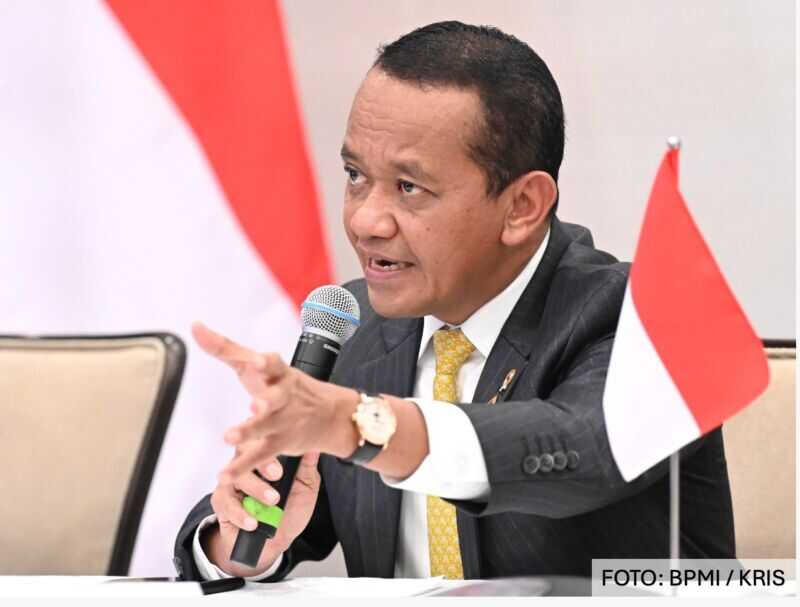
SAMARINDA — Indonesia adheres to a free and active economic principle by providing equal investment opportunities to all countries, including the United States, whilst complying with prevailing Indonesian regulations.
“For critical minerals, we have agreed to facilitate US businesses in making investments, whilst respecting the regulations in force in our country. We will also give priority to supporting and facilitating execution, including investment,” said Energy and Mineral Resources Minister Bahlil Lahadalia during a press briefing in Washington DC on Friday (20/2) local time.
Bahlil emphasised that there has been no change in policy regarding raw mineral exports, as the Indonesian government remains committed to its national downstream processing programme and has no plans to open the door to raw material exports.
“So let’s say they build a smelter in Indonesia for nickel — we will encourage it, we will give them the widest possible space, the same as for any other country. So do not interpret this as us opening raw material exports. What is meant here is that after they carry out refining, the results can then be exported. Let me be clear, so there is no misinterpretation,” Bahlil stressed.
He cited existing cooperation as an example, such as the investment made by Freeport Indonesia in building a copper smelter facility worth nearly USD 4 billion, one of the largest in the world. According to him, a similar model can be applied to the development of other critical minerals such as nickel, rare earth metals, and gold.
In terms of implementation, Bahlil said the government is offering two investment schemes for US companies. The first involves directly offering US companies exploration opportunities, and the second is through partnerships or joint ventures with Indonesian state-owned enterprises (SOEs).
“Once they are in production and have built a smelter or downstream processing facility, they have the right to export to America,” he added.
Nevertheless, Bahlil disclosed that Indonesia is also opening opportunities for other countries to cooperate in critical minerals development. He said government policy is not exclusive and is not directed at any single country. Indonesia remains consistent in upholding principles of open, fair, and mutually beneficial cooperation with all global strategic partners.
“We provide equal space to other countries as well — it is simply equity treatment,” Bahlil affirmed.
Amid geopolitical dynamics and the world’s growing demand for critical minerals, Indonesia has reaffirmed its bargaining position on the global stage. The bilateral meeting between President Prabowo Subianto and US President Donald Trump in Washington, DC on Thursday (19/2) local time served as an important moment in strengthening the partnership between the two nations through the Agreement on Reciprocal Trade (ART).
For Indonesia, this cooperation is not merely a trade agreement but part of a strategy to ensure that the nation’s critical mineral wealth is not traded in raw form. The government has emphasised that every investment opportunity arising from the ART must lead to downstream processing and domestic value creation, so that the economic benefits are felt directly by the Indonesian people.