
Government Examines Implementation of Fuel Vapour Control Technology
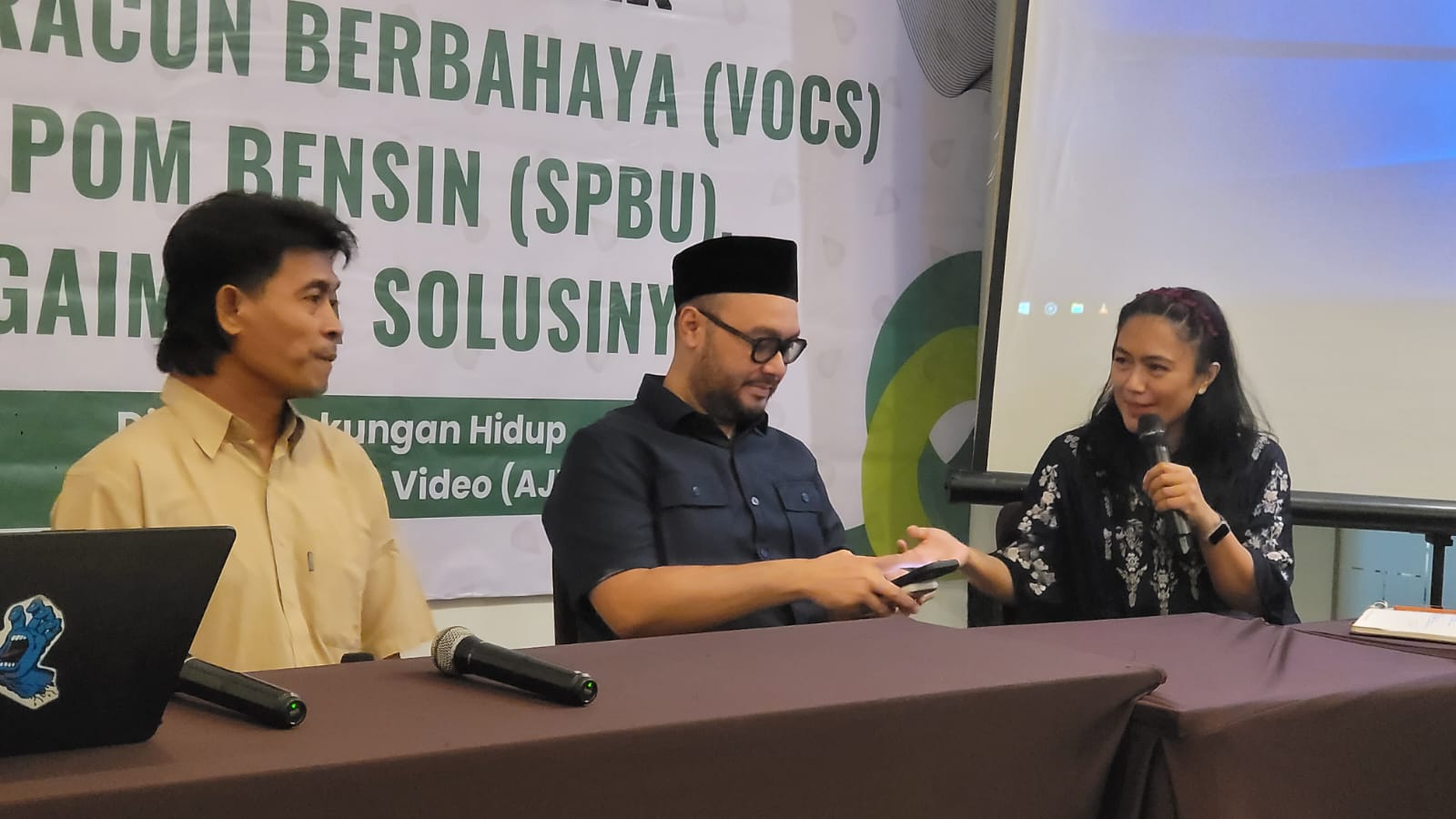
Fuel vapour emissions at petrol stations pose a potential threat to public health and the environment. This issue emerged during a public discussion titled “Toxic Hazardous Vapours (VOCs) at Petrol Stations, What Are the Solutions?” held at Hotel Amaris Pancoran, Jakarta, on Saturday, 14 March.
The Chairman of the Association of Petrol Station Operators, Chandra, expressed optimism that the discussion would yield concrete solutions to alleviate public concerns about lingering in petrol station areas and provide policy recommendations to the government.
“We have held this discussion twice before, and we hope this third discussion runs smoothly. We expect the issue raised to produce positive results and solutions so the public no longer hesitates to visit petrol stations,” Chandra stated.
The problem of petrol vapours escaping into the air is not merely an environmental issue but also represents massive economic losses.
Senior journalist Brigita Manohara, who participated in the discussion, revealed that technology currently exists that can condense fuel vapours and return them to liquid form.
“The petrol vapour released can result in losses estimated at approximately Rp3.8 trillion per year. If the vapour can be captured and reprocessed, besides reducing pollution, it can also restore its economic value,” she said.
Vapour Recovery System (VRS) installation expert Baidi explained that the technology can capture volatile organic compounds (VOCs) from the filling and storage processes at petrol stations.
The VRS machine operates by utilising the pressure of fuel vapour entering the system, which is then processed through distillation and cooling until it becomes fuel again.
“The process takes approximately 30 minutes to one hour to become fuel again. From the original machine, this equipment can capture around 75-80 per cent of VOC vapours,” Baidi explained.
He added that fuel loss due to evaporation typically ranges from 0.12-0.2 per cent, or approximately 12 litres. With this technology, most of the vapour can be recaptured. Currently, the equipment has been installed at approximately 20 petrol stations in the Jabodetabek area.
However, Baidi acknowledged that the technology is still imported from South Korea at a cost of approximately Rp600 million per unit.
“For the system to work effectively, the condition of underground tanks at petrol stations must be good, particularly the main hole. If there is a leak in that area, the machine cannot work optimally in capturing vapours,” he said.
On the same occasion, the SKK Migas Supervisory Unit, also Special Staff to the Ministry of Energy and Mineral Resources (ESDM), Anggawira, assessed the issue as highly relevant because it directly concerns public health and petrol station infrastructure standards.
“Several VOC components impact health, such as benzene, which is carcinogenic; ethylbenzene, which is also potentially carcinogenic; toluene, which can cause nerve damage; xylene, which is irritant; and n-hexane, which is a neurotoxin,” he explained.
According to him, the government is open to further discussions on fuel vapour control technology through ongoing forums involving various stakeholders.
Nevertheless, he cautioned that the business conditions of petrol station operators must also be considered, as their profit margins are increasingly narrow whilst investment for a single machine unit reaches approximately Rp600 million, or about 10 per cent of total petrol station investment.
Moving forward, the government is also encouraging the possibility of domestic production of similar equipment to make investment costs more affordable.