
Government Examines Fuel Conservation Scenarios
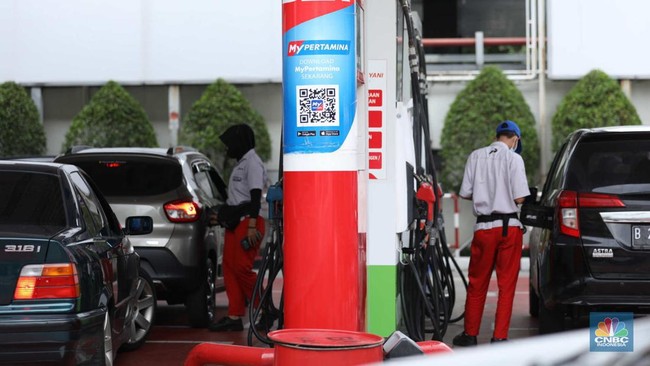
Jakarta — Tensions in the Middle East are prompting several Southeast Asian governments to anticipate potential fuel supply shortages. Thailand, Vietnam, and the Philippines have taken steps to prepare for these disruptions. Thailand and Vietnam are implementing energy conservation measures by encouraging employees to work from home to reduce fuel consumption. The Philippines has adopted a four-day working week in certain government offices and reduced official travel and government activities.
The Indonesian government is also examining its options. Energy and Mineral Resources Minister Bahlil Lahadalia stated that the government is conducting a comprehensive review of various alternatives to benefit the country whilst promoting efficient fuel consumption.
“We are currently conducting an exercise of all the alternatives we will use for the good of our nation, and simultaneously to encourage efficiency in fuel usage,” Bahlil said when met at the Presidential Palace Complex in Jakarta on Thursday, 12 March 2026.
However, Bahlil emphasised that no final decision has been made regarding which response policy the government will adopt. “But there is no definite decision yet, because all alternatives exist in unstable conditions. We must explore various alternatives,” he said.
Bahlil also urged the public not to panic about fuel supply availability or engage in panic buying. Domestic fuel supply remains secure for the next 23 days, he noted.
“There is no need for panic buying. The 23 days mentioned refers to what is in our storage tanks. But production continues, we keep producing and supply keeps coming in,” Bahlil explained.
Bahlil also confirmed that the government has not yet calculated precise figures for additional energy subsidies following the sharp rise in global oil prices. Current prices remain too volatile to serve as a reliable benchmark for subsidy calculations.
“Until now, we have not calculated the exact budget for subsidy increases. As of yesterday when I calculated, the average from January until now has not exceeded $70 per barrel,” he stated.
Crude oil prices breached $100 per barrel on Thursday, 12 March 2026, amid intensifying tensions in the Strait of Hormuz. According to Refinitiv data, Brent crude was trading at $110.02 per barrel at 11:31 WIB on Thursday, up 8.7%, whilst WTI crude was at $94.21 per barrel, up 8%. This latest surge extended Wednesday’s gains, when Brent rose 4.7% and WTI climbed 4.6%.