
Government Ensures Reusable Jugs for Packaged Drinking Water Remain Safe for Consumption
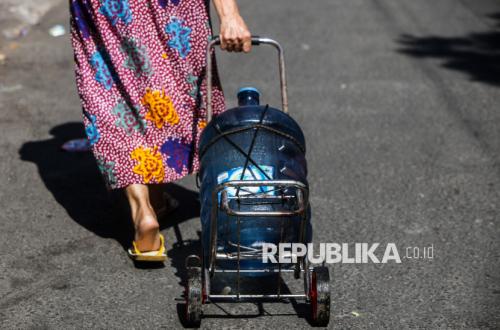
Indonesia’s government says reusable water jugs for packaged drinking water remain safe when produced by licensed industry and are placed under tight supervision through national standards, periodic audits, and sanitation processes before reuse. In the face of information that has aroused public concern, the government assesses that product safety remains maintained when produced by legitimate industry and complies with applicable standards.
Merrijanti Punguan Pitaria, Director of Beverage Industry, Tobacco, and Flavoring Materials at the Ministry of Industry, said that packaged drinking water (PDW), including reusable jugs, must meet the Indonesian National Standard (SNI) and are regularly supervised by the government.
‘PDW is a product designated by mandatory SNI, and its quality parameters are monitored and tested through periodic surveillance audits to ensure safety for consumption at the consumer level,’ Merrijanti said.
She noted that the oversight is conducted in line with food safety regulations and quality standards, including Minister of Industry Regulation No. 62 of 2024.
She explained that every reusable jug returning to the factory must pass physical checks, washing, sanitisation, and quality control before being filled again and distributed to the public.
‘Every jug reused must go through sanitisation and quality monitoring. The industry also checks the physical condition and the age of the jug before reuse,’ she added.
Merrijanti emphasised that jugs that no longer meet standards will not be used again. The PDW industry, she said, also has an culling mechanism to withdraw packaging no longer suitable for circulation.
In addition to government oversight, several academic studies are said to indicate the safety of using reusable jugs from the formal industry. Research from Bandung Institute of Technology (ITB) and Universitas Sumatera Utara indicated that Bisphenol A (BPA) content in water in reusable jugs is either undetectable or well below regulator safe limits.
Earlier, the National Agency of Drug and Food Control (BPOM) stated that all food packaging circulating in Indonesia, including BPA-containing polycarbonate reusable jugs, remains safe to use as long as they comply with the BPA migration limit set. BPOM sets a maximum BPA migration limit of 0.6 parts per million (ppm).
BPOM also notes that BPA exposure does not originate from a single type of packaging, because the compound can be found in a range of everyday products, including can linings for foods and beverages. Therefore, oversight is conducted based on safe migration limits of substances, not merely on packaging material type.
The Ministry of Industry also underlined the importance of monitoring distribution outside official industry channels, especially the use of industrial jugs by refill water depots that are beyond producer control.
According to Merrijanti, the use of branded PDW jugs by refill depots makes field monitoring of jug condition more difficult for the industry.
‘That situation means the circulation of jugs among the public cannot be controlled by the PDW industry in terms of both physical condition and quality.’
The government emphasises that oversight of PDW products is comprehensive, covering packaging materials, production processes, sanitation, distribution, and periodic audits to ensure products remain safe for consumption by the public.